
.jpg)








When prospective purchasers browse portals such as Rightmove or Zoopla, they frequently encounter listings described as "Cash Buyers Only". If you've seen these words on a listing, you may be wondering: when a property is cash buyers only, what does it actually mean? For many individuals, these three words immediately raise concerns. Does seeing 'cash buyers only' on a Rightmove listing mean there is something fundamentally wrong with the property? Is it simply a bargain waiting to be acquired? Or does the seller merely require a faster completion timeline than a traditional mortgage allows?
Executive Summary
A property restricted to cash buyers only indicates that the transaction must be completed without conventional mortgage finance. This may be because the property does not currently meet a lender’s criteria, although some sellers simply prioritise the speed and certainty of a cash transaction. Common causes of mortgageability problems include structural defects, short leases, non-standard construction and missing essential facilities. For investors, these properties can sometimes present opportunities to add value, but the reason for the cash-only restriction must be established before proceeding. Independent surveys, legal due diligence, realistic refurbishment budgets and a clear exit strategy are essential.
This guide explains what cash buyers only means, why properties are marketed this way, the risks involved and the checks buyers should carry out before proceeding. By examining structural defects, legal constraints, and the realities of modern lending criteria, it equips buyers with the knowledge needed to evaluate whether a cash-only property is a viable opportunity or an asset to be avoided.
Key Takeaways
- "Cash Buyers Only" does not automatically mean something is wrong; it is simply a description of the property's current financing status or the seller's preferences.
- Many properties are advertised this way because they are currently unmortgageable under standard high street lending criteria.
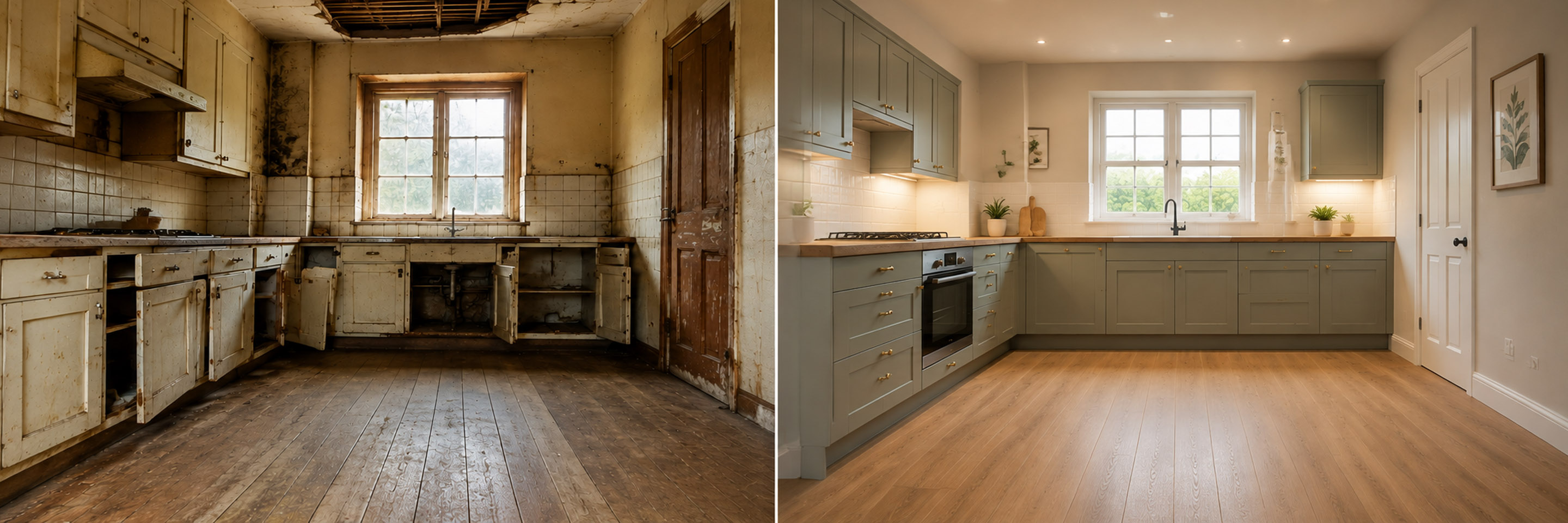
- Some cash-only properties only require basic refurbishment, such as installing a kitchen, to become mortgageable again.
- Some listings can represent attractive buying opportunities for investors prepared to execute necessary repairs.
- Others possess fundamental structural or legal defects and should be avoided.
- Understanding exactly why the property is restricted to cash purchasers is the most important step in assessing its viability.
What Does Cash Buyers Only Mean?
"Cash buyers only" means the seller or estate agent is seeking purchasers who can complete without relying on a mortgage for the purchase. This is often because the property is difficult or impossible to mortgage in its current condition, although sellers may also specify cash buyers for speed or certainty.
When a property is marketed this way, estate agents will usually demand to see liquid funds, such as bank statements showing accessible cash before officially accepting an offer or removing the property from the open market. Assets tied up in unsold properties or complex investment vehicles do not qualify an individual as a cash buyer unless the capital can be deployed immediately.
Why Are Properties Cash Buyers Only?
There are several reasons why a property may be advertised to cash buyers only, and mortgageability is one of the most common. Understanding these restrictions requires an examination of the criteria enforced by mainstream banks and building societies, such as those set out in the UK Finance Mortgage Lenders' Handbook. Lenders require the asset securing their loan to be immediately habitable, structurally sound, and legally unencumbered. When a property fails to meet these standards, the pool of potential buyers is restricted to those with independent capital.
Crucially, not every cash-only property has major defects. The reasons range from simple cosmetic deficits to severe environmental issues. To assess whether a property is worth buying, an investor must first isolate the exact reason it is restricted to cash buyers.
Structural Problems
Structural instability is one of the most common reasons a property becomes unmortgageable. Lenders rely on valuation surveyors to confirm the structural integrity of an asset. If a surveyor identifies active subsidence, severe structural movement, an incomplete roof, or inadequate foundations, the property will be deemed unsuitable security for a loan. Other significant defects that trigger mortgage refusals include severe rising damp, widespread wet or dry rot, and the complete absence of a damp proof course (DPC). While some investors purposefully seek out such assets to execute property investment strategies centred on heavy structural refurbishment, these properties carry higher inherent risks and require substantial capital reserves to repair.
No Kitchen or Bathroom
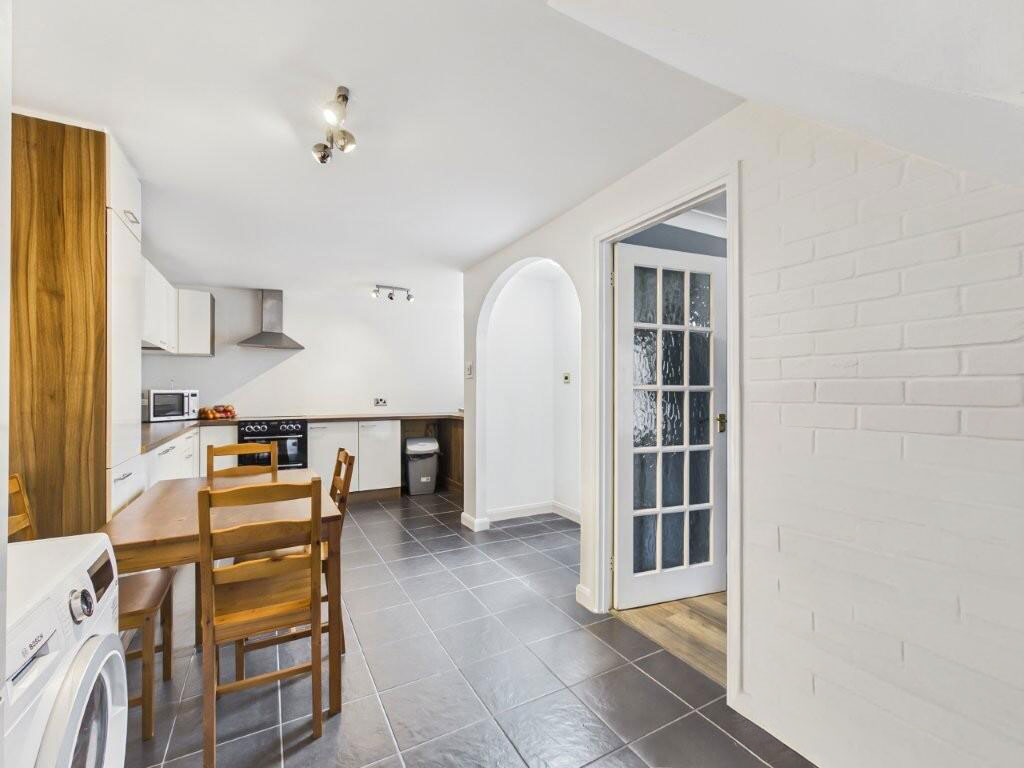
A common reason for a cash buyers only listing is the absence of basic amenities. To be deemed "habitable" by a mainstream lender, a property must possess a hygienic, functioning kitchen and an indoor bathroom. A listing for a house requiring cash buyers only may describe a property that is structurally sound, entirely watertight, and legally robust, but if a previous owner stripped out the kitchen in preparation for a renovation they never completed, traditional banks will generally refuse to lend. For example for experienced buyers executing a specific buy-to-let investment plan, these properties present straightforward, lower-risk opportunities to add value without engaging in complex structural works.
Short Leases
In the leasehold sector, the length of the remaining lease is a critical factor in mortgageability. Short leases can significantly restrict mortgage availability, with minimum acceptable lease terms varying between lenders. For instance, many mainstream lenders will refuse to issue a mortgage on a property with less than 70 to 75 years remaining on the lease, and almost none will lend if the term drops below 60 years. Historically, when a lease dropped below 80 years, the cost of extending it increased significantly due to the introduction of "marriage value". While the Leasehold and Freehold Reform Act 2024 includes provisions to abolish marriage value, as of mid-2026, the specific valuation rates remain subject to secondary legislation and ongoing consultation, meaning marriage value may still apply to current extensions until the new rates are implemented. A cash purchaser can acquire a short-lease property and legally extend it, thereby restoring the property's mortgageability and open-market value.
Non-Standard Construction
Properties built using techniques other than traditional brick or stone walls with slate or tiled roofs are classed as non-standard construction. Many of these methods currently face lending restrictions.
Concrete Construction (PRC): Following World War II, many homes were built using Precast Reinforced Concrete (PRC). However, the Housing Defects Act 1984 designated many of these structures as defective due to the internal steel reinforcements corroding and compromising the concrete panels. Unless a PRC home has been repaired under a recognised scheme and holds a valid PRC certificate, it often remains unmortgageable on the high street.
Steel and Timber Frames: Some steel-framed properties, such as British Iron and Steel Federation (BISF) houses, are viewed with caution due to hidden corrosion risks. Similarly, older timber-framed buildings may face lending restrictions depending on their external cladding and overall condition.
Spray Foam Insulation: A modern issue in UK property lending revolves around spray polyurethane foam (SPF) insulation. When applied to the underside of a roof, closed-cell spray foam can conceal the roof timbers, preventing surveyors from easily assessing them for trapped moisture, rot, or woodworm. Consequently, many mainstream lenders restrict lending on these properties, though some lenders may proceed if a specialist RICS Level 3 survey is conducted or if the foam is professionally removed and certified.
Japanese Knotweed
Japanese Knotweed is a highly invasive plant capable of exploiting weaknesses in building foundations, hardstanding, and drainage systems. Historically, the strict "seven-metre rule" meant that any knotweed identified within seven metres of a property boundary routinely halted mortgage applications.
Following updated RICS guidelines implemented in 2022, risk is now assessed based on actual material impact rather than arbitrary distance, categorised into Management Categories A to D. Properties falling into Category A (causing visible material damage to a structure) or Category B (restricting access to amenity space) still face lending restrictions and often require mortgage retentions. Sellers of heavily affected properties often limit their market to cash buyers rather than bearing the upfront cost of specialist eradication programmes.
Legal Title Problems
A property must possess a verifiable legal title to secure financing. Title defects that render a property unmortgageable include missing title deeds, severe boundary disputes, absent rights of access, or restrictive covenants that prevent the property from being used for its intended purpose. Resolving these issues often requires legal work, indemnity insurance, or lengthy applications to the Land Registry. Consequently, sellers frequently seek cash buyers who can navigate these hurdles without a lender's strict oversight.
Auction Properties
Properties sold at traditional auctions are frequently unmortgageable due to structural or legal defects, but even those in good condition are often restricted to cash purchasers (or those using specialist bridging finance) due to the rigid completion timeline. Traditional property auctions require the buyer to exchange contracts immediately upon the hammer falling and to complete the purchase within a fixed period, typically 28 days. Because standard mortgage applications usually require more time to process, cash is often the most practical option for auction purchases.
Repossessions
Some repossessed properties are marketed towards cash buyers, particularly where condition, speed or certainty of completion is a concern. Banks and asset managers looking to offload repossessed properties prioritise these factors to recoup their funds rapidly and minimise the risk of a property chain collapsing by seeking cash buyers for the property. By restricting the sale to cash purchasers, they facilitate a swift exit.
Major Refurbishment Required
Many properties are restricted to cash buyers simply because they require comprehensive modernisation. A property that has sat vacant for decades, lacking central heating, modern wiring, and basic decorative standards, may technically be mortgageable, but the perceived risk of hidden defects often deters standard buyers. For those seeking a below market value property, these unmodernised homes present opportunities to add value through straightforward refurbishment.
Cash Buyers Only: The Most Common Reasons
To clarify the varying degrees of severity associated with cash-only properties, the following comparison table categorizes the most frequent issues, their solvability, and their future financing prospects.
How Does Buying a Cash Buyers Only Property Work?
The process of purchasing a cash buyers only property differs from a conventional transaction, primarily regarding the speed of the transaction and the legal scrutiny applied to the source of the capital.
Find Property and Agree a Price
When a buyer identifies a suitable listing on Rightmove or through a sourcing agent, the initial step involves making an offer. Being able to proceed without mortgage finance can make a buyer more attractive to sellers who prioritise speed or transaction certainty, and in some circumstances this may strengthen their negotiating position.
Provide Proof of Funds and Pass AML Checks
Before an estate agent accepts an offer, the buyer must provide proof of funds. The buyer's conveyancing solicitor must also conduct stringent Anti-Money Laundering (AML) checks under the Money Laundering Regulations 2017. The conveyancer will not simply check that the cash exists in a bank account; they are legally obligated to trace the source of funds and the broader source of wealth. Whether the money stems from accumulated employment savings, the sale of another asset, dividend income, or an inheritance, the buyer must provide documentation to prove the capital is legitimate. If the funds include a family gift, the donor must also undergo identity and source of funds verification.
Solicitor Instructed and Searches Conducted
Even without a lender mandating them, a cash buyer must instruct a solicitor to conduct full local authority, environmental, and water searches. Bypassing these searches exposes the buyer to significant risks, such as discovering the property is built on contaminated land, lacks legal drainage rights, or is scheduled for compulsory purchase.
Commission a Survey
Without a bank's valuation surveyor inspecting the property to protect a loan, the due diligence falls to the buyer. Commissioning a comprehensive survey is a reliable method to uncover hidden structural flaws, particularly those that caused the property to become unmortgageable in the first place.
Exchange and Completion
Once the legal title is verified, the AML checks are cleared, and the buyer is satisfied with the structural condition, contracts are exchanged, and a completion date is set. Because there is no lender to wait for, the timeline between exchange and completion can be compressed. For an overview of standard timelines, readers can review our guide on how long does a buy-to-let purchase take?.
A 'cash buyers only' label on a property portal is not an automatic warning to run away, nor is it a guaranteed ticket to a high return.
The seller's or estate agent's explanation is never a substitute for independent due diligence. Their goal is to sell the property; the buyer's goal must be to independently verify the defects.
Can You Get a Mortgage Later?
Buyers often want to know whether the property can become mortgageable after the issue responsible for its cash-only status has been resolved. Potentially. If the issue that caused the property to be unacceptable to mortgage lenders can be resolved, the property may subsequently become mortgageable.
If a property was unacceptable to lenders because it lacked a functioning kitchen, installing one may remove that particular barrier to mortgageability, subject to the property meeting the lender's other criteria. If a property suffered from a short lease, extending the lease may bring it within a wider range of lenders' criteria. If spray foam insulation was present, conducting a certified removal process restores the roof's inspectability. Once the original issue has been resolved, the property may become acceptable to mainstream mortgage lenders, subject to their individual criteria.
However, when attempting to refinance, buyers must consider how long they have owned the property. Many lenders operate policies that restrict or heavily scrutinise remortgage applications if the borrower has owned the property for less than six months. While not a universal UK mortgage rule, and criteria or exceptions vary by lender, securing a new mortgage based on a higher post-refurbishment valuation often requires navigating these ownership timeframes.
For individuals looking to build a sustainable portfolio, understanding this is paramount to managing cash flow. For a comprehensive overview of early-stage acquisitions, review property investment for beginners.
Common Myths
The phrase "cash purchasers only" is surrounded by industry misconceptions. To navigate the market effectively, buyers must separate fact from fiction.
❌ Cash buyers only means the property is falling down.Not true. While some properties do suffer from severe structural failure, many are simply unmortgageable due to administrative issues (such as a short lease), cosmetic deficits (lacking a bathroom), or historical construction methods.
❌ You don't need a survey because there is no mortgage lender.This is a misconception. Without a bank assessing the property, the cash buyer is exposed to the asset's physical reality. A proper survey helps uncover the true extent of any defects.
❌ It is always a bargain.Properties restricted to cash buyers usually reflect their condition in the asking price, but they are not automatically profitable. The cost of necessary remediation (such as underpinning for subsidence or Japanese knotweed eradication) can easily exceed the perceived discount. Assessing the total capital expenditure is crucial.
❌ Banks will never lend on the property later.As established, once a property's specific defects are cured, mainstream lenders are generally happy to provide a mortgage on the asset, subject to standard lending criteria and their specific ownership timeframes.
Should You Buy a Cash-Only Property?
Deciding whether to pursue a cash buyers only property requires weighing the advantages against the risks.
The Advantages
The primary advantage is lower market competition. Because buyers relying on conventional mortgage finance may be excluded, the potential buyer pool can be smaller. Where a seller prioritises speed or certainty, this may strengthen a cash buyer's negotiating position. For those willing to oversee renovations, acquiring a distressed property and executing a cost-effective refurbishment provides an avenue for capital appreciation. Furthermore, the speed of cash transactions allows buyers to secure assets quickly, bypassing lengthy delays.
The Disadvantages
The primary disadvantages revolve around the property itself: unknown remediation costs, ongoing mortgageability uncertainty, potential resale restrictions, and the inability to refinance as expected. Furthermore, properties requiring heavy refurbishment carry the inherent risk of budget overruns, legal hurdles, insurance complications, and prolonged periods where the property sits vacant and generates no income. Navigating these challenges requires experience, which is why novice buyers are often advised to seek guidance from specialist property investment consultants before proceeding.
For those looking to avoid the complexities of heavy renovations, buying a tenanted property may present a less demanding alternative.
How Do You Find Out Why a Property Is Cash Buyers Only?
When evaluating a listing, understanding the specific reason for its cash-only status is the essential first step. Buyers should proactively ask the estate agent or auctioneer exactly why the property cannot be mortgaged.
Beyond a verbal explanation, buyers should request relevant documentation, including:
- Previous valuation or survey information (if a prior sale fell through)
- The auction legal pack
- Lease details and ground rent provisions
- Any known structural reports or specialist quotes (e.g., damp, timber, or Japanese knotweed reports)
- Seller disclosures regarding planning information or disputes
It is vital to stress that the seller's or estate agent's explanation is never a substitute for independent due diligence. Their goal is to sell the property; the buyer's goal must be to independently verify the defects and assess the exact cost of remediation.
What Checks Should You Carry Out?
Thorough due diligence protects a cash buyer from acquiring a problematic asset. Every assessment must answer the core question: How do I assess whether this specific cash buyers only property is worth buying?
✔ Structural Survey: A Level 3 Building Survey may be appropriate for properties requiring substantial refurbishment or where significant defects are suspected. If spray foam insulation is present, ensure the surveyor is qualified to conduct the necessary inspections.
✔ Builder Quotations: Obtain detailed quotations from reputable contractors wherever possible, and include an appropriate contingency for work where the final cost cannot be established before purchase.
✔ Legal Searches: Instruct conveyancers to carry out full local authority, environmental, and drainage searches to identify flood risks or planned infrastructure projects.
✔ Lease Verification: For leasehold properties, scrutinie the remaining lease term, ground rent escalation clauses, and service charge histories.
✔ Planning Permission: If the refurbishment strategy relies on an extension or a change of use, verify that planning permission is achievable.
✔ Insurance Viability: Confirm that the property is insurable. Properties with severe subsidence, a history of flooding, or unmanaged Japanese Knotweed may face building insurance refusals.
✔ Exit Strategy: Define a clear path to generating a return. Will the property be sold on the open market post-refurbishment, or retained and refinanced as a rental asset?
✔ Refurbishment Costs vs. End Value: Ensure that the purchase price plus the total refurbishment costs do not exceed the ceiling value of comparable properties on the same street.
✔ Rental Demand and Yield: If retaining the property for letting, analyse local tenant demand. Understanding how to work out rental yield is vital to ensure the refurbishment expenditure results in a profitable asset. Investors can use a buy-to-let calculator to stress-test their figures against the average rental yield in the UK.

Portfolio projection tool

Cash Buyers Only vs Standard Property Purchase
To contextualize the unique nature of these transactions, the following comparison table illustrates the operational differences between a cash-only acquisition and a standard, mortgage-backed purchase.
Understanding these differences helps buyers align their capital capabilities with appropriate investment opportunities.
When Should You Walk Away?
Even with substantial capital reserves and access to excellent contractors, certain cash-only properties represent an unacceptable level of risk. A buyer should carefully consider walking away from a transaction under the following circumstances:
Unknown Structural Movement: If a property exhibits severe, ongoing subsidence and a structural engineer cannot definitively confirm the root cause or provide a fixed cost for underpinning, the financial liability can be difficult to quantify.
Defective Legal Title: If the property lacks fundamental legal requirements—such as a registered legal title, clearly defined boundaries, or essential rights of access—and these cannot be resolved through standard indemnity insurance, the asset may remain unsellable and unmortgageable.
Unviable Refurbishment Costs: When calculating the total investment, buyers must factor in the purchase price, stamp duty, legal fees, and the renovation budget. If the combined total exceeds the maximum ceiling value of comparable properties on the same street, the project may result in negative equity. Overcapitalising on a distressed asset is one of the classic property investment mistakes.
Uninsurable Properties: If severe environmental factors or extreme structural histories mean that mainstream providers refuse to issue buildings insurance, the property poses a substantial risk. Furthermore, if the property is to remain unoccupied during a lengthy refurbishment, strict unoccupancy clauses apply; failing to secure specialist vacant property insurance exposes the buyer to significant loss in the event of fire or vandalism.
Severe Environmental Issues: Properties situated on heavily contaminated land, or those facing extreme, unmitigable flood risks, present hazards that simply cannot be engineered away through standard refurbishment.
No Viable Exit Strategy: If a property is located in an area with stagnant capital growth, low tenant demand, and high vacancy rates, repairing the property's structural defects may not generate a return. Without a clear exit strategy, capital can become trapped. To avoid this scenario, buyers should carefully research prime investment areas before committing funds.
Conclusion
A "Cash Buyers Only" label on a property portal is not an automatic warning to run away, nor is it a guaranteed ticket to a high return. It is simply a description of the seller's requirements or the property's current financing position: the property may be difficult or impossible to mortgage in its present condition, or the seller may simply be prioritising buyers who can proceed without mortgage finance.
What does cash buyers only mean for the prospective purchaser? It means accepting the responsibility for rigorous due diligence, understanding the asset's structural and legal standing, and possessing the liquid capital required to execute the transaction. By using proper surveys, accurate financial modelling, and sound legal advice, investors can navigate these properties safely. Ultimately, understanding why the property is cash only is what determines whether it is an asset to avoid or a sensible addition to a property portfolio. For those looking to understand the broader mechanics of generating returns from real estate, reviewing how to make money from property provides essential foundational knowledge.
Comparison of Cash-Only vs Standard Purchases
Feature
Cash Buyers Only
Standard Property Purchase
.png)
-v1.avif)
Get investor insights and early access to opportunities
Join our investor briefings for structured insights, market updates, and priority access to new deals.

No spam, just timely insights for investors We respect your privacy and never sell your data
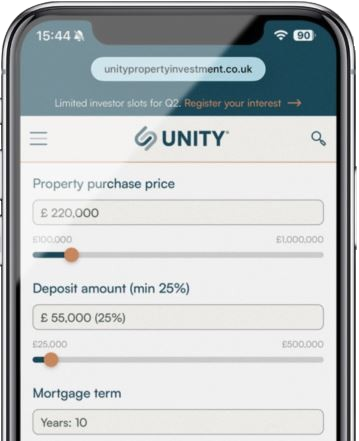
Buy to let investment and rental yield calculator
Common Reasons for Cash-Only Property Listings
Reason
Typical Issue
Can It Usually Be Fixed?
Mortgage Possible Later?
Frequently Asked Questions
What does cash buyers only mean?
Why are properties cash buyers only?
Can you get a mortgage later?
Are cash buyers only properties cheaper?
Do you still need a survey?
Can auction properties be mortgaged?
Can first-time investors buy them?
What makes a property unmortgageable?
Case study
- Property Price:£275k
- Mkt Value at purchase:£290k
- Day one equity:£14,500
- Yield:7.2%
- ROCE:28.6%
.avif)