.jpg)








When evaluating a buy-to-let opportunity, many investors focus primarily on a property's purchase price or its advertised rental yield. While these figures provide a useful snapshot of the local market, they do not answer the central question for your investment: how efficiently is the capital you have actually committed to a property generating a return?
This guide explains exactly what property ROI means, how to calculate it correctly, what costs must be included, and why understanding the return on your invested cash is a highly effective way to compare property investments and build a resilient portfolio.
Executive Summary
Property ROI measures the return an investment generates relative to the amount of capital you have actually committed. That makes it different from rental yield, which measures rental income against the property's price or value.
For buy-to-let investors, the distinction matters. Two identical properties can produce the same rental yield but very different returns on invested capital depending on the deposit, mortgage costs, acquisition costs and refurbishment expenditure.
ROI can therefore be a useful way to compare how efficiently your capital is being used. But it should never be viewed in isolation: leverage can increase ROI while also increasing financing risk, and a high projected return is only as reliable as the assumptions behind it.
Key Takeaways
- ROI measures return relative to the capital invested.
- Rental yield and ROI measure different things.
- Acquisition costs and refurbishment should be included in invested capital.
- Mortgage finance can increase ROI but also increases risk.
- A higher ROI does not automatically mean a better investment.
- Always compare properties using the same ROI methodology.
What Is ROI in Property Investment?
Calculating buy to let ROI evaluates how efficiently your money is working once it is tied up in an investment asset. It compares the net return generated by the property over a specific period to the total amount of cash initially deployed to acquire and prepare it.
A common mistake in property analysis is confusing the property's total market value with the investor's actual capital. The purchase price of a house tells you very little about the return generated on your personal funds.
Consider a £250,000 residential property. If purchased outright with cash, the capital deployed will exceed £250,000 once taxes and fees are added. If the same property is bought using a 75% loan-to-value (LTV) mortgage, the actual capital committed by the investor might fall below £90,000. Despite the physical asset generating the same rental income in both scenarios, the efficiency of the capital, or the property ROI, will be different.
By measuring return against the actual cash committed, investors can compare buy-to-let properties directly against other opportunities, such as stocks or savings accounts, using a level playing field.
How to Calculate ROI on a Rental Property
To calculate property ROI, you need to establish the relationship between the annual net return and the total capital committed. The calculation is straightforward:
Annual Net Return ÷ Total Cash Invested × 100 = ROI
In this guide, when we refer to annual property ROI, we primarily mean the annual net cash return generated relative to the investor's total cash invested. This is sometimes described as cash-on-cash return. Where capital growth is included, we refer to this separately as total return.
The usefulness of this calculation depends entirely on how strictly you define the "return" and the "cash invested". If you use gross rental income instead of net income, or forget to include purchase costs like Stamp Duty, your calculation will produce an artificially high and unhelpful figure.
The numerator must reflect your true net cash flow: gross rent minus all operating costs, management fees, maintenance allowances, and mortgage interest. The denominator must include every pound permanently tied up in the acquisition and setup of the property.
What Should Be Included in Your Property Investment?
When working out your total cash invested, the most important thing to remember is that your capital commitment extends far beyond just the deposit. It must include all the costs required to buy the property and bring it to a lettable standard.
The purchase price of a house tells you very little about the return generated on your personal funds.
The most successful investments are chosen by looking at yield, cash flow, ROI, capital growth, and risk together, rather than chasing a single metric in isolation.
This combined outlay is the denominator for calculating ROI. It is entirely separate from the ongoing day-to-day expenses that dictate your monthly profit. For a detailed breakdown of those ongoing expenses, you can read our guide to the costs of being a landlord.
Worked Example - Calculating Buy-to-Let ROI
Illustrative example. Actual costs and returns will vary.
To show how to calculate ROI on property in practice, let's look at an unleveraged (cash) purchase of a £250,000 property. This establishes a baseline for how capital relates to return.
Total Cash Invested (The Denominator):
- Purchase price: £250,000
- SDLT: £15,000
- Legal & conveyancing: £1,800
- Surveying fees: £600
- Initial compliance: £600
- Total cash invested: £268,000
Annual Return (The Numerator):
- Gross rent: £17,400 (£1,450 per month)
- Management fees: £2,088
- Landlord insurance: £362
- Maintenance provision: £950
- Ongoing compliance: £200
- Total annual costs: £3,600
- Annual net cash return: £13,800
The Calculation:£13,800 ÷ £268,000 × 100 = 5.15% ROI
In this scenario, the investor has committed £268,000 in cash. After accounting for all operational costs, the property generates £13,800 annually, resulting in a baseline cash ROI of 5.15%.
Property ROI With a Mortgage
Using a mortgage changes the ROI calculation because the investor is committing less of their own cash to the purchase.
When you use debt finance, often called leverage, the denominator in your property ROI formula shrinks significantly. Because a mortgage reduces the amount of the investor's own cash committed to the purchase, it can increase ROI if the additional financing costs do not outweigh the benefit of the smaller capital base.
However, borrowing money also increases your risk. While a mortgage can improve returns on your invested cash, the investment becomes exposed to interest-rate changes. Furthermore, leverage increases your downside risk; if property values fall, the percentage loss on your smaller equity stake is much larger.
Leverage only improves your investment when the property's return consistently exceeds the cost of borrowing.
Cash Purchase vs Mortgage - How ROI Changes
Illustrative example. Actual costs and returns will vary.
To demonstrate how financing changes capital efficiency, let's compare the cash purchase above with a mortgaged purchase of the exact same £250,000 property.
This scenario assumes a 75% LTV interest-only mortgage at a rate of 4.8%. This requires a £62,500 deposit and a £187,500 loan. We've added £1,500 for mortgage fees and increased legal fees slightly to £2,100.
This comparison highlights why yield and ROI are not the same thing. Both properties have the exact same price and generate the exact same gross rent, meaning their headline rental yield is identical.
The mortgaged investor achieves a slightly higher ROI (5.83% vs 5.15%) because they only had to commit £82,300 of their own money. However, this improvement in capital efficiency comes at a cost: the absolute annual cash flow falls from £13,800 to just £4,800, and the investor has taken on additional financing risk.
How Refurbishment and Value Creation Can Affect ROI
Illustrative example. Actual costs and returns will vary.
You can often improve the efficiency of your capital through targeted refurbishment. Upgrading an unmodernised or below market value property can simultaneously increase its rental income and potentially increase its capital value.
Consider a scenario where an investor buys a property for £215,000, spends £25,000 on refurbishments, and achieves a post-works valuation of £270,000.
- Capital invested: A 25% deposit requires £53,750. SDLT is £12,550. Legal, survey, and finance fees total £4,900. The refurbishment takes £25,000 in cash. The total cash invested is £96,200.
- Net return: The modernised property rents for £1,600 per month (£19,200 annually). Operating costs are £3,800, and the mortgage interest (on a £161,250 loan at 4.8%) is £7,740. This leaves a net cash flow of £7,660.
- ROI: (£7,660 ÷ £96,200) × 100 = 7.96%.
Following the refurbishment, the property generates a 7.96% annual cash ROI based on these assumptions. The higher post-works valuation also creates additional equity, although that equity is not included in the annual cash ROI calculation.
However, refurbishment does not automatically guarantee value creation. If you spend too much on a property in an area with a ceiling on rental prices, the extra cash you invest simply dilutes your ROI.
Cash-on-Cash Return vs ROI vs ROCE
Property investors use several terms to describe returns, often inconsistently. When comparing opportunities, it is essential to know exactly what a quoted percentage represents.

Portfolio projection tool

In standard buy-to-let analysis, cash-on-cash return and cash ROI are generally used to mean the exact same thing. However, you should always check whether an advertised ROI figure relies purely on actual rental income, or if it has been inflated by assuming future house price growth.
Return on Capital Employed (ROCE) is another term you may encounter, sometimes referred to specifically as property ROCE. While originating in corporate finance, in property it generally refers to the return generated relative to the total capital tied up in the investment. Because the exact methodology can vary between investors, you should always clarify how it is being calculated before comparing figures.
Rental Yield vs ROI - What's the Difference?
Rental yield is a property-level metric. It measures income against the property's total price, completely ignoring how the purchase was funded or what taxes were paid. ROI is an investor-level metric. It measures the net return specifically against the cash you have committed.
For example, a £200,000 property generating £12,000 in net rent (before financing) has a net rental yield of 6%.
If you use a mortgage and only commit £60,000 of your own capital (covering deposit and costs), you must deduct your financing costs to find your ROI. If your mortgage interest is £7,000 a year, your actual net cash return falls to £5,000. Your ROI is therefore £5,000 divided by your £60,000 invested capital, which equals 8.3%.
For a deeper dive into property-level income metrics, you can read our guide to rental yield.
Profit vs ROI - Why They Are Not the Same
Profit is a monetary amount, whereas ROI is a percentage.
A buy-to-let property might generate £5,000 in absolute annual profit. While positive cash flow is necessary to run a sustainable property business, that £5,000 means something different depending on how much cash you put in. If you invested £50,000, that profit represents a solid 10% ROI. If you invested £200,000, the same £5,000 profit represents a 2.5% ROI. The percentage therefore allows you to see how much return is being generated for every pound of capital committed.
To understand how to model income and expenses accurately, read our guide on calculating buy-to-let profit.
What Is a Good ROI on a Rental Property?
There is no single benchmark that dictates a "good" return on investment property. An acceptable return depends on several factors:
- Alternative returns: Investors should consider the return available from lower-risk alternatives such as savings or government bonds. Property normally involves greater illiquidity, management requirements and investment risk, so the expected return should be assessed in that context.
- Financing: Mortgaged properties generally need higher returns to justify the added risk of fluctuating interest rates.
- Management intensity: A single-let property with a long-term tenant may justify a different return expectation from an HMO requiring more intensive management, higher tenant turnover and additional compliance.
- Capital growth potential: Properties in prime locations might offer lower rental ROIs but better historical capital growth. High-yielding areas might offer great immediate cash flow but limited long-term appreciation.
A good rental property return on investment is one that aligns with your objectives and provides an appropriate return for the capital committed, financing structure, management required and risks being taken.
Average Return on Property Investment in the UK
It is difficult to pinpoint a meaningful "average" property ROI for the UK. Returns vary significantly based on financing, location, and the specific strategy being used.
To understand average performance, it is helpful to look at the two components of investment property returns: capital growth and rental income. Recent bulletin data on private rent and house prices from the Office for National Statistics shows that in the 12 months to March 2026, average UK house prices remained flat at 0.0% growth. However, average private rents across the UK grew by 3.5% in the 12 months to April 2026.
With national house price growth subdued over this period, rental income has represented a more important component of returns for many investors. A cash buyer will experience one type of return, while an investor using leverage to fund a refurbishment in a high-demand rental market will experience a very different one. This is why an investor's specific ROI is a much more useful metric than a national average.
Why a High Property ROI Does Not Necessarily Mean a Good Investment
A high ROI is attractive, but it should not be the only reason you buy a property. If a calculation shows an unusually high return, you need to understand what risks are attached.
A high calculated ROI can sometimes result from heavy leverage. Using a very large mortgage minimises the cash you invest, which pushes your ROI percentage up. But it also means a slight rise in interest rates, or a few void months, can quickly turn a profitable property into a loss-making one.
Similarly, properties can show high returns if they have suffered from deferred maintenance. If previous owners avoided spending money on upkeep, your initial ROI calculation might look excellent, but you will soon have to spend thousands on necessary repairs.
Finally, an ROI is only as reliable as the numbers used to calculate it. If a model relies on optimistic rental prices, no void periods, or ignores management fees, the projected return will be entirely unrealistic.
Cash Purchase vs Mortgaged Purchase ROI Comparison
Metric
Cash Purchase
Mortgaged Purchase
.png)
How to Compare the ROI of Two Investment Properties
When choosing between properties, you need a consistent framework. The most common mistake investors make is comparing a cash purchase against a leveraged purchase without accounting for the different risk profiles.
Ensure you use the exact same methodology for both properties and evaluate them against consistent investment criteria. Factor in realistic maintenance provisions, void periods, and management fees across the board, even if you plan to self-manage one of them.
Compare the actual cash required, the net cash return, and the risk you are taking on. If one property offers an 8% ROI with a large mortgage and the other offers a 6% ROI with no mortgage, you need to decide if that extra 2% is worth the financing risk.
-v1.avif)
Get investor insights and early access to opportunities
Join our investor briefings for structured insights, market updates, and priority access to new deals.

No spam, just timely insights for investors We respect your privacy and never sell your data
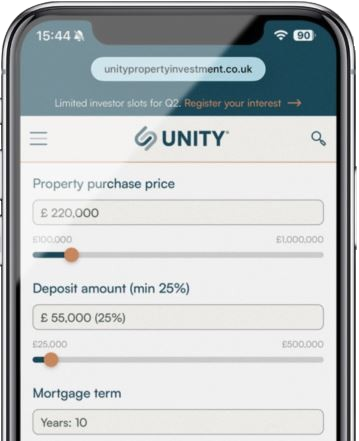
Buy to let investment and rental yield calculator
Calculate Your Buy-to-Let Return
Calculating ROI manually can be prone to error, particularly when factoring in changing mortgage rates and complex Stamp Duty thresholds.
To model these scenarios accurately, you can use our buy-to-let calculator. This tool allows you to input purchase prices, loan-to-value ratios, financing costs, and specific operating expenses to get a clear forecast of your net return on invested capital.
If you are looking to build a larger portfolio and want to understand how reinvesting returns can compound over time, our portfolio projection tool can help you model those long-term outcomes.
Final Thoughts
Property ROI is ultimately about what your personal capital is producing, not simply what percentage of a property's value is received in rent.
While yield gives you a quick snapshot of a local market, and profit tells you if a property pays for itself month-to-month, ROI shows you how efficiently your cash is working. By carefully tracking everything that counts as invested capital, including taxes, legal fees, and refurbishment costs, and understanding how a mortgage impacts your returns, you can evaluate opportunities much more accurately.
The most successful investments are chosen by looking at yield, cash flow, ROI, capital growth, and risk together, rather than chasing a single metric in isolation.
Costs Included in Total Cash Invested
Capital Component
Description
Common Property Return Metrics Explained
Metric
What it tells you
Frequently Asked Questions
What is ROI on a rental property?
How do you calculate ROI on a rental property?
What is a good ROI on a buy-to-let property?
Is ROI the same as rental yield?
What is the difference between ROI and cash-on-cash return?
Does a mortgage increase property ROI?
Case study
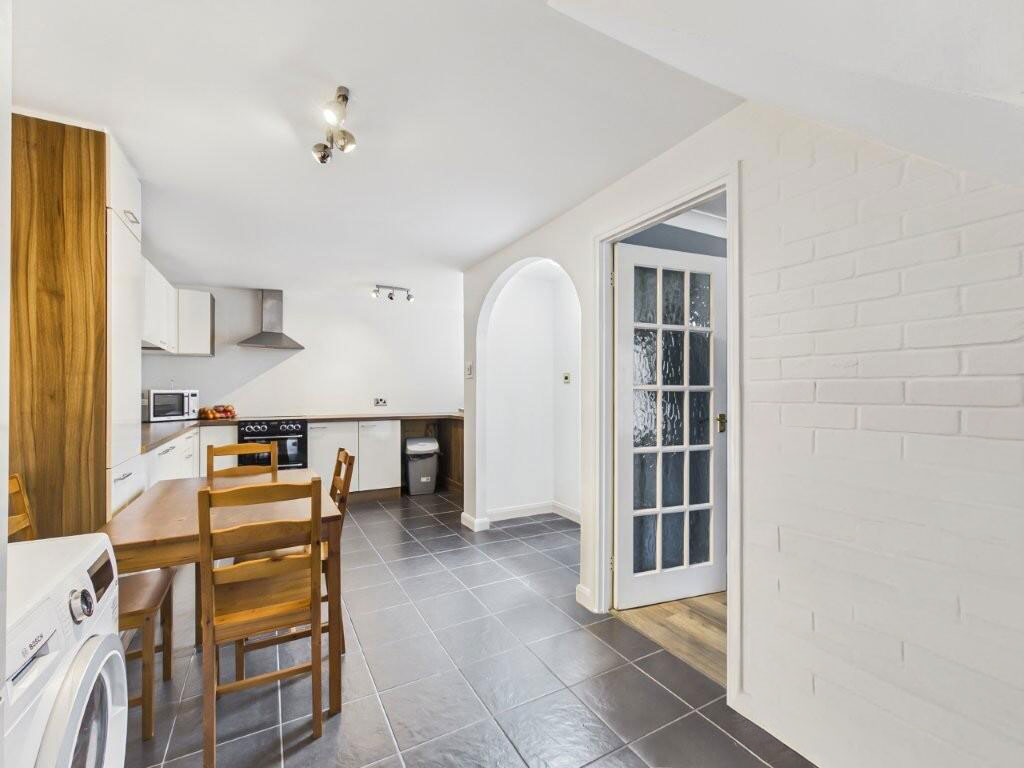
- Property Price:£275k
- Mkt Value at purchase:£290k
- Day one equity:£14,500
- Yield:7.2%
- ROCE:28.6%
.avif)