.jpg)






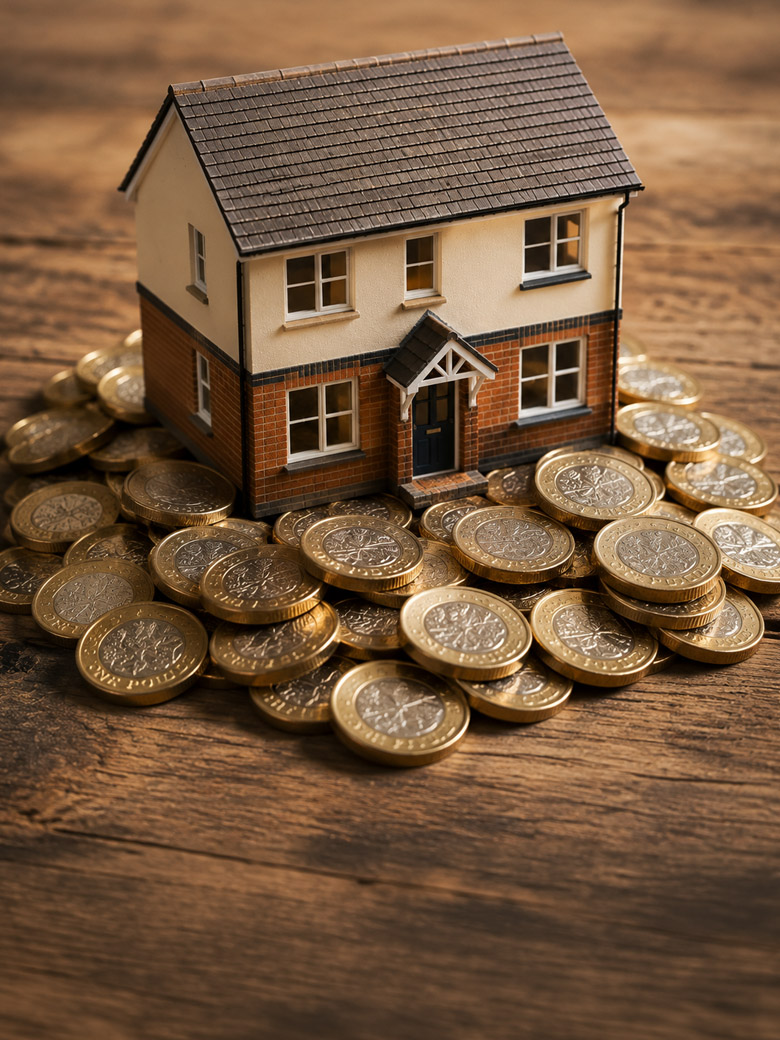

If you've accumulated significant savings, perhaps through selling a business, an inheritance, a property sale, or years of investing, you may be wondering whether buying a house with cash is the smartest financial decision.
Many investors sit with this capital and ask themselves: "Am I making a mistake?" Some feel uncomfortable taking on debt, even when it may improve long-term returns. Others value the peace of mind that comes from owning a property outright. Neither approach is universally right, the best choice depends on your objectives, income requirements, and tolerance for risk.
While purchasing outright offers certainty and avoids mortgage interest, it also ties up a large amount of capital that could potentially be used elsewhere. For individuals actively evaluating the best way to invest £100k or more, the psychological appeal of owning a tangible asset without a mortgage is undeniably strong, but it must be weighed against your broader wealth-building goals.
This guide starts with a general explanation of what it means to be a cash buyer. From there, we transition specifically into how this applies to property investors, exploring how cash compares to leverage, and outlining the key factors UK property investors should consider before deploying their capital.
Executive Summary
For property investors with significant liquid capital, deciding whether to buy a house with cash or use a mortgage is a foundational strategic choice. This report examines the mechanics, advantages, and drawbacks of purchasing property outright in the UK market.
- The Cash Advantage: Cash buyers benefit from significantly faster completion times, immunity to fluctuating mortgage interest rates, and the unique ability to purchase distressed or "unmortgageable" properties. They also command stronger negotiating power, frequently securing sizable discounts compared to mortgaged buyers.
- The Leverage Advantage: While cash offers peace of mind and maximum immediate monthly cash flow, it severely limits long-term wealth accumulation and traps capital in an illiquid asset. Using a mortgage allows investors to spread their capital across multiple properties, diversifying geographic risk and mathematically magnifying long-term returns through capital appreciation.
- For most investors: Buying with cash is typically optimal for retirees seeking stable, debt-free income, highly risk-averse individuals, or investors specifically targeting unmortgageable auction properties. Conversely, investors focused on aggressively scaling a portfolio and maximizing their Return on Equity (ROE) over a multi-year horizon should generally prioritize sensible leverage.
Buying a House with Cash vs Buying a Home to Live In
While this guide focuses heavily on buying an investment property with cash, the core mechanics apply equally to owner-occupiers. If you are buying a home to live in, paying cash still offers you a stronger negotiating position, eliminates the risk of mortgage down-valuations, and provides a swift, chain-free transaction.
However, the financial goals are entirely different. For an owner-occupier, the primary driver is often emotional security, stability, and owning a family home outright without the pressure of monthly mortgage payments. For property investors, the decision is strictly mathematical. An investor must weigh the immediate cash flow benefits of buying outright against the opportunity cost of not using leverage to scale a larger portfolio. This article evaluates the decision through that investor lens.
What Does Buying a House with Cash Mean?
Buying a house with cash means purchasing a property outright using your own liquid funds, without relying on a mortgage, bridging loan, or any other type of borrowing.
Because there is no lender involved, the transaction is entirely between you and the seller. However, the legal transfer of ownership must still be processed correctly.
The standard 7-step process for a cash house purchase typically looks like this:
- Make an offer: You submit your offer, explicitly stating you are a cash buyer.
- Offer accepted: The seller accepts, often favouring your bid over mortgaged buyers.
- Show proof of funds: You provide bank statements to the estate agent and solicitors to prove the liquid cash is readily available, passing standard Anti-Money Laundering (AML) checks.
- Instruct a solicitor: A conveyancer is hired to handle the legal transfer.
- Searches and surveys: While optional for cash buyers, it is highly recommended to conduct local authority searches and property surveys.
- Exchange of contracts: You pay the deposit (usually 10%), making the transaction legally binding.
- Completion: The remaining balance is transferred, you receive the keys, and the property undergoes official title deed registration via HM Land Registry.
Common Myths About Buying with Cash
- ❌ Cash buyers don't need solicitors: False. You still need a qualified conveyancer to handle the legal transfer of title deeds and conduct searches.
- ❌ Cash buyers don't pay Stamp Duty: False. Cash buyers are still subject to standard Stamp Duty Land Tax (SDLT) rates, including the 3% surcharge for additional properties.
- ❌ Cash buyers never need surveys: False. While no lender is forcing you to get a survey, buying without one leaves you fully liable for hidden structural defects.
- ❌ Cash buyers automatically get huge discounts: False. While you have stronger negotiating power, a seller will not automatically accept a 20% discount just because you have cash.
Buying a House with Cash vs Buying a Home to Live In
It is important to note that this article focuses primarily on buying investment property with cash.
If you are an owner-occupier looking to buy your forever home outright, the psychological benefits of living completely debt-free often outweigh the mathematical benefits of leveraging your money. Knowing your family home is secure, regardless of what happens to the economy, offers immense peace of mind.
However, if you are treating property as a vehicle for wealth generation, the rules are fundamentally different. Investors must weigh the security of a cash purchase against the mathematical advantage of using leverage to build a larger portfolio.
Advantages of Buying Property with Cash
For those wondering what the best way to invest £100k or more is, buying property outright carries several distinct advantages.
- Faster completion: Without a mortgage underwriter reviewing the application, a cash purchase can often complete in a matter of weeks rather than months.
- No mortgage interest: 100% of the rental income (minus standard expenses and tax) goes directly into your pocket, maximising your monthly cash flow.
- Immunity to interest rates: Your investment is completely insulated from fluctuations in the Bank of England base rate.
- Lower buying costs: You avoid mortgage arrangement fees, valuation fees, and broker fees.
- Attractive at auctions: Traditional auctions require a 10% deposit on the day and full completion within 28 days, a timeline that is incredibly difficult to meet with a standard mortgage, making cash the primary currency of auction rooms.
Identifying such assets requires deep market knowledge, highlighting the importance of understanding how we source properties to locate high-yield, below-market-value opportunities.
A £500,000 cash purchase doesn't just represent one investment, it also represents the decision not to diversify.
Ultimately, buying a house with cash isn't simply a question of whether you can afford to do it. The more important question is whether it represents the most effective use of your capital
Can You Negotiate a Better Price When Buying with Cash?
One of the most common reasons investors want to buy outright is the belief that cash unlocks major discounts. While it doesn't guarantee a bargain, being a cash buyer does give you immense leverage at the negotiating table.
Sellers often accept lower offers from cash buyers because of the certainty it provides. A significant percentage of UK property sales fall through before completion, most commonly due to broken property chains or lenders down-valuing the home.
When you buy a house with cash:
- You are chain-free.
- There is no risk of a mortgage being declined at the last minute.
- There is no risk of a lender demanding independent property valuations from the Royal Institution of Chartered Surveyors (RICS) and refusing to lend against the agreed purchase price.
If a seller needs a fast, guaranteed exit, perhaps due to a divorce, inheritance, or relocation, they will frequently accept a cash offer slightly below asking price over a higher offer from a buyer relying on a mortgage.
Disadvantages of Buying Property with Cash
Despite the security and negotiating power it provides, buying a house with cash carries significant structural limitations:
- Tying Up Capital (Illiquidity): Real estate is inherently illiquid. Sinking a large sum of capital into a single property creates a highly concentrated portfolio. If an investor requires rapid access to liquid funds for emergencies, extracting capital from an unencumbered property is notoriously slow. This is a critical factor when calculating how much money you need to invest in property, as locking away your entire cash reserve leaves no buffer for unexpected costs or alternative ventures.
- Legislative Capital Risks: The Renters' Rights Act 2025 mandates that privately rented properties must achieve an Energy Performance Certificate (EPC) rating of at least a 'C' by 2030. If an investor has tied up all their capital, they may lack the necessary liquidity to fund mandatory retrofitting or insulation upgrades.
- Opportunity Cost: Deploying hundreds of thousands of pounds into a single purchase incurs a severe opportunity cost. A £500,000 cash purchase doesn't just represent one investment, it also represents the decision not to diversify across multiple properties, regions, or asset classes. That opportunity cost is one of the most important considerations when deciding whether to buy outright. Distributing that cash across diversified property investment funds or utilising it as leverage across multiple assets may yield a significantly higher blended return.
- The "6-Month Rule" Restriction: Investors utilising the Buy, Refurbish, Refinance, Repeat (BRRR) strategy are aggressively hindered by the "6-month rule." Most mainstream lenders refuse to offer a mortgage on a property until the owner has been registered at the HM Land Registry for a minimum of six months. This forces the investor’s cash to remain trapped in the asset for half a year.
- Concentrated Geographic Risk: If an investor buys one property in a single post-code in cash, their entire real estate exposure is subject to the micro-economic fluctuations of that specific street.
Buying Property with Cash vs Using a Mortgage (Leverage)
The decision to buy a property ou
tright or use a mortgage sits at the very heart of property investment strategy. To understand why many wealthy investors deliberately choose to take on debt, we need to look at the power of leverage.
Leverage simply means using borrowed money to increase the potential return of an investment.
The Flow of Capital
Cash Purchase Strategy
↓
Own 1 Property Outright
↓
Receive 100% Rental Income
+
Capital Growth on 1 Property
=
Steady, Low-Risk Long-Term Return
Leveraged (Mortgage) Strategy
↓
Buy 3 Properties (using 25% deposits)
↓
Receive 3x Rental Income Streams (minus mortgage costs)
+
Capital Growth on 3 Properties
=
Accelerated Long-Term Wealth Generation
The Story of Sarah: Cash vs Leverage
Let's look at a practical scenario. Sarah has £250,000 in cash. She wants to invest in property and faces two choices.
Option A: Buy one £230,000 property outright.
Sarah uses £230,000 to buy a house in cash, keeping £20,000 aside for Stamp Duty Land Tax (SDLT) and legal fees. She owns the property 100%. She has no mortgage payments, meaning all the rental income flows directly into her bank account. She sleeps easily at night knowing she has no debt. However, her entire £250,000 is tied up in a single asset on a single street. If that property sits empty, her rental income instantly drops to zero.
Option B: Buy three £230,000 properties using mortgages.
Instead, Sarah uses her £250,000 to put down 25% deposits (£57,500 each) on three identical £230,000 properties, covering the SDLT and fees for all three. She takes out a 75% Loan-to-Value (LTV) Buy-to-Let mortgage on each.
Now, Sarah controls £690,000 worth of real estate. If the market grows by 3% a year, she earns capital appreciation on £690,000, not £230,000. She also has three separate rental income streams. If one property becomes vacant, the other two still generate income, significantly reducing her void risk. However, she must now manage three properties, pay mortgage interest, and navigate interest rate fluctuations.
Neither strategy is inherently better. Sarah's decision depends on whether her priority is maximum monthly income, maximum long-term wealth, lower risk, or greater liquidity.
The Long-Term Mathematics
To see how this plays out over a decade, we can model a baseline scenario wherein an investor possesses £215,000 in liquid capital targeting £200,000 properties generating a 7.2% gross yield. Both scenarios account for operating expenses, management, and the standard SDLT additional property surcharges.
Is Buying Investment Property with Cash Better?
Despite the mathematical superiority of leverage in long-term wealth generation, there are distinct investor profiles where buying investment property with cash is objectively the superior strategy.
For investors in the drawdown or retirement phase, maximum capital appreciation is often secondary to stable, predictable income. An unencumbered property generates higher monthly cash flow per unit without the stress of managing mortgage renewals or navigating fluctuating Interest Coverage Ratios (ICRs) imposed by lenders. For individuals seeking a reliable monthly income from investing £100k, cash purchases provide bond-like stability.
In high-interest-rate environments where borrowing costs exceed the gross yield of a property (negative leverage), using a mortgage actively erodes profitability. Deploying cash protects the yield. Cash is also a prerequisite for acquiring distressed properties at auction, where traditional financing is impossible to secure within the stringent 28-day completion windows.
Conversely, for investors in the accumulation phase, leverage remains the defining mechanism of real estate investment. Utilising debt allows the investor to spread capital across multiple geographic investment areas. While London may offer strong capital growth, Northern cities frequently offer superior yields. Leverage allows an investor to blend these markets.
Are Cash Buyers Better?
From the perspective of a property seller or an estate agent, cash buyers are universally considered superior to mortgaged buyers.
The UK housing market is highly vulnerable to collapse between the agreement of a sale and the exchange of contracts. Market data from Q1 2026 revealed that the national fall-through rate on agreed sales sat at 23.7%, meaning nearly one in four transactions failed before completion. In high-value markets like Inner London, the collapse rate climbed as high as 27%.
Cash buyers are entirely insulated from the primary catalyst of these fall-throughs: mortgage finance failure. Because a cash buyer does not rely on a bank's underwriter, they present the seller with unparalleled transaction certainty. Consequently, estate agents actively prioritise a cash buyer property offer.
Why Do Sellers Prefer Cash Buyers?
When analyzing why do sellers prefer cash buyers, the reasoning centres entirely on the systematic elimination of friction points.
The foremost risk eliminated is the lender valuation, commonly referred to as a "down-valuation." When a buyer requires a mortgage, the lender dispatches a surveyor. In a softening market, surveyors frequently declare the property is worth less than the agreed purchase price. This forces the buyer to bridge the equity gap or demand a price reduction, which frequently causes the sale to collapse. Cash buyers bypass this institutional hurdle.
Additionally, cash buyers facilitate chain-free transactions. Mortgage lenders impose strict conditions before releasing funds, demanding bespoke indemnity insurances and raising exhaustive legal inquiries regarding ground rents or leasehold defects. Cash buyers can instruct their solicitors to take a pragmatic, commercial view on minor legal defects, vastly accelerating the completion timeline.
Should You Buy Property with Cash?
Deciding whether to execute a cash purchase property strategy requires aligning the mathematical realities of the market with your personal risk tolerance, liquidity requirements, and timeline.
For those navigating this complex decision, engaging with professional property investment consultants can provide clarity on whether liquidating a portfolio to buy outright aligns with long-term goals, regardless of whether you are exploring the best way to invest £50k or managing a large fund.

Portfolio projection tool

The Decision Framework
IF Retiring
↓
Probably cash: You prioritise stable, debt-free income without the stress of mortgage renewals or interest rate shocks.
IF Building wealth
↓
Probably leverage: You want to maximise capital growth, scale your portfolio rapidly, and benefit from the multiplier effect of holding multiple appreciating assets.
IF Want maximum income right now
↓
Cash: You have no mortgage interest cutting into your net monthly profits, ensuring maximum immediate cash flow per property.
IF Want maximum net worth in 10 years
↓
Leverage: Controlling a larger asset base means standard market growth compounds into significantly higher overall wealth generation.
IF Buying distressed or unmortgageable property
↓
Cash: Lenders will not finance properties with structural defects or short leases, making cash the only viable entry mechanism.
Comparison Table: Buying a Property Cash vs Mortgage
When evaluating whether to buy a house with cash, there is no universal, one-size-fits-all answer. The decision hinges entirely on the strategic objective behind the capital deployment and the specific life stage of the investor.
Buying property outright suits conservative investors, retirees seeking robust income streams, and proactive auction-hunters targeting unmortgageable assets. It provides absolute immunity from debt markets, shields the investor from interest rate volatility, and offers the highest degree of monthly cash flow security.
Conversely, for those intent on long-term wealth generation, utilizing sensible leverage allows for faster portfolio growth, geographic diversification, and significantly higher returns on invested equity. By locking all available capital into a single asset, cash investors forfeit the multiplier effect of leverage and expose themselves to severe liquidity constraints, a notable risk given the incoming regulatory demands of the Renters' Rights Act 2025.
Whether choosing to purchase outright or build a leveraged portfolio, ensuring professional property management is in place is critical to safeguarding the asset's yield and navigating evolving legislative frameworks.
Ultimately, buying a house with cash isn't simply a question of whether you can afford to do it. The more important question is whether it represents the most effective use of your capital. For some investors, debt-free ownership is the right choice. For others, sensible leverage may create significantly greater long-term wealth. The right decision depends on your objectives, not on the availability of cash.
To explore vetted investment opportunities tailored to your capital position, investors can book a call with the advisory team at Unity Property Investment.
10-Year Wealth Generation
10-Year Wealth Generation
Option A: Cash Purchase (1 Property)
Option B: Leveraged Portfolio (3 Properties)
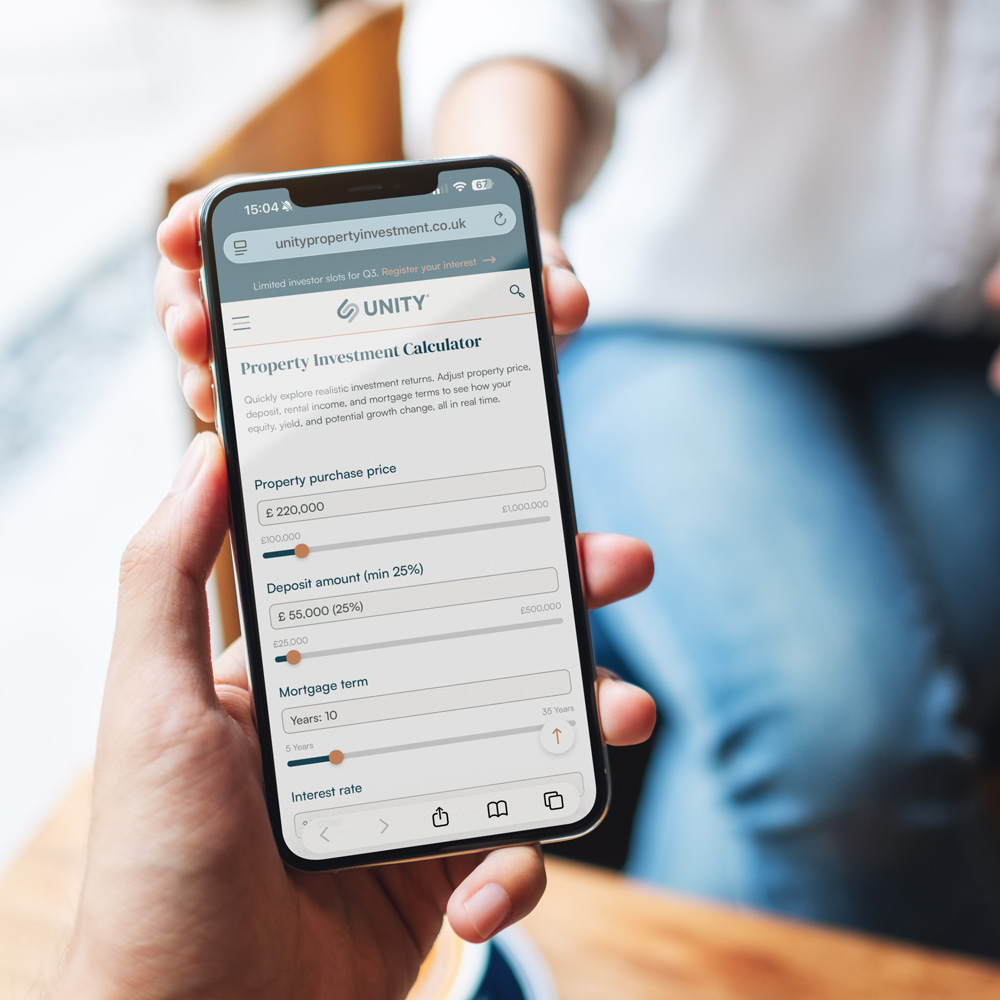
Over a decade, the leveraged investor generates nearly double the total wealth, despite starting with a slightly lower initial capital outlay. Investors can model their own bespoke scenarios by utilising our buy-to-let calculator to stress-test rental yields, or our portfolio projection tool to visualise how leverage alters long-term wealth accumulation.
.png)
-v1.avif)
Get investor insights and early access to opportunities
Join our investor briefings for structured insights, market updates, and priority access to new deals.

No spam, just timely insights for investors We respect your privacy and never sell your data
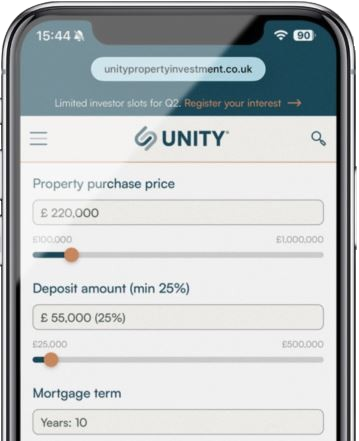
Buy to let investment and rental yield calculator
First-Year Comparison
First-Year Comparison
Option A: Cash Purchase (1 Property)
Option B: Leveraged Portfolio (3 Properties)
While the immediate annual net cash flow between the two options is virtually identical, the true power of leverage is revealed over time through capital appreciation. Assuming a localised capital growth rate of 3% per annum over a 10-year horizon, the mathematical divergence becomes highly pronounced.
Strategic Factor Comparison
Strategic Factor
Buying Property with Cash
Buying with a Mortgage (Leverage)
Frequently Asked Questions
Can you negotiate more if you're a cash buyer?
Do cash buyers pay less?
Can you buy a buy-to-let property with cash?
Is it cheaper to buy with cash?
Can a cash buyer complete in seven days?
Can you buy a house with cash?
Are cash buyers better?
Why do sellers prefer cash buyers?
Is it better to buy property outright?
Case study
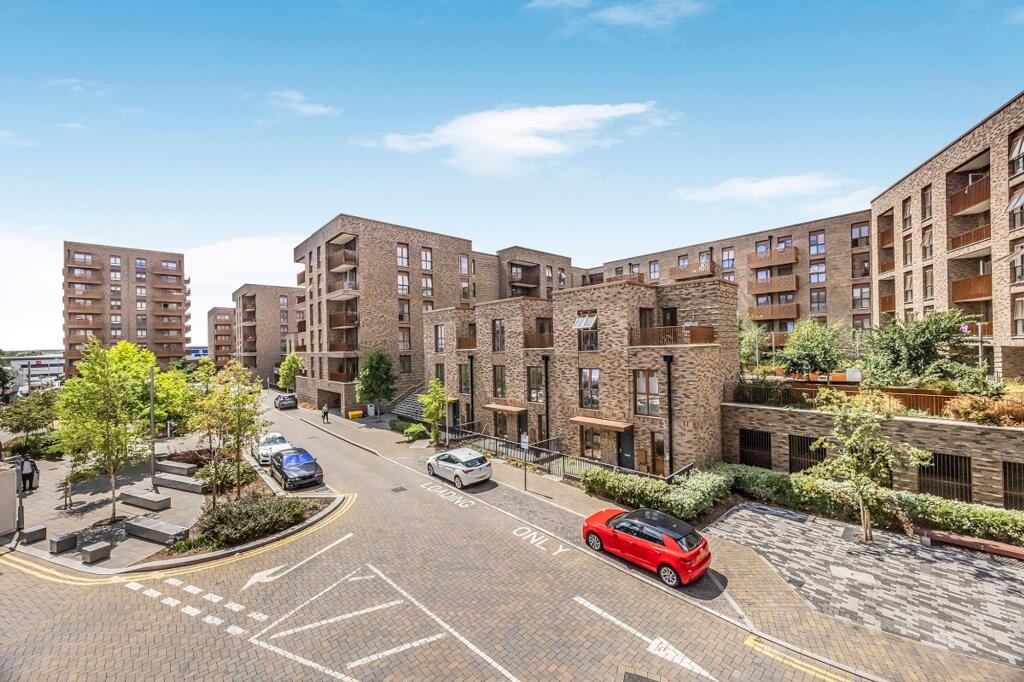
- Property Price:£300k
- Mkt Value at purchase:£320k
- Day one equity:£20,000
- Yield:6.8%
- ROCE:30.1%
.avif)