
.jpg)









Scaling a buy-to-let portfolio requires more than just identifying the right properties; it demands a highly strategic approach to property finance. As you move beyond owning one or two rental properties, borrowing criteria rapidly change. Lenders begin to assess you not just as a private individual, but as a commercial property business.
This shift unlocks access to professional landlord mortgages - specialist financial products designed to support complex ownership structures, multiple yielding assets, and long-term wealth creation. However, securing the right funding at this level requires navigating strict affordability rules, aggregate portfolio stress testing, and the increasingly popular use of limited company structures.
This guide explains exactly how professional landlord mortgages work, how lenders evaluate portfolio investors, and the steps you can take to secure finance that supports sustainable, long-term portfolio growth.
Executive Summary
If you're building a property portfolio, your mortgage strategy becomes just as important as choosing the right investment. Professional landlord mortgages are designed specifically for investors managing multiple rental properties. Unlike standard buy-to-let mortgages, these products take into account the size, performance and structure of your wider property portfolio. Following changes to tax relief and stricter rules from the Bank of England, lenders now assess property investors as commercial businesses.
Today's professional landlords face stricter affordability rules, greater regulatory scrutiny and an increasing use of limited company ownership. With billions of pounds in historical five-year fixed-rate mortgages maturing soon, portfolio landlords face an important refinance window.
Navigating a professional landlord mortgage successfully requires an understanding of portfolio loan-to-value (LTV) limits, tax mitigation strategies, and upcoming changes to capital gains tax reliefs. This complete guide details exact eligibility criteria, corporate borrowing dynamics, and the strategies essential for active property investors.
Key Takeaways
- Portfolio Landlord Status: The PRA classifies anyone with four or more mortgaged rental properties as a portfolio landlord. This immediately triggers mandatory background portfolio checks.
- Corporate Ownership: Many professional landlords now choose limited company landlord mortgages (SPVs) because they allow full mortgage interest deductibility and lower Corporation Tax rates.
- Affordability Metrics: Mortgage lenders apply different Interest Coverage Ratios (ICRs). SPVs usually benefit from a 125% threshold, whereas personal properties face tests up to 145%.
- Underwriting Requirements: Securing a landlords mortgage at this level requires detailed documentation, including cash flow forecasts and business plans.
- Tax Legislation: Upcoming changes to Section 162 Incorporation Relief will make moving personally held portfolios into a company structure much harder and subject to HMRC audits.
- Top-Slicing: Investors facing rental shortfalls against lender stress tests can sometimes use "top-slicing". This allows them to bridge the gap using their personal disposable income.
What Is a Professional Landlord Mortgage?
A professional landlord mortgage is a specialised property finance product designed for investors who treat property investment as a business. Standard buy-to-let mortgages generally cater to accidental landlords or individuals holding a single supplementary property. In contrast, professional products support scalability, portfolio diversification, and complex corporate ownership structures.
The purpose of these financial products is to provide capital to investors managing multiple yielding assets. They accommodate arrangements that high-street algorithms often reject. This includes financing multi-unit freehold blocks (MUFBs), houses in multiple occupation (HMOs), semi-commercial properties, and portfolios held across multiple Special Purpose Vehicles (SPVs).
To understand the difference in modern lending, it helps to contrast these products with standard residential equivalents. A detailed comparison in our buy-to-let versus residential mortgage guide reveals that residential lending revolves around personal income. Professional buy-to-let lending focuses heavily on the property asset's ability to service its own debt, the overall strength of your background portfolio, and your overarching investment strategy.
In short, a standard mortgage asks if you can afford the loan from your salary. A professional landlord mortgage asks if your property business can survive economic changes, void periods, and interest rate spikes.

Who Qualifies?
Qualification is not based on simply calling yourself a professional, nor does property investment need to be your only income source. Qualification depends on regulatory classifications set by the Bank of England and individual lender criteria.
The Portfolio Landlord Classification
The PRA established the rules for portfolio landlords through Supervisory Statement SS13/16. Under these rules, a borrower is classified as a portfolio landlord when they own four or more mortgaged buy-to-let properties. This count includes all mortgaged rental assets, whether they are held in a personal name, jointly with a partner, or within a limited company.
Once you reach four properties, lenders cannot assess a new mortgage application in isolation. They must evaluate the systemic risk of the entire portfolio. For more context on this definition, understanding what is a portfolio landlord is essential for investors transitioning into a full-time enterprise. Unencumbered properties, those owned outright without mortgage debt generally do not count toward the four-property threshold, though conservative lenders may still review them.
Landlord Experience Requirements
Most lenders offering professional landlord mortgages want to see a track record of property management. Typically, you need 12 to 24 months of active experience as a landlord before a bank will grant access to complex portfolio products, HMO finance, or multi-unit block lending. Underwriters want assurance that you understand tenant management, property maintenance, and statutory compliance.
However, the market is not closed to well-capitalised beginners. It is possible to secure limited company landlord mortgages without deep experience if the property is a standard residential dwelling and the financials are strong. Our guide on whether first-time buyers can get a buy-to-let mortgage, outlines the restrictive deposit and income criteria applied to inexperienced investors.
Individuals who have acquired rental properties by chance, such as inheriting a home or renting out a previous primary residence are usually serviced by standard consumer products. The rules governing these situations are detailed in accidental landlord mortgages explained.
Professional Landlord Mortgage Criteria
Securing a landlords mortgage at a portfolio level requires passing affordability tests, corporate compliance checks, and wider portfolio assessments. Lenders are legally required to ensure your investment strategy is resilient to economic shocks.
Deposits and Loan-to-Value (LTV) Ratios
Professional landlords need accessible cash reserves to expand. The standard maximum Loan-to-Value (LTV) for a professional landlord mortgage is 75%. While a few specialist lenders occasionally offer 80% LTV products, these facilities attract premium interest rates and usually require the background portfolio to hold significant unencumbered equity.
Our breakdown of buy-to-let mortgage deposit requirements shows that investors must maintain a minimum 25% cash equity across new acquisitions. Furthermore, lenders assess the overall gearing of the background portfolio. The aggregate LTV across all properties combined must usually not exceed 75%.
Rental Stress Testing and Interest Coverage Ratios (ICR)
The Interest Coverage Ratio (ICR) is the most critical metric dictating borrowing capacity. Lenders require the property's projected gross monthly rental income to comfortably exceed the monthly mortgage interest payment. This is calculated using a theoretical "stress rate" to protect against future interest rate volatility.
The ICR thresholds heavily favour corporate structures over personal ownership due to varying tax liabilities.
In short, a standard mortgage asks if you can afford the loan from your salary. A professional landlord mortgage asks if your property business can survive economic changes, void periods, and interest rate spikes.
Selecting the optimal professional landlord mortgage requires a holistic approach that extends beyond securing the lowest headline interest rate. The best landlord mortgages are those that perfectly complement your overarching investment strategy.
The stress rate applied usually sits between 5.0% and 5.5%, or the product pay rate plus a protective margin. If you borrow £200,000 via a limited company on a 5-year fixed rate, the lender might apply a stress rate of 5.5%. The annual interest at 5.5% is £11,000. Applying the SPV ICR threshold of 125%, the property must generate a minimum of £13,750 in gross annual rent (£11,000 x 1.25). You can model these calculations using our buy to let affordibility stress testing guide.
Portfolio Underwriting Requirements
Lending to a portfolio landlord requires a thorough audit of your property business. Lenders routinely request the following documentation before offering a professional landlord mortgage:
- Comprehensive Schedule of Properties: A spreadsheet detailing every property owned, including market valuations, outstanding mortgage balances, lender details, and rental income.
- Strategic Business Plan: A document outlining your long-term objectives, target yields, acquisition strategy, and contingency planning.
- Cash Flow Forecasts: Projections of future portfolio income and expenditure.
- Statement of Assets and Liabilities: A view of your global net worth, detailing tax liabilities and cash reserves.
Graphic Suggestion: Typical lender assessment process. A flowchart diagram detailing the underwriting journey of a portfolio landlord application, moving from the initial submission of the property schedule, through background stress testing, to final credit sanction.
Personal Guarantees (PGs) and Credit History
While limited companies shield investors from personal liability in standard operations, mortgage banks require strict Personal Guarantees (PGs) from company directors. A PG makes the director personally liable should the SPV default on the mortgage agreement.
Consequently, your personal credit history remains critical. Lenders will conduct credit searches to ensure there are no recent defaults or County Court Judgments (CCJs).
How Much Can You Borrow on a Professional Landlord Mortgage?
When assessing borrowing capacity for a professional landlord mortgage, lenders look far beyond standard affordability metrics. Securing the best landlord mortgages requires an understanding of how your overall portfolio health influences a lender's decision. For a detailed breakdown of borrowing limits, you can read our guide on how much you can borrow on a buy-to-let mortgage.
Maximum LTV and Portfolio Size
For portfolio applications, the maximum Loan-to-Value (LTV) generally sits at 75%, though select lenders may offer up to 80% under strict conditions. Crucially, lenders evaluate the aggregate LTV of your entire background portfolio, meaning that highly leveraged existing properties can sometimes restrict new borrowing. There is technically no limit to portfolio size for many specialist lenders, providing the aggregate risk remains within their threshold.
Rental Income and Stress Testing
Borrowing capacity is primarily dictated by the Interest Coverage Ratio (ICR). Lenders apply a stress test to ensure the property’s rental income can comfortably cover mortgage interest payments, even if rates rise. Stress rates are often set around 5.5% or the product pay rate plus a 2% margin.
For limited company landlord mortgages, lenders typically require the rental income to cover 125% of the stressed interest. However, properties held in a personal name by higher-rate taxpayers face stricter ICRs, often requiring 145% coverage to account for heavier tax burdens.
Top-Slicing
If the rental income fails the strict ICR stress test, some lenders offer 'top-slicing'. This mechanism allows investors to use their verified personal disposable income, often requiring a minimum baseline salary of £40,000 to £50,000 to bridge the shortfall and secure the required loan amount. This is particularly useful for high-growth areas where rental yields are lower but capital appreciation is strong.
Limited Company Landlord Mortgages
The use of corporate structures has become a defining characteristic of professional landlords. The implementation of Section 24 of the Finance (No. 2) Act 2015 permanently altered property taxation. By preventing private landlords from deducting mortgage interest costs from their rental income before calculating tax, personal-name property investment became far less viable for higher-rate taxpayers.
The Rise of the Special Purpose Vehicle (SPV)
To mitigate these personal tax rates, limited company landlord mortgages are now a popular choice. Many investors choose to purchase property through a Special Purpose Vehicle (SPV). An SPV is a limited company established solely to purchase and operate real estate. It must be registered with specific Standard Industrial Classification (SIC) codes, such as 68100 or 68209.
Many lenders prefer SPVs over active trading companies because SPVs carry no operational debt or staff payroll liabilities. This presents a clean risk profile, allowing underwriters to process applications efficiently. Our limited company buy-to-let guide highlights how setting up these structures from day one is vastly superior to restructuring later.
Tax Efficiency: Corporation Tax vs Income Tax
Operating via an SPV provides significant tax efficiencies. Because an SPV is a separate corporate entity, mortgage interest is classified as a fully deductible business expense. The SPV pays tax on its true net profit. Currently, the Corporation Tax rate is 19% for small profits (up to £50,000) and 25% for larger profits exceeding £250,000.
For a higher-rate taxpayer purchasing property in their personal name, the effective tax rate on gross rental income can rapidly reach 40% to 45%.
To illustrate, consider a property generating £12,000 in annual rent with £5,000 in mortgage interest costs.
The implications of these tax dynamics are explored in our buy-to-let tax guide. Furthermore, investors collaborating on acquisitions frequently use joint buy-to-let mortgages via corporate share allocations, allowing for flexible dividend distribution among business partners.
Graphic Suggestion: Limited company vs personal ownership comparison. An infographic showcasing the tax journey of £1,000 of rental income, demonstrating how Section 24 limits personal profit compared to the Corporation Tax efficiency of an SPV.
The Upcoming Shift in Section 162 Incorporation Relief
An upcoming, market-altering development for professional landlords is the alteration to Section 162 Incorporation Relief. Historically, landlords transferring a personal portfolio into a limited company could roll over their Capital Gains Tax (CGT) liability into the base cost of the new shares.
Under upcoming changes, this relief is no longer automatic. Landlords will have to actively file a manual claim via their Self-Assessment tax return, subjecting the transfer to intense HMRC auditing.
Compounding this is the Stamp Duty Land Tax (SDLT) Additional Dwelling Surcharge, which now sits at 5%. Incorporating a portfolio incurs large SDLT costs. This friction underscores the necessity of acquiring assets directly into an SPV from the outset using a landlords mortgage, rather than attempting mid-cycle restructuring.

Portfolio projection tool

Mortgage Types Available
Professional landlords can choose from several mortgage types depending on how they invest, how long they intend to hold the property and whether cash flow or debt reduction is the priority.
Fixed-Rate Mortgages
Fixed-rate products provide certainty over monthly liabilities for a predetermined period, typically two or five years. A five-year fixed rate is particularly advantageous for portfolio landlords. Because the rate is locked for a longer period, lenders often apply a more lenient ICR stress test, assessing affordability at the pay rate rather than an inflated stress rate. This can allow you to borrow more capital against the same rental yield.
Variable and Tracker Mortgages
Variable and tracker mortgages fluctuate in tandem with the Bank of England base rate. While these products carry the risk of rising monthly payments, they offer strategic flexibility. They frequently feature low or non-existent Early Repayment Charges (ERCs). This makes them useful for properties earmarked for near-term sale, refurbishment, or refinancing. Detailed analysis of market pricing can be found via our buy-to-let mortgage rates guide.
Interest-Only vs Repayment Structures
A large proportion of professional landlord mortgages are structured on an interest-only basis. Monthly payments cover only the interest accrued on the debt. This results in higher monthly cash flow, giving you the working capital needed to fund further acquisitions. The principal debt remains static and is settled at the end of the term through the sale of the asset, cash reserves, or refinancing.
Capital repayment mortgages erode the principal balance over the term but compress monthly cash flow, restricting your ability to accumulate deposits for new purchases. The strategic deployment of these products is assessed in our guide to interest-only vs repayment mortgages.
Multi-Property Portfolio Facilities
For investors operating at scale, managing individual mortgages for 20 or 30 properties can become difficult. Specialist buy-to-let lenders offer multi-property mortgages. These facilities allow landlords to place up to 30 properties on a single mortgage account. This consolidates administration into a single monthly payment, one annual statement, a blended LTV calculation, and one combined stress test.

Types of Professional Landlord Mortgage Lenders
When searching for the best landlord mortgages, it is important to understand the different types of lending institutions available. Not all lenders assess portfolio risk equally, and approaching the wrong type of bank can lead to immediate rejection.
- High Street Banks: Mainstream lenders offer competitive headline rates but typically use rigid, automated underwriting systems. They may reject complex limited company structures, mixed-use assets, or portfolios with minor LTV anomalies.
- Challenger Banks: These institutions often provide more flexible criteria. They bridge the gap between high street pricing and specialist underwriting, making them a common choice for growing portfolio landlords.
- Building Societies: Smaller regional societies often offer tailored products. They frequently feature lower arrangement fees or unique stress testing rules that favour portfolio investors.
- Specialist Buy-to-Let Lenders: These institutions provide bespoke professional landlord mortgages. They use manual underwriting to assess complex setups, trading companies acting as guarantors, HMOs, and multi-unit freehold blocks.

Choosing the Best Landlord Mortgage
Selecting the optimal professional landlord mortgage requires a holistic approach that extends beyond securing the lowest headline interest rate. The best landlord mortgages are those that perfectly complement your overarching investment strategy.
Analysing Total Cost to Route
Mortgage pricing frequently features a trade-off between the interest rate and the arrangement fee. Some lenders advertise low rates but attach percentage-based arrangement fees (ranging from 2% up to 7% of the total loan amount). On large portfolio loans, this can result in thousands of pounds in upfront costs. Landlords must calculate the true amortised cost of the loan over the fixed period, balancing the fee against the monthly interest savings.
Lender Selection and Underwriting Appetite
As detailed above, lenders have varying appetites for complex discretionary trusts, active trading companies, or highly leveraged portfolios. To accurately assess borrowing capacity across different lender models, investors must consult guidance on how much you can borrow on a buy-to-let mortgage to model various ICR outcomes. In specific cases, commercial buy-to-let mortgages may be required for mixed-use assets.
Long-Term Strategic Alignment
The selected mortgage product must align with the asset's lifecycle. Placing a five-year fixed mortgage with ERCs on a property scheduled for significant structural development and rapid refinancing is a strategic error. Landlords select financial products based on planned exit strategies and portfolio gearing. If a property is temporarily being let without a formal buy-to-let mortgage, understanding consent to let explained is important before refinancing into a professional product.
Should You Seek Landlord Mortgage Advice?
Given the massive differences in commercial lending criteria, obtaining expert landlord mortgage advice from a specialist broker is highly recommended. Portfolio lending is complex. Lenders use vastly different stress rates, top-slicing rules, and background portfolio ICR limits.
A specialist broker understands exactly which lender aligns with your specific corporate structure. They possess direct access to Business Development Managers (BDMs) and senior credit underwriters. Good landlord mortgage advice allows you to pre-clear complex deals before formal submission, protecting your personal credit file from unnecessary searches and helping you find the most cost-effective path for long-term portfolio growth.
Buy-to-Let Tax Comparison (Based on £12,000 Gross Rent and £5,000 Interest)
Ownership Structure and Tax Band
Applicable Tax Rate
Total Tax Due
.png)
Landlord Mortgage Advice & Best Practices
Navigating today's regulatory environment demands preparation and proactive portfolio management.
Preparing Complex Applications
Prior to submitting an application, professional landlords must compile a detailed portfolio pack. This pack should contain up-to-date SA302 tax calculations, certified corporate accounts, three months of business bank statements, and an error-free property schedule. Ensuring that the SPV is correctly registered with the appropriate SIC codes prevents automated rejections.
Proactive Refinancing and Portfolio Planning
With billions in historical mortgage debt maturing soon, thousands of landlords face payment shocks. Proactive investors engage brokers six to nine months prior to maturity to evaluate restructure options. The strategies outlined in our buy-to-let remortgaging guide stress the importance of locking in forward-funding rates early.
Furthermore, safely extracting equity requires continuous portfolio review. By tracking local market valuations, landlords can identify capital raising opportunities to fund new deposits, a strategy explored in guide on how to build a property portfolio.
Common Mistakes
Even experienced property investors can fall victim to strategic errors when structuring professional landlord finance.
- Focusing Only on Headline Rates: Fixating on the cheapest interest rate while ignoring prohibitive percentage-based product fees. A cheaper rate is useless if the lender's conservative ICR stress test heavily restricts the loan size.
- Poor Portfolio Structuring: Acquiring multiple properties in a personal name as a higher-rate taxpayer, only to suffer Section 24 tax penalties. Attempting to rectify this by incorporating via Section 162 relief under the new rules triggers unrecoverable frictional costs in 5% SDLT surcharges and Capital Gains Tax.
- Inadequate Data Management: Failing to maintain an accurate schedule of background properties. Presenting underwriters with outdated property valuations or mismatched rental figures erodes credibility and stalls the application.
- Depleting Liquid Cash Reserves: Extracting maximum equity to fund rapid new purchases without maintaining a cash buffer. Zero liquid cash reserves indicate an inability to absorb void periods or emergency maintenance, often leading to a declined application.
- Failing Stress Tests: Submitting applications without pre-calculating the lender's specific background stress test. Different lenders test background portfolios at vastly different rates. Ignorance of these mechanics leads to avoidable rejections.
-v1.avif)
Get investor insights and early access to opportunities
Join our investor briefings for structured insights, market updates, and priority access to new deals.

No spam, just timely insights for investors We respect your privacy and never sell your data
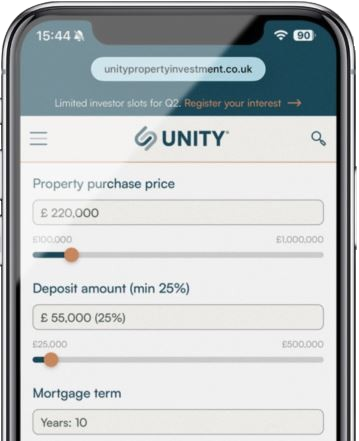
Buy to let investment and rental yield calculator
Conclusion
Choosing the right professional landlord mortgage isn't simply about securing the lowest interest rate. Portfolio size, affordability, ownership structure, tax efficiency and long-term investment objectives all play an important role. By understanding how lenders assess professional landlords, investors can secure finance that supports sustainable portfolio growth rather than limiting future opportunities.
FAQ
What is a professional landlord mortgage?
A professional landlord mortgage is a specialised commercial lending product designed for property investors holding multiple yielding assets. Unlike standard buy-to-let mortgages, which generally cater to individuals with one or two residential properties, professional mortgages accommodate complex corporate holding structures, such as Special Purpose Vehicles (SPVs), multi-unit freehold blocks, and HMOs. Lenders evaluate these applications by scrutinising the aggregate financial health of the investor’s entire property portfolio.
What is the difference between a portfolio landlord and a professional landlord?
A portfolio landlord is a strict regulatory definition created by the Prudential Regulation Authority (PRA). It applies to anyone owning four or more mortgaged buy-to-let properties. In contrast, a professional landlord is a broader industry term. It generally describes an investor who treats property as their primary business or uses corporate structures like limited companies. You can be a professional landlord with just two properties if you operate through a limited company. However, you only become a portfolio landlord once you hit the four-property threshold.
Who qualifies as a professional landlord?
For regulatory and underwriting purposes, the PRA defines a portfolio or professional landlord as a borrower who owns four or more distinct mortgaged buy-to-let properties. This definition applies regardless of whether the properties are held in a personal name, jointly, or within a limited company structure. Once a borrower crosses this threshold, lenders must apply specialist, portfolio-wide underwriting criteria.
Can first-time landlords qualify?
It is possible for first-time landlords to secure a professional landlord mortgage, though they face restricted product availability and stricter lending criteria. Most specialist buy-to-let lenders demand a proven track record of 12 to 24 months of active property management. Inexperienced investors attempting to utilise SPVs from day one generally require much higher deposits, pristine personal credit histories, and robust external personal incomes.
Are professional landlord mortgages only for portfolio landlords?
While portfolio landlords (those with four or more mortgaged properties) constitute the primary target market, these mortgages are heavily used by investors with fewer properties who require commercial flexibility. For instance, a landlord with only two properties may require a professional landlord mortgage if they are operating through a limited company (SPV) or purchasing a complex HMO.
Can I get a professional landlord mortgage through a limited company?
Yes. Purchasing real estate through a limited company, specifically a Special Purpose Vehicle (SPV), is currently a preferred methodology for professional property investors. Holding property within an SPV ensures that mortgage interest can be fully deducted as a legitimate business expense, shielding the investor from the restrictions of Section 24 personal tax rules. Lenders actively cater to this market with highly tailored limited company landlord mortgages.
What deposit is required?
Borrowers typically require a minimum liquid deposit of 25% (equating to a 75% Loan-to-Value) to secure a landlords mortgage. However, successfully achieving the maximum loan amount is entirely dependent on the property’s gross rental yield passing the lender's Interest Coverage Ratio (ICR) stress test. In regions with lower yields, the stress test will restrict borrowing capacity, frequently forcing the investor to inject a larger deposit of 30% to 35%.
Are rates higher than standard buy-to-let mortgages?
Historically, mortgages designed for limited companies or complex portfolios carried a premium of around 1.0% above standard personal buy-to-let rates. However, as the professional corporate sector has expanded, this pricing gap has narrowed significantly. In many cases, the pricing between standard and professional products is nearly identical. The corporate tax efficiencies gained by using an SPV structure frequently outweigh any marginally higher interest costs.
Should I use an SPV?
Utilising a Special Purpose Vehicle (SPV) is highly advantageous for higher-rate taxpayers and investors intent on scaling a large portfolio. An SPV allows rental profits to be taxed at Corporation Tax rates (19%–25%) rather than personal income tax rates (up to 45%), while fully preserving mortgage interest deductibility. However, for basic-rate taxpayers with no intention of expanding beyond one or two properties, the administrative costs of running a limited company may outweigh the benefits.
What documents do lenders require?
Lenders mandate a comprehensive suite of financial documentation. Applicants must provide a detailed schedule of all background properties (including current market values, outstanding mortgages, and rental incomes), a documented business plan, personal statements of assets and liabilities, three to six months of bank statements, and certified corporate accounts or personal SA302 tax calculations. Directors of SPVs must also provide personal identification for Personal Guarantees (PGs).
Should I use a mortgage broker?
Engaging a specialist, whole-of-market commercial mortgage broker is highly recommended to receive the best landlord mortgage advice. Portfolio lending is complex; lenders utilise different stress rates, top-slicing rules, and varying background portfolio limits. A specialist broker understands which lender aligns with your specific corporate structure, protecting you from unnecessary application declines and identifying the most cost-effective paths for portfolio growth.
Minimum Interest Coverage Ratio (ICR) Thresholds
Borrower Ownership Structure
Minimum ICR Threshold
Rationale for Threshold
Case study

- Property Price:£300k
- Mkt Value at purchase:£320k
- Day one equity:£20,000
- Yield:6.8%
- ROCE:30.1%
.avif)