
.jpg)










The United Kingdom property market offers a wide variety of opportunities marketed as investment properties. From online portals advertising apartments in regional city centres to sourcing agents highlighting potential discounts, the volume of buy to let properties for sale can be overwhelming. However, properties marketed for investment vary enormously in their underlying quality, risk profile, and actual commercial viability.
An attractive headline yield or an apparently discounted asking price does not necessarily make a property a good investment. Too often, purchasers acquire assets based on superficial marketing metrics, only to discover later that operational costs, unexpected defects, or lower-than-expected tenant demand erode their returns. Experienced property investors approach the market differently. They understand that finding an investment property for sale is merely the initial step in a careful process of commercial investigation, financial screening, and risk assessment.
An investment property should be assessed on the quality of its underlying investment case, not simply because it is marketed as a lucrative opportunity. The objective of this guide is to explain how investors can screen, filter, and evaluate investment properties for sale UK wide. By exploring how to evaluate purchase prices, calculate realistic rental potential, assess location fundamentals, and identify due diligence questions, investors can build a practical framework for identifying strong acquisitions. Ultimately, a good investment property is not defined by the way it is marketed. It is defined by the price you pay, the income it can realistically produce, the ongoing costs and risks, the potential to create value, and the options you retain when you eventually want to exit.
Executive Summary
Searching for a buy-to-let property requires moving past marketing claims and evaluating the fundamental commercial viability of an asset. This guide provides a practical framework for screening potential investments by rigorously examining price, cash flow, location, and potential red flags before proceeding to a detailed financial appraisal.
Key Takeaways:
- Look beyond asking price and gross yield: Actual market value and net cash flow after operational costs and financing are far more reliable indicators of a property's investment potential.
- Assess locations commercially: Prioritize areas with strong, underlying tenant demand driven by major employment hubs, transport infrastructure, and a balanced local housing supply.
- Evaluate property type and condition: Weigh the operational control of a freehold house against the potential urban demand for leasehold flats, and determine if targeted refurbishment can actively create capital value.
- Conduct preliminary due diligence: Identify red flags such as unrealistic rental claims, short leases, and unresolved compliance issues early to filter out unviable assets.
- Consider the exit strategy upfront: Ensure the property has strong resale liquidity by appealing to both investors and owner-occupiers.
What Actually Makes a Good Investment Property?
Before assessing individual property deals for sale, it helps to establish a framework for what constitutes a strong investment. A property being listed for sale to an investor does not automatically mean it aligns with their specific requirements, risk tolerance, or portfolio strategy. A high-performing buy to let investment property generally requires a balanced assessment rather than a narrow focus on a single metric like the gross yield.
Investors typically evaluate opportunities against four primary pillars during the initial screening phase. The first pillar focuses on financial fundamentals: examining the purchase price relative to realistic market value, the achievable gross rent, the indicative gross and net yields, the estimated monthly cash flow, and the financing costs associated with the asset.
The second pillar involves locational drivers. This includes assessing long-term tenant demand, proximity to employment hubs, transport infrastructure, the local supply of comparable rental stock, and the historical price-to-rent relationship in the area.
The third pillar examines the physical characteristics of the asset. The property type, such as a freehold house or a leasehold flat, can dictate the ongoing maintenance requirements and appeal to different demographics. Investors also look at the current condition, any immediate refurbishment needs, and the potential for sensible physical improvements.
The fourth pillar involves the legal and regulatory framework governing the property. This includes verifying the tenure, reviewing the lease terms and service charges for flats, checking Energy Performance Certificate (EPC) ratings, and identifying any local licensing requirements. A failure to investigate this regulatory pillar can turn a seemingly profitable asset into a poor investment.
Investors who are ready to compare current opportunities can view Unity's investment properties currently available. For those conducting their own search, the following sections explain how to apply this evaluation framework.
Start With the Purchase Price - Not the Asking Price
The first figure encountered when reviewing an investment property for sale is usually the asking price. It is important to separate the asking price from the potential underlying value of the asset. The asking price is a marketing figure; it is not a binding reflection of the property's worth, nor is it a reliable baseline for calculating potential returns.
When evaluating a buy to let property for sale UK investors should look for comparable sold evidence to estimate a realistic market value. This involves reviewing recent HM Land Registry data for similar properties situated nearby. Using metrics like price per square foot can be useful, but adjustments should be made for differences in condition, layout, and external space.
During the initial screening phase, it is also important to consider the condition of the property and the nature of its possession. A property sold with vacant possession can sometimes command a different value compared to an identical property sold with a tenant in situ, particularly if the incumbent tenant is paying a rent that differs from the current market rate or if the property requires modernization.
Claims of properties being sold "below market value" should be tested independently. A property might be priced lower than a neighbouring house, but if it requires significant capital expenditure, such as a new roof or full rewiring, the apparent discount may simply reflect the cost of those necessary works.
Value can sometimes be found in off-market opportunities, where motivated vendors may prioritize speed and certainty over achieving the maximum open-market price. Understanding these acquisition dynamics can be useful when sourcing effectively. You can learn more about how this works by reading our insights on off-market property, or see how Unity approaches this in our guide to how we source properties.
Calculate the Rental Yield Properly
Once a realistic purchase price has been estimated, the next step in screening a buy to let property for sale is assessing its rental yield. The gross rental yield is a widely used metric that provides a high-level snapshot of the asset's income relative to its cost, serving as a useful initial screening tool for comparing multiple properties.
The gross yield is calculated by dividing the annual rent by the purchase price, and multiplying by one hundred. For example, a property purchased for £220,000 that generates a realistically achievable monthly rent of £1,300 produces an annual rent of £15,600. This results in a gross yield of 7.09%.
While a gross yield can help shortlist properties, it is only the beginning of the evaluation. The gross figure does not account for the operational costs of running a property. To determine whether the numbers warrant further investigation, investors should estimate the net yield. The net yield subtracts likely operational expenses from the gross rental income, including letting and management fees, maintenance, landlord insurance, ground rent and service charges where applicable, compliance costs, and an allowance for void periods.
Only after considering these ongoing costs can an investor accurately compare the income profile of two different investment properties for sale. Investors can use our buy-to-let calculator to quickly test different rental scenarios and operational deductions during this initial screening stage.
A good investment property is not defined by the way it is marketed. It is defined by the price you pay, the income it can realistically produce, the ongoing costs and risks, the potential to create value, and the options you retain when you eventually want to exit.
Investors should not shortlist properties based solely on gross yield because financing and operating costs can materially alter the actual cash flow.
Cash Flow Matters More Than the Headline Yield
Investors should not shortlist properties based solely on gross yield because financing and operating costs can materially alter the actual cash flow. Cash flow is the liquid profit remaining each month after operational expenses and mortgage interest have been paid.
Two properties with identical gross yields can produce very different cash-flow outcomes based on their underlying costs.
If you are using mortgage finance, the achievable rent must also support the borrowing you require. Buy-to-let lenders typically assess rental coverage using an Interest Coverage Ratio (ICR) and a stressed interest rate, following underwriting expectations established by the Bank of England. The exact calculation varies by lender, product and borrower circumstances, so indicative borrowing capacity should be established before progressing too far with an acquisition.
During the initial screening, high-level estimates are usually sufficient to check if a property is likely to produce a positive monthly surplus. Detailed cash-flow modelling, which accounts for exact leveraged returns and tax positions, should be reserved for properties that pass this initial filter. Investors wanting a deeper look at long-term financing impacts can explore our portfolio projection tool.
Assess the Location Like an Investor
Owner-occupiers and investors often evaluate locations differently. While an owner-occupier might prioritize personal lifestyle amenities, an investor should look at long-term tenant demand, economic resilience, and the balance between local housing supply and demand.
To assess a location commercially, investigate the underlying demographic drivers. Proximity to employment hubs such as major hospitals, universities, and commercial districts can help support tenant demand and may reduce the likelihood of long void periods. Transport connectivity can also be a strong driver for both tenant demand and potential capital growth, particularly in commuter corridors where tenants seek access to larger cities.
Investors should also examine the local supply of comparable rental stock. An area with a large volume of similar available properties could face localized oversupply, which might affect rental pricing and the time it takes to find a tenant.
Rental markets vary materially across the UK, but national and regional averages only provide context. When evaluating an investment property UK investors should always establish achievable rent, tenant demand, and competing supply at the local level. The location with the highest historical capital growth is not necessarily the best income investment, and areas offering the highest yields sometimes correspond to markets with lower historical capital growth or different demographic profiles. Successful property screening involves identifying locations that align with the investor's specific strategy. For more on identifying balanced investment locations, read our perspective on investment areas.
Property Type - House or Flat?
The type of property selected can have implications for the investment's risk profile, financing, and ongoing management. When searching for buy to let investment properties for sale, investors often weigh the merits of houses versus flats. Neither property type is inherently superior; instead, each offers different considerations that should be evaluated.
Freehold houses offer the advantage of complete land ownership, meaning an absence of leasehold service charges and ground rent. This also provides the investor with greater control over maintenance. Depending on the location, houses can appeal to a broad tenant market as well as owner-occupiers on resale. Depending on the market, houses may also present sensible value-add opportunities through extensions or reconfigurations.
Leasehold flats, on the other hand, can sometimes offer lower acquisition prices in certain markets and are often situated in urban locations with strong tenant demand from young professionals. However, flats require careful evaluation of the lease terms. Investors must factor in service charges, ground rent provisions, and the potential for major works to the building. The remaining lease length and any restrictive covenants can also impact the property's mortgageability and long-term value.
The chosen property type should align with the investor's strategy and willingness to manage different types of ongoing costs. For further analysis, investors can consult our articles on are flats good buy-to-let investments? and leasehold vs freehold buy-to-let.
Look for Value That Can Be Created
One strategy some investors use to improve their position is identifying properties where value can be created through physical improvement. When screening a buy to let investment property for sale, it can be helpful to distinguish between purchasing a turnkey investment and acquiring a property with sensible refurbishment potential.
Turnkey properties are typically well-presented and require minimal upfront work. While they can offer a straightforward route to generating income, they may leave investors more reliant on general market appreciation for capital growth.
Alternatively, properties suffering from dated interiors or poor presentation can sometimes be acquired below their potential modernised value. By undertaking a sensible refurbishment, such as updating a kitchen, improving the EPC rating, or redecorating, an investor may be able to improve the property's capital value and command a higher rental income.
However, the central principle of this strategy is that value creation only works when the economics of the entire project make sense. Refurbishment does not automatically create capital value. Investors should carefully compare the combined total of the purchase price, acquisition costs, refurbishment costs, and finance/holding costs against a conservative estimate of the post-works market value and the realistic achievable rent. The final valuation must align with local ceiling prices for the street.
To explore how this process can be managed, you can review how we refurbish investment properties and read our published case studies.
Buying a Property With a Tenant Already in Place
Some investment properties for sale are marketed with a tenant already in situ. While this can offer commercial benefits, it also requires specific investigation during the screening phase.
The potential advantages of purchasing a tenanted property include immediate rental income upon completion, a reduced initial void period, and a known rental history.
However, inheriting a tenancy means the investor should carefully investigate the tenancy documentation, the current rent relative to the open market, any history of arrears, and the deposit registration position. It is also important to verify that all compliance documentation, such as valid gas safety and electrical certificates, was provided to the tenant correctly. The physical condition of the property should be assessed, along with the implications of the current tenancy agreement.
Understanding the legislative environment is also key. For example, the Renters' Rights Act 2025 introduced major reforms to the private rented sector in England, including the abolition of Section 21 "no-fault" evictions from 1 May 2026 and a move to a periodic tenancy system. This means landlords now require specific, legally defined grounds to reclaim possession of a property. Consequently, the legal and practical standing of an inherited tenancy becomes a crucial part of the initial screening and due diligence process.
Due Diligence Before Buying an Investment Property
Commercial due diligence helps investors transition from theoretical assumptions to practical reality. During the initial screening and shortlisting phase, the goal is to identify issues that might prompt further investigation or lead an investor to reject an opportunity before committing to formal legal conveyancing or surveys. When evaluating investment properties UK wide, this process remains fundamentally important.
At this preliminary stage, investors should consider the title and tenure. For leasehold properties, this involves checking the remaining lease length, the service charge history, and any ground rent terms.
Compliance screening involves reviewing the Energy Performance Certificate (EPC) to ensure the property meets current minimum standards, as well as checking for valid safety certificates. While a full structural survey occurs later, the initial screening should note any obvious visual signs of issues like damp or roof disrepair. Investors should also check if the property falls within an area subject to local authority licensing requirements, which can add to ongoing costs.
For a detailed breakdown of the checks required before purchasing, investors can refer to our comprehensive property due diligence checklist.

Portfolio projection tool

Red Flags When Looking at Investment Properties for Sale
To effectively filter buy to let properties for sale UK investors should look out for marketing claims that warrant deeper questioning. Spotting these potential red flags can help determine whether a property deserves further investigation.
- Unrealistic Yields: Are the yield projections calculated using peak rental figures that are unsupported by comparable local listings?
- Unsupported Valuations: Is the stated "market value" supported by independent, recent HM Land Registry sold data, or does it rely solely on a developer's internal appraisal?
- Guaranteed Rent Schemes: If a property is sold with guaranteed rent, who provides the guarantee, and what is their financial strength? What are the conditions and duration, and what is the true underlying market rent once the guarantee ends? Furthermore, is the initial purchase price supported independently of the guarantee?
- Lease Terms: For flats, does the property have a shorter remaining lease term? While not an automatic barrier, shorter leases can affect mortgageability, property value, and future extension costs. Similarly, are there unusually high or rapidly escalating service charges?
- Non-Standard Construction: Properties built using non-traditional methods (such as certain concrete or timber frames) can sometimes restrict mortgage availability and limit resale liquidity.
- Local Supply: Are there an excessive number of identical rental properties available in the immediate area, which might indicate weak tenant demand or localized oversupply?
Think About the Exit Before You Buy
An often-overlooked aspect of screening an investment property for sale is considering the eventual exit strategy. The property's future resale liquidity should form part of the initial acquisition analysis.
Different properties appeal to different markets. A highly specialized investment, such as certain types of student accommodation, may offer an attractive yield but might only appeal to other investors when it comes time to sell. Conversely, a standard freehold house in an established residential area may appeal to both investors and owner-occupiers, potentially providing a broader resale market. This dual-market appeal can provide stronger exit liquidity.
Investors should consider their long-term plans, whether that involves a long-term hold, refinancing to extract capital after a refurbishment, selling the property tenanted, or selling it vacant. Each pathway may influence the type of property chosen during the initial search. For more guidance on aligning your purchase with your long-term goals, read our overview of buy-to-let exit strategies.
How to Shortlist Investment Properties for Further Appraisal
Faced with multiple property deals for sale, investors can use a screening framework to compare opportunities and decide which ones warrant a detailed financial appraisal.
This shortlisting process does not necessarily produce an automatic winner; rather, it highlights the trade-offs of each option based on an investor's strategy and risk tolerance.
In this scenario, both properties represent credible investments with genuine trade-offs. Property B offers a higher headline yield and requires less initial work, but comes with service charges and a more restricted resale market. Property A has a lower yield and requires upfront capital for refurbishment, but offers freehold ownership and broader exit liquidity.
The highest headline yield is not automatically the best investment. Once a property passes this initial screening stage, investors should conduct a more detailed assessment of its value, rental income, costs, financing, and potential returns. Our investment property appraisal guide explains this deeper analytical process in more detail.
Buying Directly vs Using a Buy-to-Let Investment Company
Investors searching for buy to let investment properties have a choice: they can source and screen properties independently, or they can work with a specialist buy to let investment company.
Experienced investors with sufficient time, knowledge, and access to local markets can successfully source properties themselves. Sourcing independently allows for direct control over every decision and avoids professional acquisition fees.
However, other investors may prefer specialist assistance because they value having support with sourcing, financial analysis, refurbishment coordination, or ongoing management. When evaluating a buy to let investment company, investors should look carefully at the provider's model. Key questions to ask include:
- How transparent are their fees?
- What is their sourcing methodology?
- Do they provide independent evidence to support their valuations and rental assumptions?
- Are there any conflicts of interest?
- What does their due diligence process involve?
- Do they have genuine project-management capabilities for refurbishments?
- Do they offer post-completion management?
- Can they demonstrate a verifiable track record and case studies?
For investors who prefer a guided approach, Unity sources and assesses UK buy-to-let opportunities against defined investment criteria, considering factors including purchase price, rental potential, location, condition, value-creation potential and exit considerations. You can learn more about our approach by exploring our property investment consultant services, reading how we work, or reviewing how we source properties and our investment criteria.
Investment Properties Currently Available Through Unity
Searching for an investment property for sale should be a systematic, evidence-led process. A good investment property is not defined by the way it is marketed. It is defined by the price you pay, the income it can realistically produce, the ongoing costs and risks, the potential to create value, and the options you retain when you eventually want to exit.
Once you understand how to assess a property and identify the factors that matter most to your strategy, the next step is applying those criteria to live opportunities.
If you'd rather start with properties that have already been through an initial screening process, explore Unity's current investment opportunities. Our pipeline features opportunities that have been assessed against our strict criteria for value, rental demand, and long-term potential.
-v1.avif)
Get investor insights and early access to opportunities
Join our investor briefings for structured insights, market updates, and priority access to new deals.

No spam, just timely insights for investors We respect your privacy and never sell your data
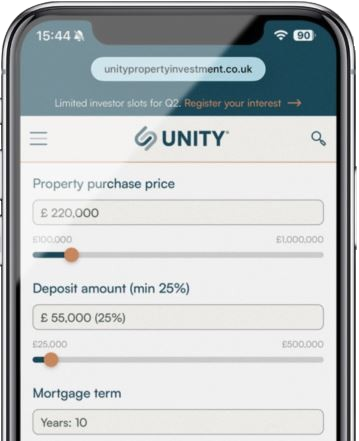
Buy to let investment and rental yield calculator
.png)
Example Property Shortlisting and Comparison Matrix
Screening Factor
Property A (Freehold House)
Property B (Leasehold Flat)
Frequently Asked Questions
What should I look for when buying an investment property?
What is a good rental yield for a buy-to-let property?
How do I know if an investment property is below market value?
Is a house or flat better for buy-to-let?
Is it better to buy a tenanted investment property?
How do I compare buy-to-let properties for sale?
What are the biggest red flags when buying an investment property?
Where can I find buy-to-let investment properties for sale in the UK?
Case study

- Property Price:£250k
- Mkt Value at purchase:£250k
- Day one equity:£0
- Yield:7.4%
- ROCE:31.6%
.avif)