
.jpg)










Navigating the UK property investment landscape in 2026 requires a sharp understanding of how to manage debt. Following years of economic turbulence and shifting interest rates, securing the right finance is more important than ever for maintaining a profitable portfolio.
At the core of any robust buy-to-let investment strategy is a fundamental decision: should you opt for a buy to let interest only mortgage or a repayment buy to let mortgage?
This choice dictates your monthly cash flow, your ability to scale, and your long-term wealth generation. In this comprehensive guide, we will explore the mechanical differences between these two mortgage structures and explain how professional investors use them to optimise capital, navigate lender stress tests, and build resilient portfolios.
Executive Summary
In the 2026 UK property market, selecting between a buy to let interest only mortgage and a repayment buy to let mortgage is a foundational decision that dictates a portfolio's cash flow, scalability, and overall risk profile. Ultimately, the optimal choice depends heavily on an investor's specific buy-to-let investment strategy, tax bracket, and long-term financial objectives.
Key takeaways from this guide:
- Cash Flow and Scaling: The vast majority of professional investors favour an interest-only structure. By minimising monthly outgoings, it unlocks vital liquidity to safeguard against unexpected expenses and provides the deployable capital needed to rapidly scale a portfolio.
- Navigating Stress Tests: Interest-only structures are mathematically better suited to passing the rigorous affordability stress tests currently enforced by UK lenders.
- Leveraging Inflation: Maintaining interest-only debt over a long term leverages macroeconomic inflation to systematically erode the real value of the debt.
- Wealth Preservation: For "accidental landlords", investors nearing retirement, or those with a fundamentally lower risk tolerance, a repayment structure remains a highly effective, systematic path to debt-free ownership.
Navigating the UK property investment landscape in 2026 requires a sharp understanding of how to manage debt. Following years of economic turbulence and shifting interest rates, securing the right finance is more important than ever for maintaining a profitable portfolio.
At the core of any robust buy-to-let investment strategy is a fundamental decision: should you opt for a buy to let interest only mortgage or a repayment buy to let mortgage?
This choice dictates your monthly cash flow, your ability to scale, and your long-term wealth generation. In this comprehensive guide, we will explore the mechanical differences between these two mortgage structures and explain how professional investors use them to optimise capital, navigate lender stress tests, and build resilient portfolios.
What Are Interest-Only and Repayment Mortgages?
Before diving into advanced strategies, it is crucial to understand how these two financial products work.
The Buy-to-Let Interest-Only Mortgage
With an interest-only mortgage, your monthly payments exclusively cover the interest charged on the loan. The original amount you borrowed (the principal) does not decrease during the mortgage term. If you borrow £200,000 over 25 years, you will still owe exactly £200,000 on the final day of the term.
Because of this, lenders require you to have a solid "repayment vehicle" or exit strategy in place. For most property investors, this involves selling the property, refinancing the debt, or using capital from other investments to clear the balance at the end of the term.
The Repayment Buy-to-Let Mortgage
Also known as a capital and interest mortgage, a repayment buy to let mortgage requires you to pay both the accrued interest and a portion of the original loan each month.
Over time, your outstanding debt gradually decreases. By the end of the term, assuming all payments are made, the mortgage balance reaches zero, leaving you with an unencumbered, debt-free asset . While this is the standard path for homeowners deciding between a buy-to-let vs residential mortgage, its application in an investment context significantly alters the property’s cash flow dynamics.
Interest Only vs Repayment Mortgage: The Monthly Differences
The most immediate difference when comparing an interest only vs repayment mortgage is the monthly cost. Because an interest-only structure does not require you to pay down the capital, the monthly payments are substantially lower.
To see this in action, let’s look at a £200,000 mortgage fixed at a 4.50% interest rate over a 25-year term.
As Table 1 demonstrates, the repayment structure demands an extra £361.66 per month. Over a year, that is an additional £4,339.92 taken out of your gross rental income simply to service the capital debt. This has a profound impact on your buy-to-let profit and cash flow.
Why Professional Investors Favour Interest-Only Mortgages
You might wonder why anyone would choose not to pay down their debt. However, in the commercial world of property investment, the vast majority of professionals utilise interest-only products. Here is why:
1. Improved Cash Flow and Liquidity
By keeping monthly payments low, investors retain maximum liquid cash. This surplus cash flow is a vital safety net against void periods or unexpected maintenance emergencies—common realities detailed in the costs of being a landlord. Strong cash flow also makes it easier to cover buy-to-let management fees and rent guarantee insurance.

2. Rapid Portfolio Scalability
Professionals focus on the "velocity of money." The cash saved each month on an interest-only mortgage can be rapidly stockpiled to form the buy-to-let mortgage deposit for a second or third property. This allows the portfolio to scale exponentially.
3. Refinancing Flexibility
As property values naturally rise over time, your Loan-to-Value (LTV) ratio drops. Investors can use a buy-to-let remortgaging guide to extract this new equity tax-free and reinvest it into new UK property investment opportunities. Paying down the debt actively works against this leveraging strategy.
4. Efficient Capital Allocation
Money trapped as equity in a property generates an effective cash return of zero. If you can achieve a higher Return on Investment (ROI) by deploying capital into the best buy-to-let areas in the UK, it is mathematically inefficient to use that same cash to pay down a low-interest mortgage.
Money trapped as equity in a property generates an effective cash return of zero. It is mathematically inefficient to use cash to pay down a low-interest mortgage if you can achieve a higher Return on Investment elsewhere
By leveraging fixed debt against an inflating asset, you ultimately pay off today's debt with tomorrow's devalued pounds.
Why Repayment Mortgages Reduce Portfolio Growth
While a repayment buy to let mortgage offers the psychological comfort of a decreasing debt burden, it introduces friction for investors seeking rapid growth .
- Reduced Leverage: Your capital becomes locked into the physical bricks and mortar, limiting your agility to snap up below market value property deals.
- Lower Monthly Profitability: The heavy capital payments can easily result in negative monthly cash flow, particularly in areas with lower rental yields.
- Suppressed Acquisition Speed: Because your net monthly cash flow is diminished, saving for your next deposit takes significantly longer, stifling portfolio expansion.
Lender Assessments: Affordability and Stress Testing
Choosing your mortgage structure goes hand-in-hand with navigating 2026 lending criteria. Lenders do not primarily assess buy-to-let affordability based on your personal salary. Instead, they use an Interest Coverage Ratio (ICR) to conduct rigorous buy-to-let affordability stress testing.
Lenders apply a hypothetical "stress" interest rate (often around 5.5%) to your loan to ensure the rent covers the debt even if the economy worsens. The required rental buffer depends heavily on your tax status, highlighting the importance of having your buy-to-let tax explained by a professional:
- Basic Rate Taxpayers & Limited Companies: Rent must generally cover 125% of the stressed mortgage interest. This favourable treatment is why many use a limited company buy-to-let guide to structure their business.
- Higher Rate Taxpayers: Rent must typically cover 145% of the stressed interest, requiring a much higher-yielding property to secure the loan.
Understanding how to work out rental yield is vital here. If the average rental yield in the UK in your chosen area is too low, you simply will not pass the stress test for maximum leverage.
How Inflation Impacts Long-Term Mortgage Debt
A sophisticated strategy views a buy to let interest only mortgage as a dynamic tool manipulated by macroeconomic forces, specifically inflation .
Inflation erodes the purchasing power of money over time. If you take out a £200,000 interest-only mortgage today, the nominal debt remains £200,000 for 25 years. However, its real economic weight shrinks. Historically, as inflation rises, so do rents and capital values, as seen in long-term UK house price forecasts. By leveraging fixed debt against an inflating asset, you ultimately pay off today's debt with tomorrow's devalued pounds.
Refinancing and BRRR-Style Investing
For investors using the BRRR strategy (Buy, Rehab, Rent, Refinance, Repeat), an interest-only structure is practically non-negotiable .
Once a distressed property is refurbished and tenanted, the investor seeks a cash-out refinance to recycle their initial capital into the next project. Applying a repayment mortgage at this stage would cripple the operational liquidity needed to fund further refurbishments and scale the portfolio . You can use a buy-to-let calculator to model the exact extraction points during the refinance phase.

When a Repayment Buy-to-Let Mortgage Makes Sense
Despite the advantages of interest-only finance, there are clear situations where a repayment buy to let mortgage is the superior choice .
- Retirement Planning: As investors transition from their aggressive acquisition phase into a consolidation phase, switching to repayment mortgages is a sound defensive strategy. By retirement, the assets are completely unencumbered, generating 100% of their gross rental yield as pure passive income.
- Lower Risk Tolerance: Property investment is highly psychological. If holding non-amortising debt causes anxiety, a repayment mortgage offers a guaranteed path to debt-free ownership. For these investors, reviewing the investment criteria and about pages of consultants is crucial to find an advisor aligned with their risk profile.
- Accidental Landlords: If you have inherited a property or retained a former home without plans to build an empire, a repayment mortgage acts as a fantastic automated savings plan, converting tenant rent directly into personal equity.

Portfolio projection tool

The Risks Associated With Interest-Only Borrowing
It is vital to acknowledge the systemic risks of interest-only borrowing.
- Refinancing Risk and Rising Rates: If you exit a fixed-rate deal into a much higher interest rate environment, your cash flow can be wiped out overnight. This exact scenario has led many to ask, are landlords selling up?
- Poor Asset Selection: If a property suffers from stagnant capital growth or falls into negative equity, you could face a significant financial shortfall at the end of the term. This stark reality underscores the absolute necessity of robust due diligence. Whether you are researching broad investment areas or hunting for the best buy-to-let places in the UK for £50k, selecting a location with strong fundamentals is critical to protecting your exit strategy.
- Lack of Repayment Planning: Relying solely on a hopeful future sale is dangerous. Professionals establish diversified repayment vehicles, such as stocks, pensions, or a structured portfolio sell-off plan.
Scenario Modeling: Cash Flow, Equity, and ROI
To crystallise these differences, let's look at a 10-year projection. We strongly recommend using our dedicated portfolio projection tool to map out your own specific numbers.
The Verdict: The repayment mortgage results in a superior total equity position by Year 10 (£196,859 vs £148,479). However, the interest-only investor generated £65,625.60 in highly liquid cash flow, compared to a mere £24,938.40 for the repayment investor. The interest-only investor now holds enough cash to confidently fund the deposit on a second £250,000 property.
Balancing Leverage, Liquidity, and Risk
The best investors do not view these products as mutually exclusive. Guided by proven case studies, many adopt a hybrid lifecycle approach. They use interest-only debt during their growth phase to aggressively expand, and transition to repayment structures (or strategic sell-offs) during their legacy phase to eliminate risk.
Understanding how we source properties and utilising professional property management services are operational strategies used to protect the asset's underlying value while leveraging debt to build wealth. Furthermore, investor fees should simply be factored in as the standard cost of scaling efficiently. Check our FAQ for more on structuring these operational costs.

Conclusion
The debate between mortgage structures does not have a one-size-fits-all answer. The right choice depends entirely on your investor objectives, cash flow targets, portfolio scaling goals, and risk appetite.
For the professional intent on building a scalable portfolio, the interest-only mortgage remains the preeminent tool for unlocking liquidity and leveraging inflation. For those looking to enter the market efficiently, exploring the best way to invest 50k in UK property can offer a solid starting point.
Conversely, for the risk-averse or those nearing retirement, the repayment buy to let mortgage offers unparalleled peace of mind and structured wealth preservation.
If you are unsure which path aligns with your specific goals, exploring our guide on how it works is a great way to familiarise yourself with the process. When you are ready to move forward, you can easily contact our team or directly book a call.
10-Year Mortgage Performance and Equity Projection (Based on £250,000 Property)
10-Year Performance Metric
Interest-Only Mortgage
Repayment Mortgage
Note: Assumes a 6.0% gross yield, 4.50% interest rate, and a conservative 3.0% annual capital appreciation.
.png)
-v1.avif)
Get investor insights and early access to opportunities
Join our investor briefings for structured insights, market updates, and priority access to new deals.

No spam, just timely insights for investors We respect your privacy and never sell your data
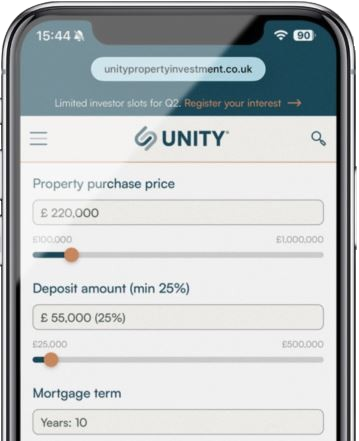
Buy to let investment and rental yield calculator
Monthly Payment Comparison (£200,000 Mortgage at 4.50% over 25 Years)
Financial Metric
Interest-Only Mortgage
Repayment Mortgage
Variance
Case study

- Property Price:£300k
- Mkt Value at purchase:£320k
- Day one equity:£20,000
- Yield:6.8%
- ROCE:30.1%
.avif)