
.jpg)










Buy-to-Let vs Residential Mortgage: Key Differences Explained
Stepping into the property market requires a clear understanding of your long-term goals. Whether you are purchasing a home to build a life in, or acquiring an asset to build your wealth, the financial vehicle you use to get there matters immensely.
One of the most critical foundational steps for any prospective buyer or investor is understanding the distinction between a buy to let mortgage vs residential mortgage. While they might seem similar on the surface - both involve borrowing hundreds of thousands of pounds secured against bricks and mortar - the reality is that lenders, regulators, and the law view them as two entirely different beasts.
If you apply for the wrong product, misunderstand the lending criteria, or break the terms of your agreement, the financial consequences can be severe. In this comprehensive guide, we will break down the core legal, financial, and structural differences you need to know, answering common questions like are buy to let mortgages more expensive, and how affordability is calculated differently.
Executive Summary
Understanding the difference between a buy-to-let mortgage and a residential mortgage is essential before purchasing property in the UK. While both are secured against real estate, they are designed for entirely different purposes and assessed under very different lending rules.
A residential mortgage is intended for owner-occupiers buying a home to live in. These products typically offer lower deposit requirements, lower interest rates, and strong FCA consumer protections. Affordability is based primarily on your personal income, debts, and household expenditure.
A buy-to-let mortgage, by contrast, is structured for investors purchasing property to rent out. Lenders assess these loans based largely on expected rental income using stress-tested Interest Coverage Ratio (ICR) calculations. Deposits are usually higher, rates and fees are often more expensive, and most investors choose interest-only structures to maximise monthly cash flow.
This guide explains the legal, financial, and practical differences between the two products, including affordability criteria, deposit levels, repayment options, costs, and the serious risks of renting out a property on a residential mortgage without permission.
Choosing the correct finance structure from day one is critical. For homeowners, a residential mortgage is the right route. For investors, a properly structured buy-to-let mortgage forms the foundation of a scalable and profitable property portfolio.
The Fundamental Mindset Shift: Home vs. Business
Before diving into the numbers and regulations, it helps to understand how banks view these two types of loans.
When you apply for a residential mortgage, you are looking for a loan to buy a primary residence - the roof over your head. The bank views this through a consumer lens. They know that in times of financial hardship, you will prioritize paying for your home above almost all other debts.
When looking at a buy to let vs residential mortgage, the paradigm shifts. A buy-to-let (BTL) property is an investment vehicle. You are purchasing a business asset designed to generate income and capital growth. Consequently, lenders view BTL mortgages as commercial transactions. The risk profile is inherently higher; if an investor hits tough times, they are statistically more likely to default on an investment property than their own home. This single distinction dictates almost every other difference in how these mortgages are structured, regulated, and priced.
Core Legal and Regulatory Differences (FCA Regulation)
The most profound structural difference between these two mortgage types lies in how they are governed by UK law.
Residential Mortgages: High Protection
Residential mortgages are strictly regulated by the Financial Conduct Authority (FCA). Because these loans involve your primary dwelling, the FCA enforces rigorous rules to protect you as a consumer. Lenders must adhere to strict guidelines regarding how they assess your affordability, how they market their products, and how they treat you if you fall into arrears. The goal is to prevent irresponsible lending that could result in individuals losing their homes.
Buy-to-Let Mortgages: The Unregulated Commercial Space
In stark contrast, the vast majority of buy-to-let mortgages are completely unregulated by the FCA. Because purchasing a property to rent out is considered a commercial business enterprise, the government assumes that the borrower is operating as an investor taking calculated business risks, rather than a vulnerable consumer needing protection.
This lack of regulation gives lenders much more freedom in how they design their BTL products, set their interest rates, and enforce their terms.
The "Consumer Buy-to-Let" Exception: There is one notable exception. If you become an "accidental landlord"- for example, you inherit a property and decide to rent it out, or you move in with a partner and rent out your former home - you may qualify for a Consumer Buy-to-Let (CBTL) mortgage. These are regulated by the FCA to offer protections to people who didn't explicitly set out to become professional property investors.

Affordability Criteria: Personal Salary vs. Rental Income
If you have ever applied for a residential mortgage, you know the drill: the lender scrutinizes your salary, your bonuses, your credit card debt, your childcare costs, and even your monthly subscription services. Residential affordability is entirely based on your personal ability to repay the debt from your earned income.
For a buy-to-let mortgage, your personal income takes a back seat. While many lenders do require a minimum personal income (often around £25,000 per year) simply to ensure you have a financial safety net, the loan is primarily secured against the property's earning potential.
The Interest Coverage Ratio (ICR)
Instead of looking at your payslip, BTL lenders use an Interest Coverage Ratio (ICR) stress test. They want to know that the rental income generated by the property will comfortably cover the mortgage payments, even if interest rates rise or the property sits empty for a month (a "void" period).
Typically, lenders require the projected rental income to be between 125% and 145% of the mortgage interest payments.
- Example: If the interest-only mortgage payment is projected to be £500 a month, a lender requiring a 145% ICR will want to see that the property can reliably achieve at least £725 a month in rent (£500 x 1.45). Furthermore, lenders will "stress test" this calculation not at the current interest rate, but at a higher hypothetical rate (e.g., 5.5% or 2% above the product rate) to ensure the investment remains viable in a turbulent economy.
If you want to understand how your potential rental income stacks up against property prices, read our detailed guide on how do you work out rental yield? to master the math behind property investment.
A residential mortgage funds where you live. A buy-to-let mortgage funds an income-producing asset.
Buy-to-let lenders assess the property’s rental strength first - not just your salary.
Differing Deposit Size Requirements
Because lenders view buy-to-let properties as a higher risk than residential homes, they demand more "skin in the game" from the borrower to protect their capital in the event of a housing market downturn.
- Residential Deposits: Depending on government schemes and market conditions, you can frequently secure a residential mortgage with a deposit of just 5% or 10% (a 90% to 95% Loan-to-Value, or LTV).
- Buy-to-Let Deposits: Finding a BTL mortgage with a 10% deposit is virtually impossible. Standard buy-to-let mortgages require a minimum deposit of 25% (a 75% LTV). While some specialist lenders might occasionally stretch to an 80% LTV (requiring a 20% deposit), the interest rates on these products are usually punitive. To unlock the best interest rates on the BTL market, investors often need to put down 40% (a 60% LTV).
For a deep dive into how to fund your investment and structure your capital, explore our dedicated breakdown on the buy-to-let mortgage deposit.
Repayment Structures: Interest-Only vs. Capital Repayment
The way you structure your monthly payments is another major dividing line between homeowners and investors.
Residential: Capital Repayment
When buying a home, the ultimate goal is almost always outright ownership. Therefore, the vast majority of residential mortgages are structured on a capital repayment basis. Every month, your payment is split into two parts: paying off the interest accumulated that month, and chipping away at the original loan amount (the principal). Over a 25 or 30-year term, the debt decreases until you own the house free and clear.
Buy-to-Let: Interest-Only
Conversely, the vast majority of professional property investors choose interest-only mortgages for their BTL properties. With an interest-only mortgage, your monthly payments only cover the interest charged by the lender. You are not paying down the actual loan amount.
Why do investors prefer this? Cash flow. Interest-only payments are significantly lower than capital repayment ones. By keeping their monthly mortgage costs as low as possible, landlords maximize their monthly profit margin (the gap between the rent collected and the mortgage paid).
Because the original loan amount remains completely untouched, investors must have a viable "exit strategy" at the end of the mortgage term to repay the bank. Common strategies include:
- Selling the property and using the equity gained through market appreciation to pay off the loan.
- Refinancing the property.
- Using other investments, stocks, or savings to clear the debt.
Rates and Fees: Are Buy-to-Let Mortgages More Expensive?
A frequent question from new investors is, "are buy to let mortgages more expensive?" The short answer is yes. Investing in property involves higher costs across the board compared to buying a home.
Interest Rates
Because of the unregulated nature and higher risk profile, BTL mortgage interest rates are typically 1% to 2% higher than equivalent residential mortgage rates. The bank is charging you a premium for the commercial risk they are taking on.
Arrangement Fees
The sting in the tail for many new investors is the product arrangement fee. On a residential mortgage, you might pay a flat arrangement fee of £999, or sometimes zero, depending on the product.
Buy-to-let arrangement fees are often calculated as a percentage of the total loan amount - commonly ranging from 1% to 3%, and sometimes up to 5% for specialist lending.
- If you are borrowing £250,000 for a BTL property and the arrangement fee is 2%, you are instantly hit with a £5,000 fee. While lenders usually allow you to add this fee to the total mortgage loan, doing so means you will pay interest on that £5,000 for the duration of the mortgage.
Additional Costs
Beyond the mortgage itself, buy-to-let investors also face a 3% stamp duty surcharge on top of standard Stamp Duty Land Tax (SDLT) rates, higher legal conveyancing fees, and potentially higher valuation fees.
Strict Penalties for Letting on a Residential Mortgage
Given the higher interest rates and larger deposits required for buy-to-let mortgages, a dangerous temptation arises for some people: Why don't I just buy a property with a cheap 10% deposit residential mortgage, and then quietly rent it out to tenants?
Doing this is a breach of contract, and lenders treat it incredibly seriously. Signing a residential mortgage contract means you are legally declaring to the lender that you intend to live in the property as your primary residence.
If you rent out the property without informing the bank, you are committing what the industry refers to as mortgage fraud.
If a lender discovers unauthorized tenants in your property (and they have sophisticated ways of finding out, including checking the electoral roll, credit files, and insurance databases), the penalties are severe:
- Immediate Repayment: The lender can "call in" the loan, demanding that you repay the entire outstanding mortgage balance immediately (usually within 30 days).
- Financial Penalties: They can retrospectively apply higher interest rates backdated to the moment the tenancy began, hitting you with a massive sudden bill.
- Blacklisting: Your credit file can be marked with a CIFAS (fraud) marker, making it nearly impossible to get any form of credit - let alone a mortgage - for years to come.
- Repossession: If you cannot pay the demanded sums, the bank will repossess the property.
The Solution: Consent to Let
If your life circumstances change - for example, you need to relocate for work temporarily but want to keep your home, you do not necessarily need to refinance onto a BTL mortgage immediately. You can apply to your current residential lender for Consent to Let.
This is a formal, temporary permission (usually granted for 12 to 24 months) to rent out your residential property. Lenders will often charge an admin fee or temporarily bump up your interest rate by 1% while the Consent to Let is active, but it keeps you entirely on the right side of the law.

Portfolio projection tool

Summary: Making the Right Choice
The choice between a buy to let mortgage vs residential mortgage isn't really a choice at all, it is entirely dictated by your intent for the property.
- If you are going to live in it, you need a residential mortgage, benefiting from lower rates, lower deposits, and strong FCA consumer protections.
- If you are going to rent it out, you must use a buy-to-let mortgage, accepting the commercial reality of higher deposits, stricter rental-based affordability stress tests, and higher setup fees.
Property investment remains one of the most robust ways to build long-term generational wealth, provided you approach it as a professional business from day one. Structuring your finance correctly is the bedrock of a profitable portfolio

Ready to build your property portfolio?
Understanding the mortgage landscape is just the beginning. To truly succeed as a property investor, you need a holistic understanding of market trends, tax structures, and portfolio strategies.
I highly recommend reading our master guide: the Buy-to-Let Investment Guide 2026. It covers everything from finding the right areas to invest in, to navigating the latest tax legislation.
-v1.avif)
Get investor insights and early access to opportunities
Join our investor briefings for structured insights, market updates, and priority access to new deals.

No spam, just timely insights for investors We respect your privacy and never sell your data
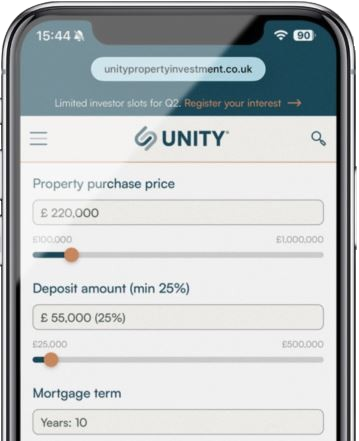
Buy to let investment and rental yield calculator
Case study

- Property Price:£300k
- Mkt Value at purchase:£320k
- Day one equity:£20,000
- Yield:6.8%
- ROCE:30.1%
.avif)