
.jpg)
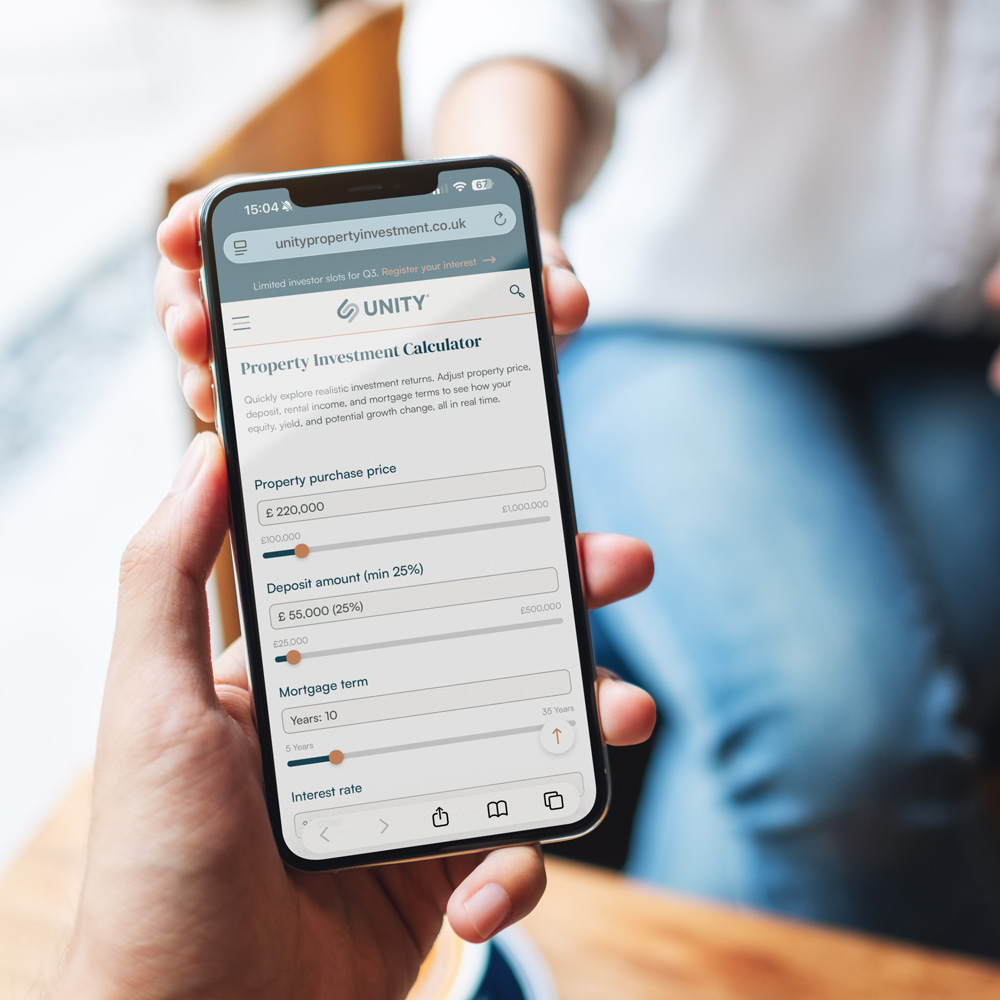








Yes, you can potentially remortgage an existing property to release equity and use the money towards buying another property. Releasing equity to buy another property can allow investors to turn some of the value accumulated in an existing home or buy-to-let into capital for their next purchase. However, the amount of equity you own and the amount you can actually release are two different figures.
Understanding this transaction requires separating several distinct financial concepts. Total equity represents the current market valuation of the property minus the outstanding mortgage balance. Conversely, releasable or usable equity is the portion of that total equity that a lender will allow to be extracted, governed primarily by maximum Loan-to-Value (LTV) limits and rental cover calculations. Furthermore, affordability and rental stress testing will dictate whether the income generated by the property can sustain the increased borrowing. Investors must also account for transaction costs, including early repayment charges and legal fees, which directly reduce the gross capital released. Ultimately, the metric that matters most is the net available capital: the actual cash deposited into the borrower's bank account, ready to be deployed toward the next acquisition.
This guide examines the strategy of extracting capital from an existing asset to facilitate the acquisition of a new asset. Rather than functioning as a generic overview of refinancing mechanics, this analysis provides an acquisition-led framework. It details how to assess available capital, navigate typical lender criteria, account for 2026 tax liabilities, and execute a capital allocation strategy effectively.
Executive Summary
This guide provides a comprehensive roadmap for property investors seeking to unlock wealth from an existing asset to fund their next acquisition. Moving beyond basic refinancing mechanics, it outlines the critical steps from calculating genuinely available capital to deploying it efficiently in the current tax and lending landscape.
Key Takeaways:
- Equity vs. Liquid Capital: A property's total equity does not equal available cash; lenders typically restrict capital release to a maximum of 75% Loan-to-Value (LTV).
- Stress Testing is the Gatekeeper: Extracting equity relies heavily on the existing property passing stringent Interest Coverage Ratio (ICR) stress tests, which vary based on tax status and chosen mortgage products.
- Comprehensive Budgeting: The released capital must cover more than just the next property's deposit. Investors must account for the 5% Stamp Duty Land Tax (SDLT) surcharge on additional properties, legal fees, surveys, and any required compliance refurbishments.
- Portfolio-Wide Scrutiny: Investors possessing four or more mortgaged buy-to-let properties are classified as portfolio landlords, subjecting their entire portfolio to aggregate lender stress testing.
- Alternative Funding Routes: While remortgaging is common, further advances and second-charge mortgages can sometimes offer more cost-effective avenues for raising capital without disturbing an existing favourable mortgage rate.
Can You Remortgage to Buy Another Property?
The direct answer to whether one can remortgage to buy another property is yes. Lenders are accustomed to processing capital raising remortgage applications where the stated purpose of the funds is the acquisition of further residential or commercial real estate.
At a high level, the transaction functions through a replacement of debt. An investor applies for a new, larger mortgage against their existing property based on its current market valuation. Upon the completion of the legal process, the newly appointed lender advances the total loan amount to the investor's conveyancing solicitor. The solicitor utilises these funds to pay off the original, smaller mortgage balance held by the previous lender. The surplus capital, representing the difference between the new loan and the old loan, minus any associated fees, is then transferred to the borrower as a tax free cash lump sum. This newly liquid capital can subsequently be used as the deposit and purchasing capital for a second property.
However, the lender must be satisfied that the existing property can support the increased debt profile without risking default. Concurrently, they will evaluate the stated purpose of the additional borrowing to ensure it aligns with their lending criteria.
Because this guide focuses specifically on the strategic deployment of equity into a new acquisition, readers requiring a detailed understanding of the administrative, legal, and valuation steps involved in the refinancing process itself should consult Unity Property Investment's dedicated operational guide: buy to let remortgaging explained: refinance & release equity.
How Using Equity to Buy Another Property Works
To execute this strategy, it is necessary to first accurately quantify the baseline equity position. Total equity is calculated by taking the current market valuation of the property and subtracting the outstanding mortgage balance. If a property is valued at £400,000 and carries a mortgage of £200,000, the total nominal equity is £200,000.
However, mortgage lenders require an equity cushion to remain in the property. For investment and buy to let mortgages, the maximum borrowing limit is typically capped at 75% loan to value (LTV), though some specialist lenders occasionally stretch to 80% under specific circumstances. Therefore, releasable equity is calculated by multiplying the property value by the maximum permitted LTV, and then subtracting the existing debt.
To conceptualise this mechanism, consider an illustrative scenario demonstrating the disparity between total nominal equity and the actual capital potentially available for extraction.
In this scenario, while the investor possesses £150,000 in total equity, the maximum capital they could extract at a 75% LTV limit is £75,000. It is vital to recognise that this £75,000 represents a gross figure. The actual borrowing depends on lender criteria, affordability and rental coverage, valuation, and other personal circumstances.
How Much Equity Can You Release to Buy Another Property?
The calculation of releasable equity extends beyond a simple loan to value assessment. The UK mortgage market operates under frameworks designed to ensure borrowing remains sustainable. Lenders apply buy to let affordability stress testing to verify that the borrowing would remain affordable even in different economic conditions. An investor with £150,000 of nominal equity may find themselves unable to release the full amount if the property's rental income fails to satisfy the lender's affordability models. In fact, using equity to buy an investment property does not necessarily mean releasing the maximum amount a lender will allow.
Several intersecting factors dictate the amount of equity that an investor can extract from an existing asset.
The defining metric for borrowing capacity in the buy to let sector is the Interest Coverage Ratio (ICR). As outlined in the Bank of England's buy to let underwriting standards, the ICR mandates the ratio by which the gross rental income must exceed the mortgage interest payments. ICR thresholds often vary based on the borrower's personal tax status. For basic rate taxpayers and properties held within corporate structures like Limited Companies, many lenders require the rental income to cover 125% of the mortgage interest. Higher rate and additional rate individual taxpayers are frequently subjected to a stricter 145% ICR threshold by many lenders, reflecting the changes to mortgage interest tax relief under Section 24 of the Finance (No. 2) Act 2015. It is important to note that these are typical parameters, not universal rules applying identically across the market, and actual requirements vary by lender, product, and ownership structure.
Crucially, lenders typically do not calculate this ICR requirement using the actual interest rate of the mortgage product applied for, known as the pay rate. Instead, they apply a hypothetical "stress rate" to ensure the loan would remain affordable if interest rates were to rise. Two year fixed products may be assessed using a higher stress rate or a margin above the pay rate, while some five year fixed products can be assessed more favourably. Criteria vary significantly between lenders. As a result, choosing a five year fixed product can often increase maximum borrowing capacity compared to a two year product on the same property, assuming identical rental income.
Investors must also account for early repayment charges (ERCs). If the existing mortgage is currently within its initial fixed rate penalty period, refinancing with a new lender to extract capital will generally trigger a financial penalty. This fee is calculated as a percentage of the outstanding loan balance, frequently ranging from 1% to 5%. If an investor faces a 3% ERC on a £150,000 mortgage, a £4,500 penalty must be paid. In marginal cases, this penalty can significantly consume the released equity.
To ascertain whether the current rental income is sufficient to release the desired level of equity, investors can approximate the standard underwriting formula. The formula suggests that the maximum loan equals the annual rental income divided by the stressed interest rate, which is then divided again by the required ICR.
For example, if Property A generates £15,000 annually in gross rent, and the lender applies a 125% ICR and a 5.5% stress rate, the £15,000 rent is divided by 0.055, yielding £272,727. This figure is then divided by 1.25, resulting in a maximum permitted loan of £218,181. Even if 75% of the property's physical market value equated to £225,000, the lender in this scenario would cap the advance at £218,181 based on the rental income limit.
When undertaking capital recycling, the emphasis should be on whether the combined investment position makes sense, not simply whether a lender will permit the borrowing.
The relevant question is not simply 'Can I release the equity?' but rather 'Does the expected return from deploying that equity justify the additional borrowing and risk?
How Much Equity Do You Need to Buy Another Property?
Once the precise volume of releasable equity from Property A has been established, the analytical focus must move to the capital requirements of Property B. Released equity may need to cover more than just the mortgage deposit for the next acquisition. Purchasing property in the UK market involves a cascading series of taxation, compliance, and transactional costs.
When evaluating potential target assets, investors must provision for several capital requirements. The primary requirement is the buy to let mortgage deposit. Standard buy to let and commercial property mortgages dictate a typical baseline deposit of 25% of the purchase price.
Taxation represents the next substantial cash requirement. The UK stamp duty land tax (SDLT) regime applies an additional property surcharge to the acquisition of second homes and buy to let properties. Effective from 31 October 2024, the SDLT surcharge was increased from 3% to 5% above standard residential rates. For an investor purchasing an additional property in 2026, a 5% tax charge applies on the first £125,000 of the purchase price, a 7% charge on the portion between £125,001 and £250,000, and a 10% charge on the portion between £250,001 and £925,000. This surcharge generally applies whether purchasing in a personal name or through a Limited Company.
Beyond taxation, secondary acquisition costs accumulate quickly. Professional conveyancing and legal fees for investment properties typically range between £1,200 and £2,000. Specialist buy to let mortgage products frequently carry arrangement fees, and independent due diligence through a property survey requires an allocation of £400 to £1,000.
Investors should also provision for initial compliance and setup costs. Depending on the condition of the target property, this may include immediate refurbishment, safety compliance checks, and anticipated energy efficiency upgrades. Furthermore, maintaining a liquid contingency buffer is advisable to absorb unforeseen maintenance issues or cover mortgage liabilities during the initial void period.
To conceptualise the true cost of scaling a portfolio, consider the approximate capital requirement for a mid market £250,000 investment property in 2026.
In this illustrative example, the investor would need approximately £103,000. However, this is not a universal minimum; a £250,000 investment property requiring little work could require substantially less cash. The equity released from Property A must be sufficient to clear the specific requirement of Property B to facilitate a debt funded expansion.
Once you've established how much capital is available, the next step is determining what that capital can realistically buy. Our investment property acquisition service helps investors identify and assess opportunities against their budget, yield requirements and investment objectives.
Using Equity From One Property to Buy Another: Worked Example
To demonstrate how the transition from Property A to Property B functions in practice, the following scenario outlines a capital recycling strategy executed within the 2026 market environment.
The Extraction Phase: Property A
An investor owns an existing buy to let property. Over the preceding years, the asset has experienced regional capital growth. The investor's existing fixed rate mortgage product has expired, meaning there are no early repayment charges to factor into the refinancing process.
In this scenario, Property A generates £1,650 per calendar month (£19,800 annually) in gross rental income. When assessed by the new lender, the property's income comfortably supports the increased £262,500 debt burden. Consequently, the transaction completes, and £110,000 in liquid capital is deposited into the investor's bank account.
The Deployment Phase: Property B
The investor subsequently reviews available investment opportunities and identifies a new investment asset priced at £250,000.
Where the next property is being purchased through a limited company buy to let, released personal funds may potentially be introduced to the company as a director's loan. The tax and accounting treatment should be discussed with a suitably qualified adviser.
The Strategic Outcome
The net equity released from Property A (£110,000) successfully covers the entire acquisition, taxation, and initial refurbishment costs of Property B (£103,000). The transaction leaves an operational liquidity buffer of £7,000 retained to handle minor initial cash flow requirements.
Releasing Equity From Your Home to Buy an Investment Property
For a significant proportion of the market, the initial journey into property investment begins by raising capital against their primary residential home. While the mechanical flow of funds during a remortgage remains similar, the underwriting process and risk profile differ from buy to let refinancing.
When an individual attempts to release equity from their own home, the lender assesses affordability based heavily on personal earned income. Residential mortgage affordability is generally assessed primarily against household income, expenditure and existing financial commitments. Income multiples can provide an indication of borrowing capacity, but the amount available varies considerably by lender and borrower circumstances. Underwriters will also look at personal credit commitments and general living costs to ensure the household can sustain the higher residential mortgage payment.
Securing additional debt against a primary residence for investment purposes cross collateralises an investment venture with your home. If the newly acquired buy to let property suffers prolonged void periods or requires unexpected maintenance, the investor must service the increased residential mortgage from their personal salary. Failure to maintain these payments places the family home at risk. Consequently, adopting a position of conservative leverage is strongly recommended when utilising primary residence equity for investment purposes.

Portfolio projection tool

Releasing Equity From a Buy to Let to Buy Another Buy to Let
Some investors release equity from an existing buy to let and redeploy it into another investment. Often described as capital recycling, the objective is to put accumulated equity to work elsewhere while maintaining an appropriate level of leverage.
Investors generally generate the extractable equity required for this through organic capital growth, where market values drift upward over time. Alternatively, investors use debt reduction to widen the gap between the property value and the loan balance. A more active pathway involves value created through refurbishment, purchasing a property that requires modernisation, completing the works, and refinancing at the newly elevated post works valuation.
When undertaking capital recycling, the emphasis should be on whether the combined investment position makes sense, not simply whether a lender will permit the borrowing. Combining a leveraged Property A with a leveraged Property B leaves the portfolio sensitive to interest rate fluctuations and void periods.
The Impact of Portfolio Landlord Regulations
Investors must remain aware of Prudential Regulation Authority (PRA) guidelines regarding systemic risk. Under rules in force in 2026, any borrower possessing four or more distinct mortgaged buy to let properties is classified as a "portfolio landlord".
Once an investor falls within the portfolio landlord definition, lenders generally undertake a more detailed assessment of the wider portfolio, which can include aggregate borrowing, portfolio LTV, rental coverage and overall financial performance. Preparing a comprehensive business plan, a cash flow forecast, and an updated property schedule detailing every tenancy and mortgage is a standard requirement for portfolio landlords navigating the refinance process.
Remortgaging to Buy a Second Property
The intent behind purchasing a "second property" alters the financial landscape the borrower must navigate. If the capital released is not intended for a standard buy to let investment, but rather for a personal second home or a holiday property, using equity to buy a second property means different lending criteria will apply.
Second residential homes do not produce standard rental income for underwriting purposes. Therefore, any mortgage required for the new second home will be assessed on the borrower's personal income and their capacity to sustain two residential mortgages simultaneously. Furthermore, the 5% SDLT surcharge for additional dwellings applies to holiday homes and personal second residences, exactly as it does to commercial investment properties.
How to Remortgage to Buy Another Property: Step by Step
When remortgaging to buy another property, navigating the complexities of equity extraction and subsequent redeployment can be achieved by following a systematic sequence:
- Estimate the current value of Property A. Conduct localised market research using recent sold comparables rather than relying purely on automated estimates.
- Check the outstanding mortgage. Contact the existing lender for a redemption statement confirming the exact balance and any early repayment charges.
- Calculate total equity. Subtract the mortgage balance from the realistic market value.
- Estimate potential borrowing at appropriate LTVs. Determine the maximum loan size by applying typical LTV limits (e.g., 75%).
- Check affordability and rental coverage. Apply standard ICR hurdles and stress rates to Property A’s current rental income to confirm the theoretical loan is likely acceptable to a lender.
- Account for refinancing costs and ERCs. Deduct broker fees, legal costs, and penalties from the gross equity release figure.
- Calculate the full cash requirement for Property B. Factor in the deposit, the 5% SDLT surcharge, conveyancing, survey costs, and required refurbishments.
- Assess whether the new combined leverage is sensible. Ensure stripping equity from Property A does not severely compromise its cash flow and resilience.
- Apply for the refinance. Engage a buy to let mortgage broker to find a suitable lender, navigate stress tests, and submit the application.
- Complete the refinance. Once the property is valued and legal checks conclude, the surplus equity is transferred to your bank account.
- Use the available capital. The released funds can now be deployed toward exchanging contracts on the next acquisition.
Estimated Capital Requirements for a £250,000 Investment Property
Property B Capital Requirements
Financial Allocation
.png)
What Can Stop You Releasing Equity?
While financial modelling may suggest a viable transaction, several practical obstacles frequently disrupt the extraction of equity.
The most common disruption is a downvaluation. Lenders rely on an independent RICS surveyor; if the surveyor determines the property is worth less than anticipated, the 75% LTV ceiling drops, compressing the releasable equity.
Insufficient rental income frequently blocks applications. The property value may be high, but if the rental income fails to pass the ICR stress test, the lender will cap the loan at the level the rent can support. Additionally, high existing LTVs or uneconomic early repayment charges can make the transaction financially unviable.
Lender exposure limits, property condition, or personal credit issues can also halt an application. Finally, for those classified as portfolio landlords, a failure in the aggregate background portfolio stress test can result in a declined application on the subject property.
-v1.avif)
Get investor insights and early access to opportunities
Join our investor briefings for structured insights, market updates, and priority access to new deals.

No spam, just timely insights for investors We respect your privacy and never sell your data
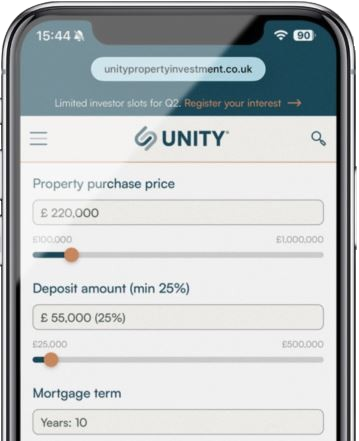
Buy to let investment and rental yield calculator
Should You Use Equity to Buy Another Property?
Equity tied up in an existing property can potentially be redeployed into another investment. That can increase the amount of property an investor owns, but it also increases borrowing and financial risk.
The potential advantages include putting dormant equity to productive use, generating secondary rental income streams, and increasing investable capital. Extracting equity can avoid waiting years to save another deposit and can facilitate geographic diversification, allowing an investor to reallocate capital into new markets.
However, the risks and trade offs are substantial. The most immediate impact is increased leverage. The total debt burden across the portfolio increases, meaning both properties must perform reliably to service their respective liabilities. Refinancing to extract cash may also force a reset of the mortgage rate on the existing property, which could increase monthly costs.
Increasing LTV reduces the equity cushion, leaving the investor more exposed if property prices fall. The relevant question is not simply "Can I release the equity?" but rather "Does the expected return from deploying that equity justify the additional borrowing and risk?" How to use equity to buy another property effectively depends entirely on whether the numbers demonstrate a resilient and profitable strategy.
Alternatives to Remortgaging to Buy Another Property
A full remortgage is not the only mechanism for extracting capital. Depending on the investor's circumstances, alternative financial instruments may be considered.
A further advance involves borrowing additional funds directly from the existing mortgage lender. The original mortgage remains untouched, while the new borrowing sits alongside it as a separate sub account. This can be advantageous if the investor wishes to avoid triggering early repayment charges on their main mortgage.
An investor could also seek a second charge mortgage. This is a separate loan provided by a different lending institution, secured against the property but sitting behind the first mortgage in legal priority. Second charge loans protect the primary mortgage's interest rate and avoid ERCs, though their interest rates are generally higher than standard first charge mortgages.
Other alternatives include utilising existing cash or savings, waiting for the existing mortgage deal to expire to avoid penalties, or selling an asset to reallocate capital entirely.
Disparity Between Total Nominal Equity and Releasable Capital
Valuation and Equity Metrics
Financial Position
Property A Refinance and Equity Extraction Mechanics
Property A Refinance Mechanics
Financial Position
Property B Acquisition and Capital Deployment Mechanics
Property B Acquisition Mechanics
Financial Position
Frequently Asked Questions
Can I remortgage to buy another property?
Can I use equity to buy another property?
How much equity do I need to buy another property?
Can I remortgage my house to buy another property?
Can I release equity from a buy to let to buy another buy to let?
Can I use equity as the deposit for another property?
Can I remortgage to buy a second property?
How long after buying a property can I remortgage it?
Case study

- Property Price:£275k
- Mkt Value at purchase:£290k
- Day one equity:£14,500
- Yield:7.2%
- ROCE:28.6%
.avif)