
.jpg)








Buying an existing property portfolio allows investors to acquire several income-producing properties at once, rather than building a portfolio one purchase at a time. For investors with sufficient capital, this can provide immediate scale and rental income, but it also means taking on the risks, costs and management responsibilities of several properties simultaneously.
While a residential property portfolio for sale can provide immediate gross cash flow, operational efficiencies during the acquisition phase, and potential negotiating leverage, it inherently concentrates the acquisition risk. Purchasing multiple properties simultaneously exposes the buyer to inherited structural defects, complex tenancy issues, and market and financing risks across several properties at once. The defining principle of a successful portfolio acquisition is that the desire for scale must never override fundamental investment discipline. A portfolio should never be valued simply as one homogenous financial instrument. Every underlying property must first demonstrate its viability on its own individual merits before the collective benefits of the portfolio transaction are considered.
Investors who want to understand how portfolios can be built progressively over time, rather than acquired in a single transaction, should first read the foundational guide detailing how to build a property portfolio. For purchasers evaluating the acquisition of multiple investment properties from a single vendor, this guide details the requisite financial analysis, legislative due diligence, valuation metrics, and strategic frameworks required to execute a property portfolio sale successfully.
Executive Summary
Acquiring an existing property portfolio can accelerate growth and consolidate the transaction process, but it requires a sophisticated approach to asset evaluation. Investors must look beyond aggregate metrics and potential discounts to understand the individual viability of each property.
- Underwrite Individually: Assess each property's market value, true gross yield, and physical condition independently before evaluating the portfolio's aggregate numbers
- Beware of Bulk Liabilities: Acquiring multiple properties simultaneously concentrates risk, including inherited tenancy issues, complex financing, and the potential for severe deferred maintenance.
- Asset Selection Matters: The optimal investment strategy may involve negotiating for a strong, cherry-picked subset of the portfolio rather than accepting weaker assets simply to achieve scale.
- Discounts vs. Premiums: While motivated sellers may offer a discount in exchange for speed and certainty, high-performing portfolios with established management and reliable tenants may command a premium.
What Is a Property Portfolio Sale?
A property portfolio sale is a real estate transaction where an investor acquires multiple residential rental properties from a single vendor under a unified commercial negotiation. These sales can encompass a handful of terraced houses, large purpose-built blocks of flats, or geographically diverse residential assets, and do not necessarily require the properties to be transferred under one single legal title.
The terminology surrounding these transactions, whether referred to as a buy-to-let portfolio, a landlord portfolio, or a rental portfolio for sale, broadly describes the same commercial reality. The assets involved may be fully tenanted, completely vacant, or a mixture of both. They might be highly concentrated on a single street to provide localized dominance, or distributed across various UK regions. Crucially, a "portfolio sale" is defined by the negotiation and acquisition framework rather than the legal structure. The purchaser may be acquiring the shares of a Special Purpose Vehicle (SPV) that holds the real estate, or they may be negotiating multiple individual asset purchases that are contractually linked to complete simultaneously.

Why Do Landlords Sell Property Portfolios?
Understanding a vendor's core motivation for disposing of a rental property portfolio is a critical component of any acquisition strategy. While an inexperienced purchaser might assume that a bulk sale indicates financial distress or underlying asset failure, landlords may sell portfolios for reasons including retirement, succession planning, estate simplification, capital release, refinancing, geographical consolidation or a change in investment strategy.
Regulatory pressure can also be another potential factor. The administrative burden of licensing, strict Energy Performance Certificate (EPC) requirements, and evolving tenancy legislation such as the Renters' Rights Act 2026, can prompt landlords to review their exposure to the sector.
Identifying the underlying reason for the sale provides the purchaser with invaluable context. A motivated seller seeking immediate liquidity for retirement offers genuine negotiating leverage, potentially allowing a buyer to secure favourable pricing. Conversely, a vendor attempting to offload a portfolio due to systemic structural defects, persistent tenant arrears, or unachievable refinancing requirements may present considerably greater risk. The acquiring investor must carefully distinguish between a vendor seeking transaction certainty and a portfolio designed to mask underlying liabilities.
What Are the Advantages of Buying a Property Portfolio?
Purchasing multiple properties simultaneously offers several structural and commercial advantages, provided the underlying assets align with the investor's core criteria.
Immediate scale is the most prominent benefit. An investor can acquire several income-producing assets in one transaction, completely bypassing the sequential process of sourcing properties individually. This facilitates the rapid deployment of capital and accelerates the journey toward targeted gross revenue figures. Furthermore, because many property portfolios for sale UK-wide are traded with tenants already in situ, the transaction frequently provides existing rental income from the day of completion. This eliminates the initial void periods and tenant-sourcing fees typically associated with vacant possessions.
Acquiring multiple assets also introduces the potential for a portfolio discount. Vendors prioritising speed, execution certainty, or administrative simplicity may accept a lower aggregate price than the cumulative open-market value of the individual properties. By committing to a multi-property acquisition, the buyer becomes commercially important to the vendor's exit strategy, generating significant negotiating leverage. This leverage can be utilised to negotiate flexible completion timelines or the retention of capital against identified maintenance issues.
Finally, bulk acquisitions generate operational efficiency. Acquiring multiple properties from one vendor centralises the legal, surveying, and administrative processes. A single, coordinated due diligence phase may create some administrative efficiencies compared to buying properties from multiple disparate sellers. If the acquired assets differ by property type, tenant profile, or micro-location, the transaction can also inject immediate diversification into an investor's holdings. However, it must be noted that purchasing five identical terraced houses on the same street constitutes concentration risk rather than meaningful diversification.
What Are the Risks of Buying a Property Portfolio?
The simultaneous acquisition of a residential property portfolio compounds risk. Operational, financial, and structural liabilities are acquired en masse, requiring substantial capital reserves and robust management infrastructure to mitigate the exposure.
One of the most severe acquisition risks involves buying weak assets merely to obtain desirable ones. Vendors may package highly liquid, strong-yielding properties alongside weaker, maintenance-heavy assets to ensure a total disposal. If weaker properties materially affect the investment case, the buyer may need to renegotiate the overall price, exclude those assets or walk away from the transaction.
Overpaying due to an attractive headline yield represents another common pitfall. Gross current rent alone does not dictate investment quality. Some portfolios in lower-value, higher-yielding rental markets may display double-digit gross yields while producing considerably lower net returns once management costs, maintenance, voids and tenant turnover are taken into account. Furthermore, some landlords may defer capital expenditure ahead of a portfolio sale. Consequently, the buyer may inherit multiple instances of deferred maintenance, such as aging roofs, failing boilers, and compliance upgrades, that require simultaneous, heavy capital injections.

Tenancy issues present immediate operational friction. Acquiring tenanted portfolios means inheriting historical management practices, which frequently include undocumented tenancy arrangements, unverified historic deposits, undocumented arrears, and problematic tenancies. Furthermore, below-market rents cannot always be rectified immediately due to statutory notice periods.
Financing and valuation risks also scale with portfolio size. Lender valuations may differ significantly from the vendor's aggregate asking price. If a surveyor down-values several properties based on condition or market sentiment, the investor faces an unexpected shortfall in lending, requiring additional cash equity to complete the transaction. Ultimately, transitioning multiple tenancies to a new management structure simultaneously tests operational capacity, and any failure in tenant communication or compliance rectification can result in immediate revenue loss.
The defining principle of a successful portfolio acquisition is that the desire for scale must never override fundamental investment discipline.
While purchasers frequently look for a "bulk discount", there are circumstances where a vendor expects a premium because the buyer is acquiring an established, income-producing portfolio with management and tenants already in place. The fundamental lesson is therefore: never assume buying in bulk means buying cheaply.
How to Value a Property Portfolio
Valuing a buy-to-let portfolio requires a rigorous, dual-layered analytical approach. Investors must avoid the critical error of valuing the portfolio strictly on its aggregate figures without first interrogating the fundamental viability of the individual components.
Level 1: Individual Property Underwriting
Before any collective assessment is considered, every property must be subjected to a standalone financial appraisal. Investors should complete a comprehensive property due diligence checklist for each physical asset.
For every property, the analysis must isolate the open-market value versus the apportioned purchase price, and the current passing rent versus the realistic market rent. Analysts must calculate individual gross and net yields while forecasting expected operating costs, including localized licensing or block management fees. Condition reports dictate immediate refurbishment requirements, which must be accurately costed. For flats, tenure becomes critical; the length of the lease, service charges, and ground rent terms must be reviewed. EPC ratings, local rental demand, comparable sales data, and the likely exit liquidity for that specific asset type form the foundation of the individual underwriting process.

Level 2: Portfolio-Level Analysis
Only after the individual assets have been rigorously assessed should the analysis zoom out to the macro level. The portfolio-level assessment evaluates the synergy, total exposure, and overall feasibility of the transaction.
This secondary analysis examines the total capital required, encompassing deposits, stamp duty, legal fees, and aggregated immediate capital expenditure. Blended gross and net yields across the portfolio must be calculated against total financing requirements. Geographic exposure and tenant concentration risk are modeled against overall management overheads and required contingencies.
A critical distinction must be maintained during this phase between current rent and market rent. A portfolio displaying an artificially high headline yield based on overcrowded or non-compliant usage carries significant regulatory risk. Conversely, a portfolio with heavily suppressed, below-market rents may offer substantial value-creation potential, provided the investor formulates a realistic, legally compliant strategy for increasing those rents over time.
Should You Buy the Whole Property Portfolio?
The existence of a marketed property portfolio does not obligate a purchaser to acquire every asset contained within it. Advanced acquisition strategies frequently revolve around rationalizing the vendor's offering to isolate the strongest investments.
Consider a scenario where a vendor offers eight residential properties. Rigorous individual underwriting may reveal that four properties perfectly match the investor's criteria, two are acceptable only at a significantly restructured price, and two possess fundamental structural flaws or leasehold issues making them uninvestable.
One option is to negotiate for the strongest assets rather than buying the entire portfolio. While vendors naturally prefer a clean, whole-portfolio disposal, a buyer offering certainty may be able to negotiate for a subset of the portfolio. If a vendor strictly insists on an all-or-nothing transaction, the buyer must appropriately discount the total purchase price to account for the future disposal of the unwanted assets post-completion. Scale should never justify the acquisition of unsuitable properties.
Property Portfolio Discounts and Premiums
Is it cheaper to buy a property portfolio?Purchasing a portfolio can sometimes secure a lower per-unit price, but an aggregate discount is not inherently guaranteed. Vendors may offer price reductions in exchange for execution speed and administrative simplicity. However, an asking price lower than the cumulative sum of the individual properties does not automatically mean the assets are below true market value.
Investors frequently target portfolios seeking substantial price reductions, but the mechanics of portfolio pricing require careful navigation. Genuine discounts typically arise when a seller prioritises timeline over maximum capital extraction. This is common in scenarios involving urgent refinancing pressure, insolvency events, or complicated management situations where the vendor is fatigued by vacant properties and heavy refurbishment requirements.
Conversely, while purchasers frequently look for a "bulk discount", there are circumstances where a vendor expects a premium because the buyer is acquiring an established, income-producing portfolio with management and tenants already in place. The fundamental lesson is therefore: never assume buying in bulk means buying cheaply.
True market value is established by localised comparable evidence, not by a vendor's arbitrary aggregate pricing. Investors evaluating these dynamics should review the principles of how to find below market value property and understand the mechanics of off-market property acquisitions to accurately contextualize pricing against factual market data.
Due Diligence When Buying a Rental Portfolio
Thorough due diligence represents the only defense against inheriting a vendor's liabilities. The process is tripartite, covering property-level investigations, tenancy audits, and portfolio-level tax assessments.
Property-Level Due Diligence
Every physical asset must be legally and structurally verified. The purchaser’s legal representatives must confirm title, tenure, and execute local authority searches. Structural surveys and independent valuations must run alongside a review of legal documentation. For leasehold assets, service charge accounts, major works notices, and ground rent escalation clauses require scrutiny; investors can review whether are flats good buy-to-let investments and study the nuances of leasehold vs freehold buy-to-let to navigate these specifics. Essential compliance documentation, including EPCs, gas safety certificates, and electrical safety records, must be verified for statutory validity.
Tenancy-Level Due Diligence
Where tenants are in situ, the legal and financial health of the tenancies must be audited. This involves reviewing the original tenancy agreements, current rent schedules, and historical payment ledgers to identify hidden arrears. Deposit protection and prescribed information should be verified, alongside the wider compliance history of each tenancy, as historic breaches can create legal and financial complications for the incoming landlord.
Portfolio-Level and Tax Due Diligence
Macro-level due diligence assesses aggregate cash flow, concentration risk, and the tax implications of the transaction structure. Acquiring multiple residential properties triggers complex Stamp Duty Land Tax (SDLT) scenarios that materially impact the total capital requirement.
The SDLT treatment varies depending on the number of dwellings acquired, the transaction structure, and the buyer's individual or corporate circumstances. For example, Multiple Dwellings Relief (MDR) was abolished for transactions completing or substantially performing on or after 1 June 2024, and purchasers must now navigate the standard residential rates, higher-rate surcharges for additional dwellings, or non-residential rates where applicable. Because these tax implications can dramatically alter the net returns of the investment, investors should always have the transaction reviewed by a suitably qualified tax adviser or conveyancer before committing.
How Are Property Portfolio Purchases Financed?
Financing the acquisition of multiple properties simultaneously differs materially from funding a single buy-to-let asset. Lender criteria, valuation methodologies, and affordability calculations are applied across the entire borrowing facility, altering the risk profile.
Investors typically utilise several financing routes. Individual buy-to-let mortgages can be secured separately for each property, which optimizes loan-to-value (LTV) ratios on an asset-by-asset basis but carries a heavy administrative burden. Alternatively, investors leverage portfolio landlord facilities. Lenders apply strict underwriting standards to "portfolio landlords" (defined by the Prudential Regulation Authority as those with four or more mortgaged properties), stress-testing the background portfolio's aggregate yield and rental cover requirements alongside the new acquisitions.
Specialist commercial lenders offer portfolio loan facilities secured against the entire collection of assets. This simplifies administration but interlinks the properties; selling one later may require negotiating a partial discharge with the lender. In scenarios where a portfolio contains unmortgageable properties, such as those lacking a functional kitchen or bathroom, bridging finance provides rapid, short-term capital to facilitate the purchase and refurbishment before refinancing onto term debt. Finally, cash purchases can provide additional negotiating leverage, offering the vendor execution certainty before the capital is later extracted via post-acquisition refinancing.
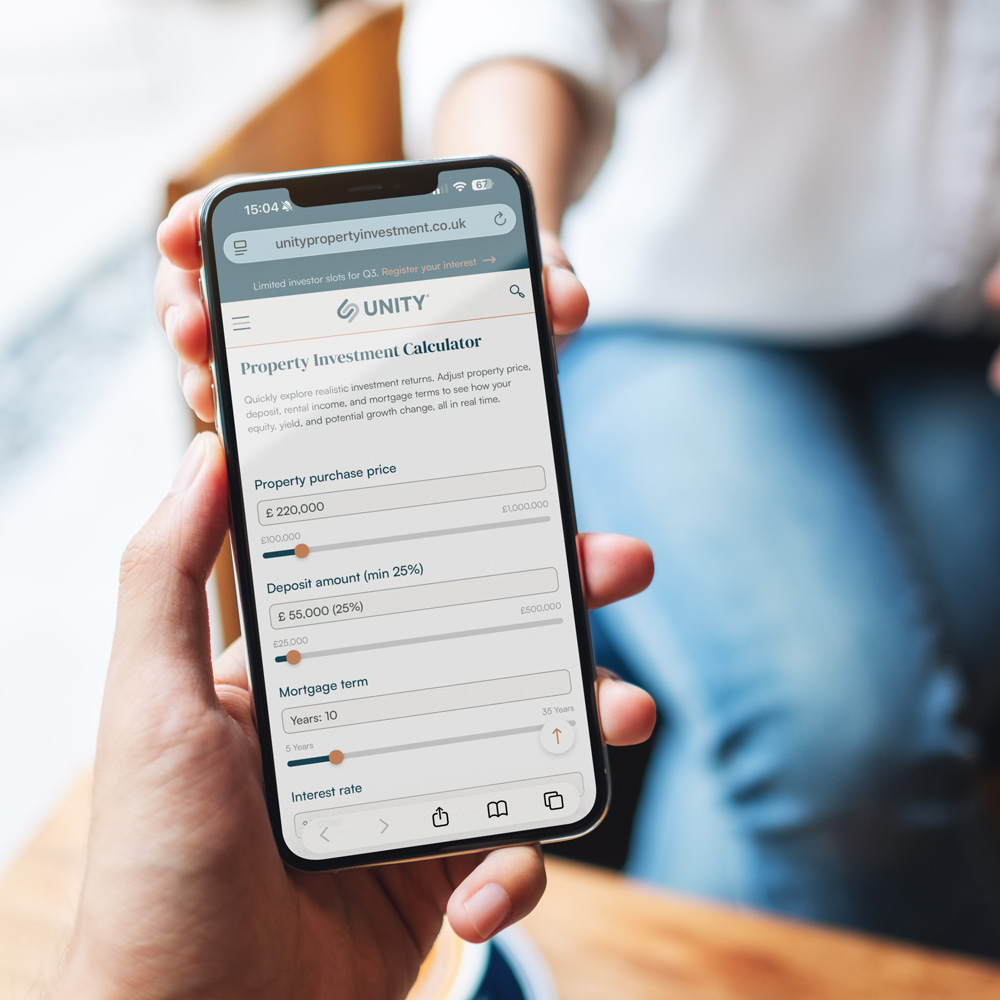
Investors must carefully model these debt parameters, utilizing a buy-to-let calculator to stress-test how prevailing interest rates and lending fees impact the portfolio's net cash flow.

Portfolio projection tool

Buying Tenanted Property Portfolios
Acquiring a landlord portfolio for sale with tenants already in occupation provides immediate yield, but requires the purchaser to inherit the operational reality of the vendor's management style.
One potential advantage is that rental income can continue from completion where tenants remain in occupation and continue paying rent. However, the operational transition involves meticulous handover protocols. The purchaser must ensure all tenancy documentation is legally compliant and formally reassigned. If the vendor has failed to provide tenants with statutory compliance documentation, the acquiring landlord assumes that liability.
Furthermore, investors must navigate shifting legislative landscapes. Investors assessing portfolios with below-market rents must not assume that revenue can be increased immediately; any rent adjustments must comply with statutory notice periods and legislative limitations. If the inherited tenancies are fundamentally problematic, the legal avenues for gaining vacant possession require extensive operational oversight.
Refurbishment and Value Creation Across a Portfolio
Identifying value-add opportunities across a multi-property acquisition is a cornerstone of advanced investment strategy. Value is generated by targeting properties where condition suppresses both the capital value and the rental yield. Rents are frequently below market rates because deferred maintenance has rendered the properties uncompetitive.
Well-targeted refurbishment can improve tenant appeal, support rental performance and strengthen long-term saleability. However, attempting simultaneous refurbishments across a portfolio introduces intense logistical and cash-flow risks. A £15,000 refurbishment on one property may be manageable; the same expenditure across six properties requires £90,000, tight project sequencing, and the ability to absorb simultaneous void periods.

Investors require strict, property-by-property budgeting, realistic contingency funds, and careful cash-flow planning. Investors can explore how we refurbish investment properties for detailed frameworks on sequencing value-add strategies and managing contractor deployment effectively across multiple assets.
How to Find Property Portfolios for Sale in the UK
Where can investors find property portfolios for sale?Property portfolios are typically sourced through specialist investment estate agents, property auction houses, and professional sourcing companies. Furthermore, portfolio opportunities can also arise off-market via direct-to-vendor negotiations before the assets are publicly listed or advertised.
Identifying high-quality residential property portfolios requires utilizing a broader array of sourcing channels than standard single-asset searches. While retail estate agents occasionally list multi-unit blocks, specialist investment agents frequently handle openly marketed portfolio disposals. Auction houses regularly list portfolios, particularly when liquidators are disposing of corporate real estate assets or vendors require absolute certainty of sale.
Many attractive portfolio opportunities are never marketed using the literal phrase "property portfolio for sale". Instead, an investor may identify a landlord who owns several properties and negotiate a private, multi-property acquisition directly. For investors seeking active market exposure, reviewing current investment properties for sale and understanding the dynamics of how we source properties provides vital visibility into portfolio opportunities.
Buying a Portfolio vs Building a Portfolio One Property at a Time
The strategic decision between acquiring an existing portfolio and building one sequentially depends fundamentally on capital availability, risk tolerance, and desired speed to market.
Investors weighing the merits of immediate scale versus progressive risk mitigation should consult the comprehensive guide on how to build a property portfolio to determine the most appropriate strategic fit for their capital base.
Planning the Exit Before Buying the Portfolio
A common error in portfolio acquisition is failing to plan the exit strategy prior to the exchange of contracts. Due to the scale of capital involved, understanding exactly how liquidity can be extracted is paramount.
Potential exits include holding the entire portfolio long-term for yield, refinancing individual properties post-refurbishment to extract initial equity, or breaking the portfolio apart to sell individual units on the retail market. A common value-creation strategy involves purchasing a portfolio, immediately disposing of the weakest assets to reduce senior debt, and retaining the highest-yielding properties.
Crucially, individual asset liquidity dictates the viability of these exits. If a portfolio comprises unique, highly illiquid assets or properties with defective leases, the investor may be forced to sell the portfolio as a whole in the future, artificially restricting their buyer pool to other cash-rich investors. Analysts must evaluate buy-to-let exit strategies to ensure they are not inadvertently acquiring stranded assets.
An Example Property Portfolio Analysis
To illustrate the necessity of granular underwriting, consider a hypothetical scenario where a vendor is offering a portfolio of five residential properties for an aggregate asking price of £950,000. On paper, the portfolio generates £67,200 in gross annual rent, presenting an attractive headline gross yield of 7.07%.
The 7.07% headline portfolio yield therefore tells only part of the story. An investor might seek to acquire Properties A and B, consider Property C at a lower price, and reject D and E. Alternatively, if the vendor requires a complete sale, the additional costs and weaker economics of D and E would need to be reflected in the price offered for the portfolio as a whole.
Hypothetical 5-Property Portfolio Underwriting Analysis
Property
Asking Price
Est. Market Value
Current Rent
Gross Yield
Assessment
.png)
Is Buying a Property Portfolio Right for You?
Acquiring a property portfolio can require considerably more capital and operational capacity than purchasing a single buy-to-let. The strategy is generally appropriate for well-capitalized investors who possess sufficient liquidity to absorb multiple deposits, legal fees, and simultaneous transaction costs without straining their reserves. It suits those desiring rapid capital deployment rather than suffering cash drag over several years. Furthermore, successful portfolio buyers possess the operational infrastructure to tolerate multiple simultaneous legal transactions and effectively manage new, inherited tenancies from day one.
Conversely, portfolio acquisition may be less appropriate where investment capital is strictly limited, offering no financial buffer for valuation shortfalls or immediate, unexpected capital expenditure. It is unsuitable for investors wishing to learn the operational realities of property management gradually, or where financing remains uncertain. Finally, if a single portfolio transaction creates excessive geographic or demographic concentration, unbalancing a wider wealth strategy, the acquisition should be avoided.
-v1.avif)
Get investor insights and early access to opportunities
Join our investor briefings for structured insights, market updates, and priority access to new deals.

No spam, just timely insights for investors We respect your privacy and never sell your data
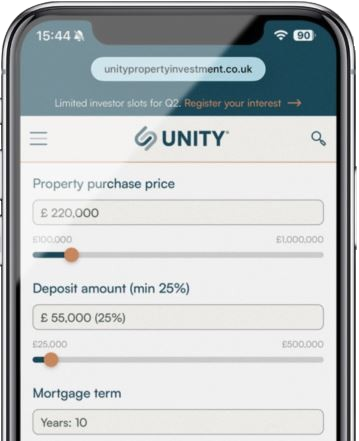
Buy to let investment and rental yield calculator
How Unity Approaches Multi-Property Investment Opportunities
At Unity, we approach multi-property opportunities in much the same way as individual acquisitions: each property first needs to work on its own merits. We operate on the fundamental conviction that acquiring more properties does not automatically create a better investment; aggregate scale must be supported by viability at the individual asset level.
When evaluating property portfolios for sale, we assess opportunities stringently on a property-by-property basis. Every underlying asset is subjected to rigorous underwriting regarding its current physical condition, localized rental demand, true market value, and capital expenditure requirements. Only after this individual assessment is complete do we factor in the broader benefits, such as operational scale, financing efficiency, and pricing potential, into our final acquisition strategy.
Through dedicated sourcing capabilities, we identify both on-market and off-market opportunities, leveraging industry networks to secure assets that align with strict investment criteria. Furthermore, we provide end-to-end integration for investors, encompassing due diligence support, the identification of value-add opportunities, comprehensive refurbishment management, and ongoing property management to ensure that theoretical yields translate into protected, long-term cash flow.
Investors seeking to understand the granular execution of this approach can review detailed case studies showcasing previous value-creation models, or utilise the portfolio projection tools to model long-term financial outcomes. For tailored acquisition strategies, investors can engage with our property investment consultants to navigate the complexities of portfolio-scale capital deployment.
Investors looking to acquire one or multiple UK investment properties can review current investment opportunities or book a consultation to discuss their core investment criteria and explore how targeted, research-backed acquisitions drive long-term wealth creation.
Strategic Comparison of Portfolio Acquisition vs Individual Purchases
Factor
Buying Existing Portfolio
Buying Individually
Frequently Asked Questions
What is a property portfolio?
Where can investors find property portfolios for sale in the UK?
Is it cheaper to buy a property portfolio?
Can an investor get a mortgage to buy a property portfolio?
Can investors buy a portfolio with tenants already in place?
How is a rental property portfolio valued?
Can an investor buy only some properties from a portfolio?
Is buying a property portfolio better than building one gradually?
Case study

- Property Price:£250k
- Mkt Value at purchase:£250k
- Day one equity:£0
- Yield:7.4%
- ROCE:31.6%
.avif)