
.jpg)









Property investment services can mean very different things. One provider might simply help an investor find a property, while another may coordinate everything from investment strategy and acquisition to refurbishment, letting and ongoing management.
For an individual or corporate entity seeking assistance in deploying capital or building a portfolio, navigating this landscape requires understanding exactly what is being offered. An investor entering the market will encounter property investment consultants, property sourcers, buying agents, mortgage brokers, RICS-qualified surveyors, project managers, and letting agents, alongside larger buy to let investment companies that offer several of these distinct functions under a single corporate roof.
The fundamental challenge for an investor is therefore identifying precisely which parts of the investment lifecycle are actually being provided. It requires understanding where a provider's responsibility begins and ends, which operational or legal responsibilities remain with the investor, and whether the necessary services are best delivered by a fragmented team of property investment specialists or through a unified, end-to-end partner.
This comprehensive guide maps the entire ecosystem of property investment services in the UK. This analysis provides the framework required to decide which stages to handle independently, when to instruct standalone specialists, and how those individual functions differ from an integrated property investment solution.
Executive Summary
The UK property investment market offers a vast array of services, ranging from isolated tasks like finding a property or conducting a structural survey to comprehensive, long-term asset management. Because the term encompasses such a broad spectrum of support, investors must clearly define their specific requirements to understand which stages of the investment lifecycle they are actually outsourcing. The most crucial decision an investor faces is determining whether to manage the process independently, assemble a network of standalone experts, or instruct an integrated investment company to coordinate the entire lifecycle.
Key Takeaways:
- No Standardised Package: Property investment involves distinct technical, financial, and operational stages; the specific services provided by an investment company can vary significantly.
- Specialists vs. Integrated Services: Investors can choose to instruct individual professionals (such as buying agents or letting agents) for specific tasks, or use an end-to-end property investment service to manage the complete workflow.
- Protected Regulatory Boundaries: Core functions such as legal conveyancing, RICS surveying, and regulated mortgage advice must remain with qualified professionals, even when an investor uses an integrated management service.
- Choosing the Right Model: The optimal level of support depends entirely on the investor's available time, existing property experience, local market knowledge, and desire for hands-on control.
What Are Property Investment Services?
Property investment services are professional services that support an investor with the strategic planning, acquisition, physical improvement, financial structuring, letting, or ongoing operational management of an investment property.
Crucially, there is no single, standardised package of services in the UK market. Because property investment is not a single action but a sequential lifecycle of highly distinct technical disciplines, the landscape is broadly divided into two structural categories:
The first category consists of specialist services. These are professionals or firms that execute a single, strictly defined function within the investment timeline. A surveyor, for example, is instructed solely to assess the physical condition of a building and assumes no responsibility for its subsequent rental performance. A letting agent is instructed solely to find a tenant and assumes no responsibility for the initial financial modelling that justified the acquisition.
The second category consists of integrated or end-to-end services. These are organisations that combine multiple stages of the investment process into a single managed workflow. These property investment solutions aim to provide operational continuity, often managing the initial strategy, the asset sourcing, the financial appraisal, the acquisition logistics, and the subsequent property management as a unified, accountable process.
For detailed guidance on how to evaluate the credentials, corporate structures, and track records of the organisations providing these services, investors should refer to our dedicated guide on choosing property investment companies in the UK.
What Services Can a Property Investor Actually Outsource?
The lifecycle of a residential property investment consists of multiple distinct technical, financial, legal, and operational stages. Almost every single stage can be outsourced, provided the investor understands who is qualified, insured, and legally permitted to perform each specific function.
The table below maps the core requirements of a property investor against the specific services designed to meet them, and identifies the professionals who typically provide them within the UK market.
While a highly integrated firm may coordinate this entire timeline, it is critical to note that certain functions sit within distinct professional and regulatory frameworks. A credible property investment service acts as the central coordinator for these third parties, managing the transaction's momentum, rather than attempting to substitute for specialist legal, financial, or surveying professionals.
Property Investment Advisory and Strategy
Before capital is deployed into an illiquid asset class, the overarching strategy must be defined. The advisory stage is where the fundamental parameters of the investment are established, ensuring the subsequent property search is anchored in financial reality rather than speculative ambition.
Property investment experts operating at this stage will typically stress-test an investor's assumptions by exploring several core strategic questions:
- What is the investor attempting to achieve? Is the primary goal immediate monthly income generation, or long-term capital growth?
- How much liquid capital is available for deployment, factoring in deposits, acquisition costs, and potential refurbishment?
- What is the intended leverage strategy, and how does the loan-to-value (LTV) ratio impact the risk profile?
- What is the investment timeframe? Is this a medium-term hold designed for a specific life event, or a generational wealth-transfer strategy?
- How much ongoing involvement does the investor actually desire?
It is important to understand that strategy formulation is entirely distinct from execution. A property investment consultancy generally focuses on helping the investor determine the strategy and make informed decisions, rather than necessarily executing the subsequent property search, negotiating the acquisition, or managing the physical asset.
For a comprehensive breakdown of where consultancy fits into the ecosystem and what property investment consultants in the UK actually do, see our guide to property investment advice.
Property Search and Acquisition Services
Once a strategy is established, the focus shifts to the physical market. Investors who lack the time to manually search property portals, or who are targeting geographic areas outside their local knowledge base, routinely outsource this stage to a property investment specialist.
Outsourced property search and acquisition services typically encompass:
- Conducting targeted market research to identify specific postcodes, regeneration zones, or commuter corridors that align with the strategic brief.
- Identifying properties, often leveraging direct-to-vendor marketing or established industry relationships to secure off-market assets before they reach the public domain.
- Filtering opportunities by rejecting assets that fail strict investment criteria, such as properties with structurally defective non-standard construction, prohibitively high service charges, or short leaseholds.
- Conducting the initial commercial assessment to verify the vendor's pricing against local comparables.
- Managing the negotiation to secure the asset on the most favourable terms.
- Coordinating the acquisition logistics through to the exchange of contracts.
Property sourcing and buying-agent businesses are also subject to specific compliance requirements, including relevant registration with HM Revenue & Customs (HMRC) for Anti-Money Laundering (AML) supervision and redress obligations. For a detailed explanation of how acquisition professionals operate, see our guide to buying agents in the UK.
There is a profound operational difference between finding a property and determining whether it represents a viable, risk-adjusted investment.
Crucially, investors should consider not only how a property is acquired, but what happens after completion, when the asset must begin delivering against the original investment case.
Investment Appraisal and Due Diligence Support
There is a profound operational difference between finding a property and determining whether it represents a viable, risk-adjusted investment. Investment appraisal is the analytical engine of property investment services, and the depth of this appraisal can vary significantly between providers, making it important to understand what analysis is actually included.
A rigorous investment appraisal models the complete economic reality of the asset over its projected lifecycle. When an investor outsources this function, they should expect the service provider to comprehensively model:
- Purchase costs and acquisition structuring.
- Achievable rent.
- Comprehensive operating costs.
- Financing options and mortgage stress-testing.
- Refurbishment costing.
- Cash flow projections.
- Gross and net yield analysis.
- Return on capital employed (ROCE).
- Exit assumptions and long-term capital appreciation.
- Downside scenarios.
While an investment company coordinates these economics, specialist technical due diligence regarding the legal title or the physical structure must remain with the relevant regulated professionals.
For further insight into this analytical phase, see how professional investors analyse property deals and how do you work out rental yield?
Mortgage, Legal and Surveying Services
A property investment service should recognise the boundaries between investment support and specialist professional advice. Property finance, legal conveyancing and surveying are specialist disciplines subject to their own professional and, where applicable, regulatory frameworks. They are services that surround the investment process, rather than functions an investment company should pretend to replace. An integrated property investment service will coordinate these professionals to ensure the transaction maintains momentum, but the appropriate specialist advice must always come from the relevant qualified party.
Mortgage Advice
Buy-to-let finance is heavily segmented. The market includes Unregulated BTL mortgages used by professional commercial investors, and Consumer Buy-to-Let (CBTL) mortgages, which are regulated by the Financial Conduct Authority (FCA) for "accidental landlords". Furthermore, investors with four or more mortgaged properties trigger strict Prudential Regulation Authority (PRA) portfolio landlord underwriting standards, requiring lenders to rigorously assess the cash flow and stress-test the entire background portfolio. A specialist mortgage broker can help investors navigate these different criteria and identify suitable financing options.
Property Surveying
Investors must rely on RICS-qualified surveyors to assess physical condition, which is entirely distinct from a lender's mortgage valuation. Whether an investor requires a RICS Level 2 or Level 3 Home Survey to understand structural integrity, or a formal RICS Red Book Valuation for complex refinancing or tax calculations, structural and formal valuation reporting remains a protected specialist function.
Conveyancing
The legal transfer of the asset requires a solicitor or licensed conveyancer. They handle the execution of title checks, raise enquiries regarding local authority searches, dissect complex leasehold management packs, and manage the secure transfer of purchase funds. Coordinating these professionals effectively is often the primary driver of a swift acquisition, as detailed in our guide on how long does a buy-to-let purchase take?.
Refurbishment and Project Management
Many high-yielding strategies detailed in our buy-to-let investment guide rely on acquiring under-performing, tired assets and adding value through targeted refurbishment. However, managing this process remotely or alongside a full-time career is a significant logistical burden for many investors.
Refurbishment and project management services bridge this gap by executing the physical uplift of the asset. When an investor outsources this phase, the service provider takes responsibility for:
- Preparing a detailed schedule and scope of works.
- Ensuring the property complies with Minimum Energy Efficiency Standards (MEES).
- Obtaining competitive quotes and conducting due diligence on contractors.
- Managing the construction budget and coordinating the timeline of different trades.
- Overseeing the quality of the specification and the final finish.
- Preparing and dressing the property for the rental market.
It is critical to note that arbitrary refurbishment does not automatically increase a property's value. A robust investment service will appraise the economic viability of a refurbishment long before the property is acquired, ensuring that the projected uplift in rental income or capital value mathematically justifies the capital expenditure.
For a practical look at how this process is managed, see how we refurbish investment properties: from acquisition to refinance.
Letting and Property Management
Once an investment property is acquired and habitable, it must be monetised and legally maintained. While often grouped together colloquially, letting and property management represent two highly distinct operational phases.
Letting is the transactional process of getting the property occupied. It typically involves conducting a rental valuation, arranging professional photography, marketing the asset on major property portals, conducting viewings, executing rigorous tenant referencing, drafting the tenancy agreement, setting up the initial rent standing order, and registering the tenant's deposit in a government-approved scheme.
Property management is the ongoing operational and legal oversight of the asset that continues long after the tenant moves in. In the UK, this service has become exceptionally complex following the Renters' Rights Act 2025, with major tenancy reforms commencing on 1 May 2026. Property management is no longer merely about collecting rent; it involves rigorous ongoing compliance with current tenancy structures, safety certificates, property-condition standards (such as the Decent Homes Standard and Awaab's Law), and strict statutory possession requirements.
A professional managing agent handles these daily legal complexities, 24/7 maintenance coordination, and arrears management. When outsourcing this function, investors should ensure their provider operates with an approved Client Money Protection (CMP) scheme, ideally under the standards of a professional body like ARLA Propertymark.
For insight into managing these operational complexities, read how we manage investor properties.

Portfolio projection tool

Do You Need Individual Property Investment Services or End-to-End Support?
The central decision for any investor navigating this ecosystem is how to assemble these required services. There is no universally correct approach; rather, the decision depends entirely on the investor's time, expertise, and desire for control. There are three primary models available in the UK market.
Option 1: DIY Investment
In this model, the investor assumes the role of the central project manager. They conduct their own market research, scour the portals, view properties, build their own cash flow models to appraise yields, and personally find and instruct the mortgage broker, solicitor, surveyor, builders, and letting agent.
- Advantages: This route provides the investor with maximum control over every granular detail and generally results in lower upfront professional fees, as the investor is trading their own time for cost savings.
- Trade-offs: It can require significant time, deep local market knowledge, access to reliable tradespeople and a willingness to assume responsibility for coordinating the process. If the surveyor's findings contradict the investor's initial yield appraisal, or the builder's delays cause the mortgage offer to expire, the investor must resolve the disconnect themselves.
Option 2: Outsource Selected Services
This hybrid model involves assembling several independent specialists. It is highly suited to investors who possess deep expertise in certain areas of the lifecycle but require targeted support elsewhere.For example, an analytical investor may confidently conduct their own strategy and market research, but use a buying agent to source the asset, before handing it over to an independent letting agent. Alternatively, an investor may source the property themselves but rely entirely on an external project manager to coordinate a complex structural refurbishment.
- Advantages: Flexibility. The investor pays only for the specific professional skills they lack.
- Trade-offs: The coordination burden remains high. The investor acts as the bridge between disparate professionals. If the buying agent's assumptions regarding achievable rent do not align with the letting agent's reality on the ground, the investor bears the financial consequence of that fragmentation.
Option 3: End-to-End Property Investment
An integrated or end to end property investment service coordinates multiple stages of the lifecycle into a single, unified workflow. Under this model, the service provider takes responsibility for the continuity of the investment: Strategy → Research → Acquisition → Analysis → Refurbishment → Letting → Management.
- Advantages: This model offers significant time savings, cohesive underwriting, and a single point of accountability. One potential advantage of this integration is greater continuity of accountability: where the same provider remains involved after acquisition, its role does not necessarily end when the transaction completes. The team responsible for sourcing and appraising the property may therefore remain involved through refurbishment, letting and ongoing management.
- Trade-offs: Requires payment of comprehensive acquisition and management fees, and necessitates trust in the partner organisation's capabilities across multiple disciplines.
It is vital to reiterate an important distinction: "end-to-end" does not mean that one company personally performs every single professional function. Solicitors, RICS surveyors, and regulated mortgage brokers remain independently responsible for their respective regulatory work. The distinction of an end-to-end service is the seamless coordination and continuity of the process.
Which Property Investment Services Might You Actually Need?
To illustrate how these services are practically applied, consider how different investor profiles construct their support networks using hypothetical scenarios.
Example 1 - The First-Time Investor
An individual with capital but limited real estate experience often requires comprehensive support to avoid costly initial mistakes. This profile typically lacks the data to accurately stress-test a yield and the network to execute a refurbishment. They may benefit from a more integrated approach: strategy formulation → market research → sourcing → rigorous appraisal → acquisition coordination → letting and management. This can reduce the number of individual stages they need to research, coordinate and manage themselves.
Example 2 - The Experienced but Time-Poor Investor
A senior executive may deeply understand buy-to-let fundamentals and own several properties, but simply cannot spare the time to actively manage a transaction and oversee a refurbishment team. This investor does not need basic education on property investment; they require execution. Their ideal service package bypasses property investment advisory and focuses heavily on the operational burden: off-market sourcing → appraisal → acquisition logistics → refurbishment project management → ongoing operational management.
Example 3 - The Investor Who Has Already Found a Property
If an investor has successfully identified and agreed a purchase on the open market, they clearly do not require property search or sourcing services. However, to execute the transaction safely, they may still assemble individual specialists, requiring: a RICS surveyor to assess the structure → a broker to structure the finance → a solicitor for the legal work → a project manager to oversee an EPC upgrade → a letting agent to find a tenant.
Example 4 - The Existing Portfolio Landlord
An investor with four or more mortgaged properties faces a vastly different regulatory environment, notably triggering strict PRA portfolio underwriting standards that require lenders to stress-test their entire background portfolio. For this profile, the primary requirement is not necessarily sourcing, but sophisticated portfolio and asset management. They require services that focus on: refinancing coordination → performance review and yield optimisation → ensuring the entire portfolio complies with evolving rental legislation → and targeted additional acquisitions to balance their overall exposure and risk profile.
This demonstrates that there is no universally correct package of services; the required support is entirely dictated by the investor's resources and pain points.
Comparing Different Ways to Get Help Investing in Property
Property Investment Services vs Property Investment Advice
While the terminology is often conflated, a core distinction exists.
Property investment advice focuses primarily on the intellectual framework of the investment, helping an investor make informed decisions regarding capital allocation, tax structuring, risk tolerance, and geographic targeting.
Property investment services is a much broader term that encompasses the practical execution of that advice. It includes the physical and logistical reality of property search, acquisition support, refurbishment coordination, and daily property management. Therefore, an advisory service may simply be one early component of a wider property investment service. For more detail, see our dedicated property advice article.
Property Investment Services vs a Buying Agent
Similarly, the distinction between a broader investment service and a buying agent lies in the scope of execution.
A buying agent primarily supports the property search and acquisition stage, focusing on finding the asset and negotiating the price. A broader property investment service may extend significantly both before and after the acquisition, incorporating the initial strategic financial modelling as well as the post-completion realities of refurbishment and decade-long asset management. For a closer look at acquisition professionals, see our guide on buying agents.
Property Investment Services vs Property Investment Companies
It is helpful to make a strict semantic distinction here:
- Property investment services describe what is being provided (e.g., sourcing, management, appraisal).
- A buy to let investment company describes an organisation that may provide some or all of those services.
A standalone consultant, an independent buying agent, a local managing agent, or a large integrated investment firm may each provide different elements of the overall service ecosystem. For detailed, step-by-step guidance on assessing providers, scrutinising fees, and conducting due diligence on property investment partners, link to our dedicated guide: property investment companies UK: how to choose the right investment partner.
Comparing Property Investment Support Models
Feature
DIY Investment
Individual Specialists
End-to-End Service
.png)
How Are Property Investment Services Charged?
Because the scope of services varies wildly across the lifecycle, fee structures reflect the specific nature of the work being undertaken. Common models include:
- Advisory/Consultancy Fees: Often charged as a fixed hourly rate or a flat project fee for building a portfolio strategy.
- Acquisition/Sourcing Fees: Charged by buying agents or investment companies for finding and securing a property. This is typically either a fixed acquisition fee (e.g., £6,000 to £16,000 depending on property value) or a percentage of the purchase price (usually 1.5% to 3%). Reputable firms structure these fees around transaction milestones to protect the buyer.
- Refurbishment/Project Management Percentage: For overseeing building works, firms typically charge a percentage (often 10% to 15%) of the total net contractor spend to manage the timeline and quality.
- Letting Fee: Letting agents generally charge a one-off fee for finding a tenant and setting up the tenancy.
- Ongoing Management Percentage: Managing agents charge a percentage (typically 10% to 15%) of the monthly rental income to operate the asset and ensure ongoing legal compliance.
Investors should not evaluate cost in isolation. Fees should be assessed against what is actually included in the service, the fundamental investment economics of the asset being acquired, the level of legal and operational risk being mitigated, and the sheer volume of work being outsourced.
What Does "End-to-End" Really Mean?
When reviewing property investment solutions, the term "end-to-end" is frequently deployed in marketing literature. To understand what is actually being offered, investors must establish the exact operational boundaries of the service:
- Where does the service begin?
- Where does it end?
- Who is legally and operationally responsible at each individual stage?
- Which activities are performed internally by the company's own staff?
- Which are referred to third-party professionals, and who coordinates them?
- Does the relationship continue after the property purchase completes?
A highly useful distinction to draw is between an acquisition-only service and an integrated investment service. An acquisition service can end the moment the investor takes legal ownership of the property; the provider takes their fee, and the investor is left to navigate the refurbishment and management alone. An integrated investment service continues into refurbishment, letting, management, and ongoing portfolio performance.
-v1.avif)
Get investor insights and early access to opportunities
Join our investor briefings for structured insights, market updates, and priority access to new deals.

No spam, just timely insights for investors We respect your privacy and never sell your data
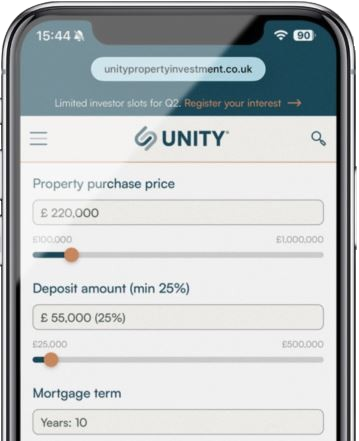
Buy to let investment and rental yield calculator
Do You Need a Property Investment Service?
The answer to this question should explicitly be: not necessarily.
An experienced investor who possesses significant free time, deep local market knowledge, strong analytical capabilities, established professional relationships with local tradespeople, and the robust management infrastructure required to navigate current rental legislation may be perfectly capable of coordinating the investment process independently.
However, professional property investment support may become particularly useful where an investor:
- Lacks the time required to source, transact and manage property directly.
- Is investing outside their local market and requires on-the-ground expertise.
- Is inexperienced and wishes to avoid acquiring structurally compromised or financially unviable assets.
- Requires significant refurbishment and project coordination as part of a value-add investment strategy.
- Wants to outsource the immense legal and compliance burden of professional property management.
- Wants to outsource several stages simultaneously without acting as the central project manager.
- Is scaling a portfolio and requires sophisticated debt structuring and asset oversight.
Understanding What You're Actually Paying For
"Property investment services" is an umbrella term covering everything from a one-off strategic consultation to decades of daily tenant management and regulatory compliance.
For an investor, long-term success relies on a clear internal audit. What matters is understanding exactly what you need help with, identifying which specific services solve those exact problems, clarifying who is responsible for each service, and deciding whether you possess the time and expertise to coordinate those specialists yourself or whether you require a more integrated model. Crucially, investors should consider not only how a property is acquired, but what happens after completion, when the asset must begin delivering against the original investment case.
Unity's model is explicitly designed to address this fragmentation. It brings property research, proactive sourcing, rigorous investment appraisal, acquisition support, refurbishment coordination, and ongoing property management into a more integrated process, while working seamlessly alongside specialist professionals such as mortgage advisers, solicitors, and RICS surveyors where required.
To explore how this structured approach operates in practice, review how it works, utilise our buy-to-let calculator to model potential returns, or book a consultation to discuss your strategic requirements with our team.
The Property Investment Services Ecosystem
Investor Need
Service Required
Who Might Provide It?
Frequently Asked Questions
What are property investment services?
What does a property investment company do?
What is an end-to-end property investment service?
What is the difference between property investment advice and property investment services?
Do I need a property investment consultant?
Can a property investment company find properties for me?
How much do property investment services cost?
Are property investment services worth it?
Can I outsource the entire property investment process?
What should I look for in a property investment service?
Case study

- Property Price:£250k
- Mkt Value at purchase:£250k
- Day one equity:£0
- Yield:7.4%
- ROCE:31.6%
.avif)