






An asking price tells you what the seller wants. An agreed price tells you what a particular buyer is prepared to pay. Neither necessarily tells you what the property is worth.
For a buy-to-let investor, establishing market value should therefore come before deciding whether a property represents a good investment.
A property might have a well-supported market value of £250,000 but still produce an inadequate return at that price. Equally, negotiating £20,000 from an asking price does not necessarily mean you have bought the property £20,000 below market value.
Understanding how to value an investment property means separating these two questions:
What is the property reasonably worth in the open market?
Does buying it at the available price make sense as an investment?
In this guide, we explain how to assess property value using comparable property sales, price per square foot, condition, rental evidence and potential value following refurbishment.
Executive Summary
Valuing an investment property is about forming a defensible view of what the market supports, rather than starting with the asking price or the return you hope to achieve. For most residential buy-to-let properties, recent sales of genuinely comparable homes provide the strongest starting point. Price per square foot, current listings, rental evidence and property condition can then be used to test and refine that assessment. Where refurbishment is planned, the property's current value and its potential value after works should be considered separately.
Key takeaways:
- Start with completed comparable sales: Look for genuinely similar properties in the same local market rather than relying on asking prices or automated estimates.
- Compare like with like: Property type, floor area, condition, micro-location, parking, outside space and tenure can all materially affect value.
- Use price per square foot as a cross-check: It can help compare properties of different sizes, but it should not be used as a standalone valuation method.
- Don't assume refurbishment cost equals value created: A £25,000 refurbishment does not automatically add £25,000 to the property's market value.
- Establish current and post-refurbishment values separately: Potential finished value should be supported by comparable sales of properties already refurbished to a similar standard.
- Keep market value and investment value separate: A property can be worth £250,000 in the open market but still fail to meet your required yield or return at that price.
What Does Market Value Mean?
The Royal Institution of Chartered Surveyors (RICS) defines Market Value as the estimated amount for which an asset or liability should exchange on the valuation date between a willing buyer and willing seller in an arm's-length transaction, after proper marketing and where the parties have acted knowledgeably, prudently and without compulsion.
For an investor, the important point is that property market value is an evidence-based estimate at a particular point in time. It is not necessarily the same as the price advertised by the seller.
Several different measures of value can appear during an investment property purchase:
- Asking price: the price at which the seller chooses to market the property.
- Agreed purchase price: the amount a particular buyer and seller agree for the transaction.
- Market value: an evidence-based assessment of what the property should reasonably achieve in the open market.
- Rental value: an assessment of the rent the property could reasonably achieve in the open rental market.
- Investment value or worth: what the property is worth to a particular investor based on their objectives, required returns and circumstances.
This distinction is fundamental to investment property valuation.
If comparable evidence suggests that a house is worth £250,000, your target return does not make its market value £220,000. It might, however, mean that £220,000 is the maximum price at which the investment works for you.
That is the difference between valuation and investment property appraisal.
How Is a Property Valued?
For most conventional residential properties, the starting point is the comparable sales method, sometimes referred to as the market approach.
Rather than attempting to calculate property value from a single formula, you examine what genuinely comparable properties have sold for and use that evidence to form a reasonable view of the subject property's market value.
RICS publishes professional guidance on comparable evidence in real estate valuation. Comparable evidence remains central to the valuation process, although professional valuers will generally have access to more data, experience and analytical tools than an individual investor.
For a typical buy-to-let acquisition, an investor can nevertheless apply the same basic discipline.
The process is:
- Define exactly what you are valuing.
- Find the strongest comparable property sales.
- Examine price per square foot.
- Account for material differences between the properties.
- Establish a reasonable valuation range.
- If refurbishment is planned, assess the potential value after works separately.
- Establish a realistic rental value.
- Only then decide whether the investment works at the available purchase price.
Let's look at each stage.
Step 1: Define the Property You Are Valuing
Before searching for house price comparables, establish exactly what you are trying to value.
Record characteristics including:
- exact location and micro-location;
- property type;
- number of bedrooms;
- internal floor area;
- age and construction;
- layout;
- current condition;
- garden and plot;
- parking or garage provision;
- extensions and alterations;
- freehold or leasehold tenure;
- remaining lease length, where applicable; and
- service charges and other material leasehold costs.
This prevents superficially similar properties from being treated as equivalent.
For example, two three-bedroom houses within the same postcode could have very different values if one has off-street parking, a larger plot and an extension while the other fronts a busy road.
The same principle applies to flats. Floor level, lease length, service charges, building condition and parking can make apparently similar properties poor comparables.
Our guide to whether flats make good buy-to-let investments examines some of these considerations in more detail.
A discount to asking price is not necessarily a discount to market value.
Follow the evidence rather than searching for comparables that justify the price you want.
Step 2: Find Comparable Property Sales
The quality of your property comparables matters more than the number of properties you find.
For residential property, completed sales of highly similar properties will generally provide stronger evidence than current asking prices.
HM Land Registry's Price Paid Data records residential property sales in England and Wales that are sold for value and lodged for registration.
Start by looking for comparable house sales that are:
- close to the subject property;
- the same or a very similar property type;
- broadly similar in size;
- reasonably recent;
- similar in condition where possible; and
- subject to similar tenure and other characteristics.
There is no universal rule that says a comparable must have sold within a particular number of months or sit within an exact radius.
A near-identical terrace five doors away that sold several months ago may provide better evidence than a detached house that completed last month half a mile away.
The objective is to find comparable property sales that represent the same market as closely as possible.
How to Find Comparable Properties
A useful starting point is HM Land Registry data, combined with property portals that allow you to examine previous listings, photographs and floor plans.
This matters because a transaction price alone doesn't tell you everything.
Suppose two neighbouring houses sold for:
- £220,000; and
- £250,000.
Without further investigation, you don't know whether the £30,000 difference resulted from condition, size, an extension, parking, layout, the timing of the transactions or something else entirely.
Look at the underlying properties rather than simply collecting sold prices.
The UK House Price Index, produced using HM Land Registry and other official data, can also provide useful context on wider market movements. It is better suited to understanding broader price trends than establishing the value of an individual house on a particular street.
Recent Evidence and the Land Registry Lag
There is another complication: completed transactions do not necessarily appear immediately in publicly available data.
HM Land Registry notes that the period between a property sale and registration can vary, and its monthly Price Paid datasets continue to be updated as further transactions are registered.
That means an investor should not rely exclusively on historic sold-price data in a changing market.
Current listings, properties sold subject to contract and conversations with active local agents can provide additional context on what has happened since the most recent completed comparables.
Treat these as additional evidence rather than automatically giving them the same weight as a completed transaction.
Sold Prices vs Asking Prices
One of the most important principles when learning how to determine market value of property is understanding what an asking price actually represents.
It is the price the seller is asking.
It is not proof of what the property is worth.
Imagine a property is marketed at £300,000 and you negotiate a purchase price of £270,000.
You have secured a:
£30,000 discount to asking price.
But you have not necessarily bought the property £30,000 below market value.
If the strongest comparable sales support a property market value of approximately £270,000, you may simply have negotiated the property back to its market value.
This distinction is particularly important when assessing purported below-market-value opportunities. Our guide to finding below-market-value property looks at this in more detail.
Asking prices still have a role. They tell you about competing stock, seller expectations and current market conditions. But they should not be confused with achieved values.
Step 3: Calculate Property Value Per Square Foot
Property value per square foot is a useful secondary tool for comparing similar properties of different sizes.
The calculation is straightforward:
Price per sq ft = property price ÷ internal floor area
Despite the different headline sale prices, the house price per square foot falls within a relatively narrow range.
If the property you are assessing measures 750 sq ft, applying £323 per sq ft would produce:
750 × £323 = £242,250
That gives you another useful reference point.
It does not establish that the property is worth exactly £242,250.
How to Calculate Price Per Square Foot Correctly
The most important principle when using property price per square foot in the UK is to compare like with like.
A 500 sq ft flat and a 1,500 sq ft house should not be assumed to command the same rate simply because they are nearby.
Nor does £/sq ft fully capture:
- condition;
- layout;
- garden size;
- parking;
- plot;
- views;
- extensions;
- tenure; or
- differences in micro-location.
Floor-area data itself can also vary depending on the measurement methodology used.
For preliminary investment analysis, EPC data and marketing floor plans can be useful sources, but £/sq ft should remain a cross-check rather than the sole basis for calculating the market value of a property.
Step 4: Adjust Your Property Comparables
No two properties are completely identical.
Once you have assembled the strongest property valuation comparables, you need to understand the differences between them.
Consider a simple example.
A fully refurbished two-bedroom terrace sells for £250,000.
An otherwise similar property requiring substantial modernisation comes to market.
If the required works are estimated at £25,000, it is tempting to calculate:
£250,000 - £25,000 = £225,000
and conclude that £225,000 must be its current market value.
That isn't necessarily how valuation works.
There is an important distinction between:
the cost of carrying out improvements
and
the market value those improvements create.
Spending £20,000 on a kitchen does not automatically increase property value by £20,000.
Likewise, a relatively inexpensive refurbishment can sometimes make a substantial difference to the appeal and saleability of a badly presented property.
The best evidence is the market itself.
If similar unmodernised houses are selling around £215,000 and refurbished examples around £250,000, those transactions tell you much more about how buyers value the difference in condition than simply deducting a contractor's quotation from the finished value.
This is why determining how to assess property value requires judgement rather than a single calculation.

Portfolio projection tool

Step 5: Estimate the Property Value After Refurbishment
For an investment property requiring work, assess two separate values:
1. What is the property worth today in its existing condition?
2. What could it reasonably be worth after the proposed works?
Do not begin with the price you need the finished property to achieve and work backwards.
Instead, find completed sales of properties that have already been refurbished to approximately the standard you intend to create.
Those are your best evidence for potential finished value.
Suppose:
- unmodernised properties sell around £215,000-£225,000; and
- genuinely comparable refurbished properties sell around £245,000-£255,000.
That begins to establish an evidence-based range for both current and potential value.
You can then assess refurbishment costs separately and determine whether sufficient value is likely to be created to justify the project.
Our guide to how we refurbish investment properties explains how refurbishment fits into Unity's wider acquisition process.
Properties requiring work can create opportunities, but the economics should be supported by evidence. See our guide to renovation properties for sale for a deeper look at assessing this type of acquisition.
Worked Example: How to Value a Buy-to-Let Property
Consider a hypothetical two-bedroom terraced house.
The property is:
- 750 sq ft;
- in need of modernisation; and
- advertised at £230,000.
You identify three nearby transactions.
What can we conclude?
First, the three transactions show a relatively consistent £/sq ft range.
Second, £250,000 provides useful evidence of what a refurbished property of this approximate type and size can achieve.
But there is something important that we cannot yet conclude:
We cannot confidently determine the current value of the unmodernised property from these three transactions alone.
Simply subtracting the estimated cost of refurbishment from £250,000 would confuse building cost with market value.
The next step should therefore be to search for comparable properties sold in an unmodernised condition.
If several similar unmodernised properties subsequently show completed values around £215,000–£225,000, the evidence becomes much stronger.
You might then conclude that:
- current market evidence supports approximately £215,000-£225,000 for an unmodernised property;
- refurbished evidence supports approximately £245,000-£250,000 following suitable works; and
- the £230,000 asking price appears above the range suggested by the most relevant unmodernised comparables.
That is a much more defensible conclusion than simply deciding what the property "should" be worth from a spreadsheet.
The principle is simple:
Follow the evidence rather than searching for comparables that justify the price you want.
How to Value a Rental Property
For a buy-to-let investor, rental property valuation has a second dimension: establishing a realistic market rent.
Capital value and rental value should be assessed independently.
Look for comparable rental properties with similar:
- location;
- property type;
- size;
- bedroom count;
- condition;
- parking;
- outdoor space; and
- furnishing, where relevant.
Recently agreed rents provide particularly useful evidence where available, while current listings show the competing supply facing prospective tenants.
Do not automatically accept the rental figure supplied by a seller, estate agent or investment pack.
Suppose a property is being sold on the basis that it can achieve £1,500 pcm, but genuinely comparable homes are being marketed and let closer to £1,250 pcm.
That difference materially changes the investment appraisal.
The same principle therefore applies to rental property value as capital value: establish your assumptions independently.
Once you have a realistic purchase price and rental assumption, our buy-to-let calculator can help assess the underlying investment economics.
Market Value vs Investment Value
This is perhaps the most important distinction in property investment valuation.
Imagine comparable sales provide strong evidence that a property has a market value of £250,000.
It rents for £1,000 per month.
Annual rent is therefore:
£1,000 × 12 = £12,000
Gross rental yield:
£12,000 ÷ £250,000 × 100 = 4.8%
The property can be correctly valued at £250,000 while simultaneously failing to meet your investment criteria.
If you require a higher return, the price at which the property works for you may be substantially lower.
Another investor may be prepared to accept the 4.8% gross yield because they have different financing, income requirements or expectations for the property.
That does not give the house two different market values.
It gives the investors different assessments of its investment value.
A complete investment property analysis should therefore follow the valuation rather than be confused with it.
Worked Example - Comparable Sales for a Two-Bedroom Buy-to-Let Property
Comparable
Size
Sale price
£/sq ft
Condition

What Affects Property Value?
There is no universal formula for how to calculate property value because buyers respond to numerous characteristics simultaneously.
Some of the most important factors affecting property value include:
Location and micro-location
Values can differ significantly within relatively small geographic areas because of transport, schools, amenities, road position, outlook and local housing demand.
Property type
Terraced, semi-detached, detached houses and flats can attract different buyer pools and command different values even at similar sizes.
Floor area and layout
More space generally matters, but how that space is configured also affects usefulness and buyer demand.
Condition
Properties requiring substantial work may sell differently from otherwise comparable refurbished homes.
Parking and outside space
The value buyers attach to gardens, garages and off-street parking varies substantially between markets.
Tenure and lease terms
Freehold and leasehold property should not automatically be compared on identical terms. Lease length, service charges, ground rent provisions and anticipated major works can influence demand and mortgageability.
Our guide to leasehold vs freehold buy-to-let covers these differences in more detail.
Market conditions
Property valuation is date-specific. A transaction agreed during a different interest-rate or housing-market environment may require more careful interpretation than a recent transaction.
Understanding what affects property value is ultimately about understanding what prospective buyers in that particular market are prepared to pay.
How Do Surveyors Value a Property?
Professional valuers don't simply enter an address into an online calculator.
For conventional residential property, comparable evidence plays a central role.
The valuer considers the available transactional evidence, investigates how relevant individual comparables are and reconciles that evidence into an opinion of value.
The quality of the evidence matters.
For example, homes England's guidance for help to buy valuations requires a valuation from a RICS-certified surveyor when an equity-loan homeowner sells. This is a particular valuation context rather than a universal rule for residential valuation, but it illustrates the wider role of independent professional valuation evidence.
The underlying principle is that a valuation should be capable of being supported by relevant market evidence.
This is also why automated estimates should be treated carefully. They can provide another reference point, but an algorithm may not fully understand that one property has been comprehensively refurbished while its neighbour has not been modernised for 30 years.
What Are the Main Property Valuation Methods in the UK?
There are several recognised property valuation methods in the UK, and the appropriate approach depends on the asset being valued.
For a conventional house or flat being considered as a buy-to-let investment, comparable market evidence is generally the most relevant approach for estimating capital value.
Other valuation approaches are used in professional practice for different types of assets and circumstances, including income-producing commercial property and development opportunities.
For the typical residential investor, however, attempting to apply a complex commercial valuation methodology to an ordinary two-bedroom house can make the analysis less rather than more useful.
The question is usually simpler:
What have genuinely comparable residential properties recently sold for?
That is why comparable evidence forms the core of the method in this guide.
Mortgage Valuation vs Market Value
A mortgage valuation serves a different purpose.
The mortgage lender wants to establish whether it is comfortable lending against the property.
The government's how to buy a home guide explains that a mortgage valuation is not the same as a property survey and is undertaken for the benefit of the lender.
Suppose you agree to purchase a property for £250,000 using a 75% loan-to-value mortgage.
At the agreed price, you might expect maximum borrowing of:
£250,000 × 75% = £187,500
But suppose the lender values the property at £240,000.
If it bases its 75% lending calculation on that figure:
£240,000 × 75% = £180,000
You now have a £7,500 difference to address through additional equity, renegotiating the purchase price or reconsidering the transaction or finance.
This illustrates why mortgage valuation vs market value should be understood as related but not identical concepts.
A lender's assessment provides another useful data point. It does not replace your own acquisition analysis.

Get investor insights and early access to opportunities
Join our investor briefings for structured insights, market updates, and priority access to new deals.

No spam, just timely insights for investors We respect your privacy and never sell your data
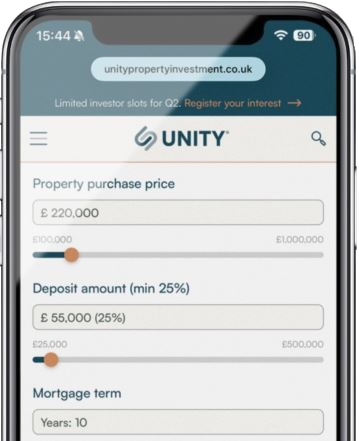
Buy to let investment and rental yield calculator
Valuation Is Not the Same as a Property Survey
It is equally important to distinguish value from condition.
Comparable sales may help you determine whether £220,000 is a reasonable price for a property.
They cannot tell you whether the roof is failing, whether structural movement is present or whether hidden damp will require significant remedial work.
The government's home-buying guidance distinguishes a mortgage valuation from a property survey and advises buyers to consider an appropriate survey to understand the property's condition.
If significant defects are identified, they can then become relevant to your valuation, negotiation and investment appraisal.
Valuation should therefore sit within a broader property due diligence checklist rather than replacing it.
How to Estimate Property Value: A Practical Checklist
If you're trying to determine the market value of a property before making an investment offer, work through the process systematically.
- Define the property - establish its type, size, condition, tenure and material characteristics.
- Check its transaction history - understand when and for how much it has previously sold.
- Find comparable sales - prioritise recent completed transactions of genuinely similar properties.
- Investigate the comparables - use previous listings and floor plans to understand why prices differ.
- Review the current market - examine listings and SSTC properties for more recent context.
- Calculate price per square foot - use it as a secondary comparison rather than a standalone valuation.
- Adjust for material differences - consider condition, plot, parking, layout, tenure and micro-location.
- Establish a range - recognise that valuation is an evidence-based estimate rather than an exact calculation.
- Assess rental value separately - independently test the rent assumed in your investment model.
- Assess post-refurbishment value separately - if works are planned, use comparable finished properties.
- Stress-test the evidence - ask whether your conclusion still works if you exclude your strongest comparable.
- Complete wider due diligence - investigate legal and physical risks.
- Run the investment appraisal - only then decide the maximum price at which the acquisition works for you.
This process is more useful than looking for a single answer to how to determine property value because it forces you to understand the evidence supporting the number.
How Unity Values Potential Investment Properties
At Unity Property Investment, we separate three questions when assessing an acquisition:
1. What is the property worth today?
2. What could it realistically be worth following any proposed improvements?
3. Does acquiring it at the available price meet the investor's objectives?
We assess comparable sales, rental evidence, property condition, refurbishment requirements and the wider investment economics rather than treating the seller's asking price as the starting point for determining value.
Our investment criteria focus the search on properties that fit our underlying acquisition approach before individual opportunities progress to detailed analysis.
You can read more about how we source investment properties, explore our approach to property investment opportunities, or view our investment property case studies.
For investors considering how individual acquisitions could contribute to a longer-term strategy, our portfolio projection tool can also model portfolio development over time.
Summary
There is no single formula for how to value an investment property.
For most residential buy-to-let properties, start with recent comparable sales. Investigate the properties behind those transactions, calculate price per square foot as a secondary check and consider material differences in condition, size, location, tenure and specification.
If refurbishment is planned, establish current value and potential finished value separately. Establish the rental value independently as well.
Above all, keep valuation and investment appraisal separate.
A good valuation establishes what the market evidence suggests a property is worth. A good investment appraisal establishes whether it makes sense for you to buy it at that price.
Comparable Property Price Per Square Foot
Property
Sold price
Floor area
Price per sq ft
Condition
Frequently Asked Questions
How Do You Calculate the Market Value of a Property?
How Do I Find Comparable Properties?
How Many Property Comparables Should I Use?
Is Price Per Square Foot a Good Way to Value Property?
Is an Asking Price the Market Value of a Property?
How Do You Value a Buy-to-Let Property?
Is Investment Property Value Different From Market Value?
Case study
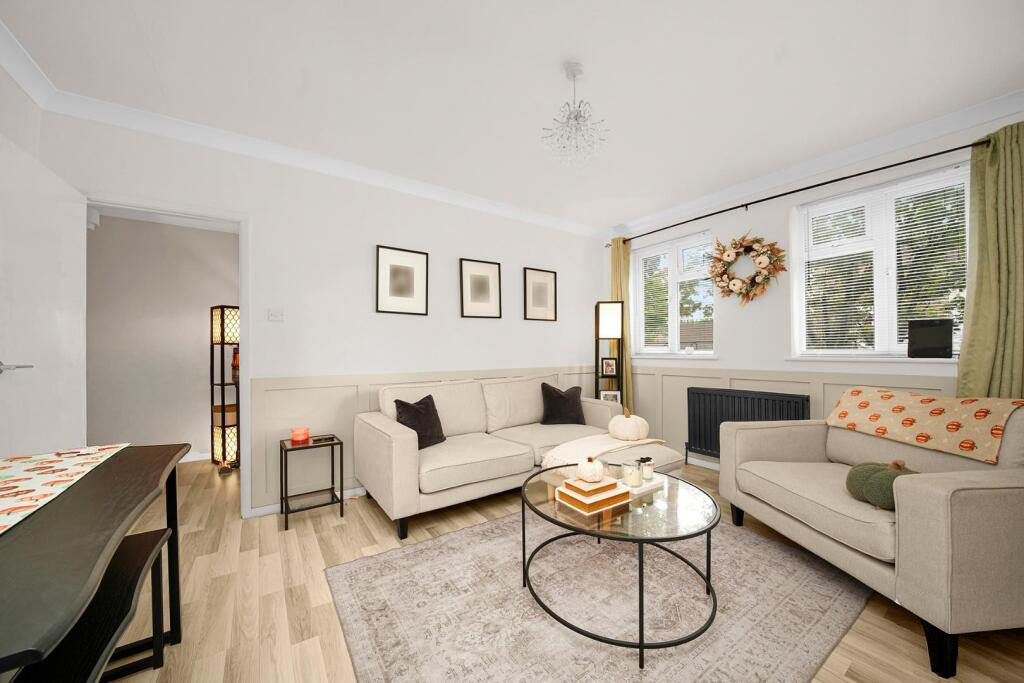
- Property Price:£250k
- Mkt Value at purchase:£250k
- Day one equity:£0
- Yield:7.4%
- ROCE:31.6%