.jpg)









Capital growth is an important component of residential property investment and can contribute to an investor's overall return alongside rental income. For those assessing an asset over an extended holding period, understanding the mechanics, drivers and limitations of property appreciation is essential.
Capital growth is the increase in a property’s market value over time, independent of the rental income it generates. While income represents cash flow, capital appreciation represents the changing capital value of the physical asset. Crucially, this growth is influenced by broader economic forces and local market dynamics, making it distinct from the value created directly by an investor through refurbishment.
Historical data confirms that capital growth is never guaranteed. The valuation of residential housing is subject to economic cycles, fluctuating borrowing costs and shifting demographics. While long-term UK house prices provide context regarding the asset class's historical performance, these averages should not be treated as a forecast of future returns.
For readers researching the broader fundamentals of building a portfolio, our comprehensive buy-to-let investment guide provides a useful foundation. The following article focuses specifically on capital appreciation within the UK residential property sector. It covers the frameworks required to calculate annualised growth rates, differentiates between nominal and real returns, outlines the factors that influence market values, and explains how investors evaluate the balance between yield and long-term equity accumulation.
Executive Summary
Capital growth, or property appreciation, is the increase in a property’s market value over time. For property investors, it is a key component of long-term returns, fundamentally distinct from the recurring cash flow generated by rental income. While historical UK house-price data demonstrates the strong long-term performance of residential property, capital growth is never guaranteed. Changing economic conditions, fluctuating borrowing costs, and local market dynamics mean that property values can fall as well as rise. Consequently, past performance should not be treated as a forecast, and investors should consider capital growth as just one element of a comprehensive investment strategy.
Key Takeaways
- Capital growth and capital appreciation are synonymous terms describing the increase in a property's market value.
- It differs entirely from rental income, which is the regular cash flow paid by tenants.
- Market appreciation is passive, whereas investor-created value is actively generated through refurbishments or physical improvements.
- Capital growth is not guaranteed and is heavily influenced by supply, demand, household earnings, and mortgage affordability.
- Historical UK house-price growth provides long-term context but should not be relied upon as a predictor of future performance.
What Is Capital Growth in Property?
Capital growth is the financial increase in a property's open-market value between two specified points in time. Within the context of property investment, it denotes the equity gained through the upward movement of the underlying housing market, rather than through any physical alteration to the dwelling itself.
To illustrate, if an investor purchases a buy-to-let property for £250,000 and the property is later valued at £300,000, the asset has experienced £50,000 of nominal capital growth. This upward revaluation reflects the price that a willing buyer would realistically pay in the current market. It remains entirely separate from the asset’s income-producing capabilities.
When researching what capital growth is in property, it is important to recognise that until a property is sold, capital growth remains an unrealised gain. A higher valuation may allow an investor to access some of the increased equity through refinancing, but this is borrowing against the property rather than realising the gain through a sale. While the UK property market has demonstrated upward trajectories over recent decades, short-term periods frequently feature stagnation or depreciating values. Therefore, property growth should be viewed as an extended-horizon phenomenon that requires the cash-flow resilience to hold through market cycles.
What Is Capital Appreciation in Property?
When evaluating property investment, individuals frequently ask what capital appreciation is and how it diverges from capital growth. The straightforward answer is that the two terms are functionally identical. Within UK property investment, capital appreciation and capital growth are synonymous, describing the exact same concept: an increase in the market value of an asset over a specified timeframe.
The distinction is purely a matter of sector convention. In global financial markets, "capital appreciation" is the standard term for a rising share price or bond valuation. Conversely, within the UK residential property sector, "capital growth" is the standard colloquial phrase. For property investors, there is generally no practical need to distinguish between the two terms. Whether measuring an institutional portfolio or a private buy-to-let, both terms measure the relative or absolute change in capital value.
How to Calculate Capital Growth on a Property
Accurately calculating capital growth requires establishing a firm baseline valuation. For calculating property appreciation, this is simply the original purchase price. Unlike ROI calculations, this baseline should not include acquisition costs such as stamp duty or legal fees, as we are measuring the performance of the property itself, not the efficiency of the overall invested capital.
Growth can be expressed in two primary formats: absolute capital growth and percentage capital growth.
Absolute Capital Growth
Absolute growth measures the monetary increase in the property's valuation, calculated simply by subtracting the original purchase price from the current market value.
Percentage Capital Growth
Percentage growth provides a relative measure of performance, allowing investors to compare the appreciation of differently priced assets on a level playing field. This is calculated by dividing the absolute growth by the original purchase price, then multiplying by 100.
Applying a mortgage to an investment does not make the property appreciate faster. The underlying market appreciation rate is blind to the investor's financing arrangements.
Capital growth is one part of the investment case, not the investment case itself. Future price growth should strengthen an investment case rather than be required to make it work.
The absolute capital growth is £50,000. While this figure is useful for understanding gross equity, it lacks context regarding the efficiency of the capital deployed. The property has experienced 20% total percentage capital growth over the holding period. However, for this calculation to be useful, the investor must clearly define the period over which this growth occurred.
How to Calculate the Annual Property Appreciation Rate
While measuring total percentage growth provides a snapshot of cumulative performance, investors typically require an annualised metric to compare property appreciation against other asset classes or inflation.
A common analytical error is attempting to calculate the average annual growth rate by taking the total percentage growth and dividing it by the number of years the property has been held. If an investment property increases from £250,000 to £300,000 over five years, the total growth is 20%. Dividing this by five produces a simple average of 4.0% per annum. However, this is fundamentally flawed because it fails to account for compounding. Because the property's value changes each year, subsequent growth is calculated upon a progressively different capital base.
To calculate the accurate annual property appreciation rate, investors must use a Compound Annual Growth Rate (CAGR) calculation. This method works backwards from the final valuation to find the exact percentage that, when compounded annually, bridges the gap between the starting and ending values.
Applying this logic to the same example (a property growing from £250,000 to £300,000 over five years), a CAGR calculation reveals that the actual annualised property growth rate is 3.71%, not the simplistic 4.0% derived from basic division.
Nominal vs Real Capital Growth
An important distinction when looking at historical property performance is the difference between nominal and real capital growth.
Nominal Capital Growth
Nominal growth measures the unadjusted change in the property's monetary valuation, ignoring the external effects of inflation. The £50,000 absolute increase explored above (rising from £250,000 to £300,000) represents a 20% nominal return. This is the headline figure most commonly reported by national indices and mortgage lenders.
Real Capital Growth
Real capital growth adjusts the nominal figure to account for the gradual erosion of purchasing power caused by inflation. Real growth measures whether the property investment has actually increased the investor's underlying wealth in terms of the tangible goods and services that capital can purchase in the broader economy.
If an investment property achieves 10% nominal capital growth over a three-year holding period, but the Consumer Prices Index (CPI) increases by 12% over that same window, the general cost of living has risen faster than the property's value. In this environment, despite the property being worth more on paper, the investor has experienced negative real capital growth. Rising house prices do not automatically equal an equivalent increase in real wealth.
What Causes Property Values to Increase?
Capital growth is ultimately driven by changes in supply and demand, alongside wider economic and local market conditions. Understanding what causes property values to rise, and what causes them to stagnate, requires analysing the specific catalysts that influence market-led appreciation.
Macroeconomic Drivers
Housing Supply and Demographic Demand
The long-term trajectory of the UK property market is influenced by an imbalance between the creation of new housing units and the rate of household formation. When demographic demand consistently outstrips the supply of available housing stock, increased competition naturally exerts upward pressure on prices.
Mortgage Affordability and Interest Rates
The majority of UK residential transactions require debt financing. Therefore, property prices are linked to the cost and availability of mortgage credit. Prolonged periods of low base rates reduce the cost of borrowing, allowing purchasers to service larger loans and bid higher for properties. Conversely, an upward adjustment in base rates increases debt servicing costs, dampening buyer affordability and placing downward pressure on valuations.
Household Earnings and Employment
Sustained real wage growth increases household purchasing power. As local populations generate more disposable income, their capacity to allocate larger sums toward housing costs increases. If real wages stagnate while property prices climb, the market eventually hits an affordability ceiling where buyers cannot secure the lending multiples needed to push prices higher.
Localised Drivers
Infrastructure and Transport
Enhancements to local civic infrastructure, such as new rail networks or expanded road links, can alter a location's desirability. By reducing commute times to major employment hubs, infrastructure projects can pull commuter wealth into previously disconnected areas, supporting property demand.
Regeneration and Urban Renewal
Investment in public spaces, commercial districts and local amenities can comprehensively transform a neighbourhood. Successful regeneration is often associated with an eventual uplift in local property values as the area attracts different residential demographics.
Schools, Amenities and Buyer Preferences
Proximity to highly rated schools and desirable lifestyle amenities commands a persistent premium in the UK market. Furthermore, shifts in societal preferences, such as a structural shift toward remote working, can cause certain property types to appreciate faster than others.
Capital Growth vs Value Creation
A fundamental distinction that must be maintained by investors is the difference between passive market appreciation and active value creation. Conflating the two distorts performance analysis and misrepresents investment strategy.
Market-Led Capital Growth
Market-led capital growth occurs passively. An investor acquires a property and, without making material changes to the asset itself, the property rises in market value because comparable property values in the wider market have increased. The investor benefits from external economic drivers.
Investor-Created Value
Investor-created value requires active intervention. The investor takes deliberate action that improves the property's intrinsic value or income potential, such as executing a physical refurbishment, extending the square footage, or resolving complex legal defects.
If an investor purchases an unmodernised asset for £250,000, natural market values in the area might increase by 2%. Concurrently, the investor spends £25,000 on structural extensions. When the property is revalued at £325,000, it is inaccurate to attribute the entire £75,000 uplift purely to capital growth. The final valuation reflects a combination of passive market appreciation and the direct value created through the capital works.

Portfolio projection tool

(Note: The investor created value uplift represents the total value added minus the natural market growth, generated directly from the £25,000 capital works). For more on sourcing assets that accommodate value add strategies, review our guidance on below market value property.
Rental Yield vs Capital Growth - What's the Difference?
Property investment returns are generally derived from two distinct channels: rental yield and capital growth.
- Rental Yield: The recurring income generated by letting the property to tenants, calculated relative to its original purchase price or current value, and expressed as an annual percentage. For a detailed breakdown, consult our rental yield guide.
- Capital Growth: The change in the underlying capital value of the physical asset over time. It remains unrealised until the property is sold, although increased equity may potentially be accessed through refinancing.
A property can present an attractive rental yield but demonstrate constrained historical capital growth, or it can present a low initial rental yield but demonstrate strong historical appreciation. Occasionally, an asset can demonstrate strong characteristics of both, or neither. Neither measure should automatically be considered superior; the preference depends on the investor's specific requirements, risk tolerance and intended time horizon.
How Capital Growth Contributes to Investment Returns
To assess the viability of an asset, investors must calculate their total investment return. This consolidates both the recurring annual rental income and long term changes in the property’s capital value, measured against the initial capital committed, ongoing costs and financing expenses.
Over long holding periods, capital growth can make a significant contribution to an investor's overall return. However, capital appreciation generally remains unrealised until the property is sold or equity is accessed through refinancing. This lack of liquidity means capital growth cannot be relied upon to pay short term liabilities or monthly mortgage interest, a distinction explained further in our guide to buy to let profit and cash flow.
When discussing how capital growth contributes to total returns, the role of financial leverage (mortgage debt) must be clarified. Applying a mortgage to an investment does not make the property appreciate faster. If a £250,000 property grows by 10%, the physical asset value increases by £25,000 regardless of whether it was bought in cash or with a mortgage. The underlying market appreciation rate is blind to the investor's financing arrangements.
However, leverage dramatically alters the investor's return on their committed equity. If the investor utilised £50,000 of their own cash and borrowed the remaining £200,000, that same £25,000 capital growth represents a vastly higher percentage return on the investor's initial £50,000 capital outlay. This leverage amplification effect works identically in reverse if property values fall. For a comprehensive methodology on calculating returns that incorporate debt, refer to the guide on calculating property investment returns.
How Compounding Affects Long-Term Property Growth
The mathematical principle of compounding impacts long term capital growth strategies because annual percentage growth is applied to the property's new, higher valuation each consecutive year.
Using an illustrative example: If a £200,000 property achieved a steady 5% annual growth rate over three consecutive years, the total monetary growth is not simply £10,000 per year.
By the end of the third year, the compounding effect has generated an additional £1,525 of equity above the flat rate expectation. However, this is strictly a mathematical illustration. Real estate values do not rise smoothly or predictably every year. The cyclicality of property markets means a holding period will inevitably feature years that produce strong growth, years with little change, and years where values actively fall.
Can Property Values Fall?
Yes. Property values can and do fall, making capital growth an unguaranteed metric. UK house prices are exposed to macro risks and local issues that can trigger depreciation in open market value:
- Economic Downturns: Rising unemployment and falling real wages strip purchasing power from the market, leading to downward price adjustments.
- Higher Borrowing Costs: When central banks raise base interest rates, the retail cost of mortgage servicing increases, reducing the maximum capital buyers can afford to borrow.
- Local Oversupply: If local housing stock dramatically expands without a corresponding increase in demand, the resulting supply imbalance can depress local resale values.
- Property Specific Defects: Issues uncovered post purchase, such as structural subsidence or severe leasehold disputes, can make a property difficult to mortgage and materially reduce its value.
- Undesirable Development: Changes to the immediate environment, such as heavy industrial development adjacent to the property, can negatively impact desirability.
Furthermore, it is vital to distinguish between national averages and individual properties. UK house prices can rise on a national level while a particular property or specific regional market actively falls in value.
Passive Market Growth vs Active Value Creation
Component
Value
.png)
What Is a Good Capital Growth Rate for Property?
Attempting to define a singular, universal target for a "good" capital growth rate is analytically flawed. The benchmark for successful property appreciation depends on a range of economic and market factors, making any single percentage target redundant outside its context.
An investor must evaluate the achieved growth rate against the economic conditions of the period measured. A modest 4% nominal growth rate achieved during an era of 1% general inflation represents genuine real wealth generation. Conversely, an 8% nominal growth rate achieved during an era of 10% inflation would represent a decline in purchasing power in real terms.
Expectations must also adjust based on location, property type and starting valuation, whilst accounting for the transaction costs associated with acquiring and disposing of the asset, the rental return subsidising the investment, and the investor's unique risk tolerance.
Average House Price Growth in the UK
When analysing UK house price growth, investors should use authoritative data from official statistical bodies such as HM Land Registry and the Office for National Statistics (ONS).
Current Market Benchmarks (June 2026)
According to the official estimates derived from the UK House Price Index for June 2026, the average price of a property in the UK reached £272,000. The annual price change for a property in the UK in the 12 months to June 2026 was recorded at 2.0%.
The June 2026 data also demonstrates why national averages need to be viewed alongside regional performance:
-v1.avif)
Get investor insights and early access to opportunities
Join our investor briefings for structured insights, market updates, and priority access to new deals.

No spam, just timely insights for investors We respect your privacy and never sell your data

Buy to let investment and rental yield calculator
The data clearly demonstrates regional divergence. While Northern Ireland, the North West, and the North East experienced annual growth exceeding the national average, London witnessed a negative annual contraction, with values falling by -2.5% during the exact same 12 month period.
Beyond geography, the physical property type also alters the appreciation profile. In the 12 months to June 2026, semi detached properties in the UK saw annual growth of 3.4%, whereas flats and maisonettes experienced a decline of -1.6%.
Long-Term Historical Averages
When analysing average house price growth over extended horizons, Land Registry data demonstrates the impact of compounding over multiple economic cycles. Over multi decade periods, UK house prices have risen substantially in nominal terms. Long term property price growth in the UK has varied considerably depending on the period, region and property type measured.
As house prices have risen relative to earnings in many parts of the UK, affordability has become an increasingly important constraint on future price growth. An individual property's expected appreciation should never be directly inferred from these macro national datasets.
How Investors Assess Capital Growth Potential
Prudent market participants recognise that assessing capital growth potential is an evidence led assessment, not a prediction of the future. Professional investors evaluate the underlying micro and macro fundamentals that historically correlate with sustained property demand.
A concise, practical framework for assessing potential long term growth incorporates the following criteria:
- Employment and Earnings: Analysing the core health of the local labour market. Are local wages growing at or above the national average, providing residents with the expanding purchasing power necessary to support higher valuations?
- Supply Pipeline: Reviewing local planning constraints and development pipelines.
- Infrastructure and Regeneration: Identifying credible, fully funded public infrastructure upgrades or commercial regeneration projects that are likely to materially improve the locality's desirability and transport connectivity.
- Demographic Demand: Evaluating whether the area is experiencing positive net migration.
- Long Term Price Trends vs Affordability: Assessing historical market resilience while measuring the current affordability ceiling.
For a detailed breakdown of how Unity identifies regions displaying robust economic fundamentals, readers should review the dedicated analysis of our investment areas. Unity evaluates potential investments across a range of quantitative fundamentals rather than relying on projected capital growth alone, an approach detailed within our investment criteria.
Should Investors Prioritise Capital Growth or Rental Income?
The decision to prioritise capital growth or rental income should be dictated by the individual investor's strategic objectives, financing arrangements, time horizon and liquidity needs.
An income focused investor, particularly one reliant on property yields to service high interest mortgage debt, will naturally place greater weight on strong, reliable cash flow. Prioritising yield ensures the asset remains self sustaining during void periods and unexpected maintenance shocks.
Conversely, an investor with an extended time horizon and sufficient capital reserves may be prepared to accept a lower initial yield if there is a credible, evidence led case for long term appreciation. This strategy accepts lower short term liquidity in exchange for potential long term equity accumulation.
Ultimately, the optimal balance requires objective portfolio structuring. For a deeper exploration of how to align asset selection with personal financial objectives, read our guide to property investment strategies.
How to Model Capital Growth in a Property Portfolio
Because future market movements are unknown, investors rely on scenario modelling rather than linear forecasting. Modelling allows an investor to mathematically stress test their portfolio against various potential economic outcomes, visualising exactly how different rates of capital appreciation interact with their rental yields and financing costs.
Investors can model multiple assumptions for individual property values and cumulative portfolio growth over an extended timeframe using our portfolio projection tool.
Growth assumptions inputted into a model are hypothetical scenarios used for risk management and strategic portfolio planning; they should not be interpreted as forecasts of future market performance.
Final Thoughts
Capital growth is one part of the investment case, not the investment case itself. A property still needs to work on its underlying fundamentals, including rental demand, income, financing costs, purchase price and downside risk. Future price growth should strengthen an investment case rather than be required to make it work.
Example Capital Growth Calculation
Metric
Value
The Three Year Compounding Effect
Year
Starting Value
Annual Growth (5%)
New Valuation
UK Regional House Price Changes (June 2026)
Country and Government Office Region
Price
Monthly change
Annual change
Frequently Asked Questions
What is capital appreciation in property?
Is capital appreciation the same as capital growth?
How do you calculate capital growth on property?
What is a good property appreciation rate?
What is the difference between rental yield and capital growth?
Does property always increase in value?
Is capital growth taxable in the UK?
Case study
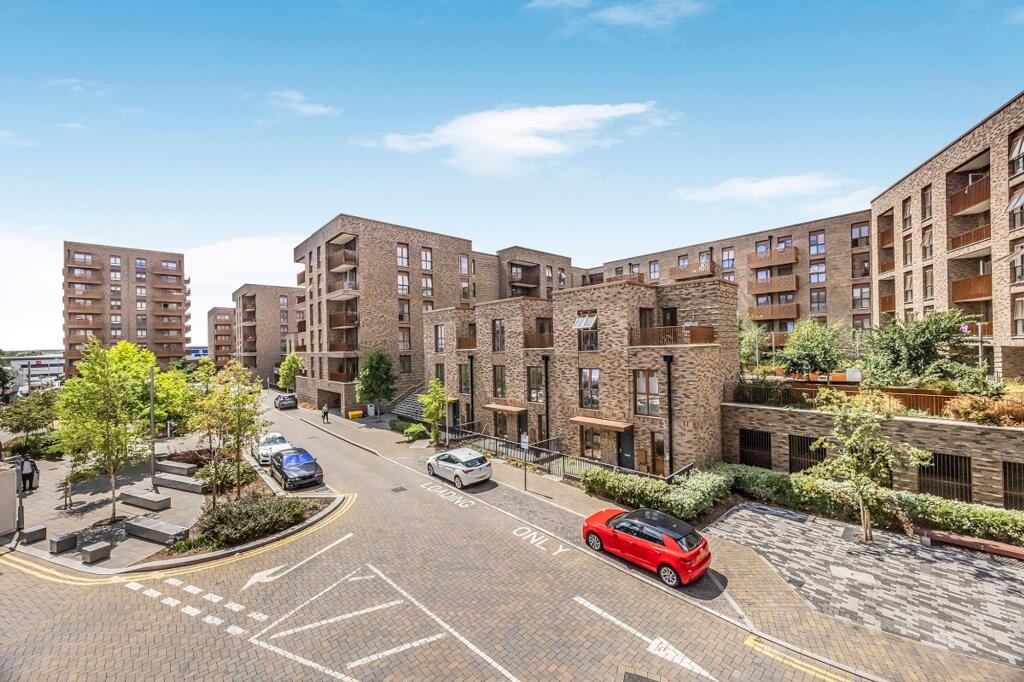
- Property Price:£300k
- Mkt Value at purchase:£320k
- Day one equity:£20,000
- Yield:6.8%
- ROCE:30.1%
.avif)