
.jpg)







Can First-Time Buyers Get a Buy-to-Let Mortgage? A Complete Guide
Yes, first-time buyers can get a buy-to-let mortgage. There is no blanket rule requiring you to own your own residential home before becoming a landlord. However, not every lender accepts first-time buyers, and the eligibility criteria are generally stricter than for existing homeowners.
If you are considering an investment property before buying a home, securing the mortgage is only one part of the process. Purchasing a buy-to-let as your first property carries significant implications for your future homeownership plans. Whether you choose to purchase the property personally or through a limited company can materially affect your tax position, your deposit requirements and your eligibility for first-time buyer reliefs and incentives later on.
Executive Summary
For prospective investors considering buying a rental property before their own home, navigating the UK mortgage market requires careful strategic planning. While securing a buy-to-let mortgage as a first-time buyer is entirely possible, the process involves stricter eligibility criteria, larger deposit requirements, and significant long-term tax implications. Understanding the structural differences between personal and corporate ownership is crucial to protecting your future homeownership benefits.
Key Takeaways:
- Mortgage availability: Lenders do accept first-time buyers, but the choice of products is narrower and underwriting is stricter.
- Deposit requirements: A 25% deposit is the typical starting point for a buy-to-let mortgage.
- Tax implications: Buying an investment property in your personal name removes your future first-time buyer Stamp Duty Land Tax (SDLT) relief.
- Corporate ownership: Purchasing through a limited company (SPV) triggers higher residential SDLT rates upfront but can preserve your personal first-time buyer status.
- Lifetime ISA: Withdrawing LISA funds for a buy-to-let purchase will incur a 25% government withdrawal charge.
Can a First-Time Buyer Get a Buy-to-Let Mortgage?
Obtaining a buy-to-let mortgage for first-time buyers is legally possible under UK mortgage regulations. The Financial Conduct Authority (FCA) and the Prudential Regulation Authority (PRA) do not prohibit lending to non-homeowners for investment purposes.
Instead, mortgage availability is determined by the internal risk policies of individual lenders. The mortgage market views applicants without a previous residential mortgage as a higher risk because they lack a proven track record of repaying property debt. Consequently, some specialist lenders mandate that at least one applicant must have owned a residential property for a minimum of 12 months.
However, several high-street banks and building societies actively accommodate the first-time buyer demographic. This means that while your choice of lenders will be more restricted, obtaining a first-time buyer buy-to-let mortgage is achievable provided you meet the necessary deposit and affordability thresholds.
First-Time Buyer vs First-Time Landlord: What's the Difference?
Mortgage lenders use specific terminology to categorise applicants. Understanding how you are classified is essential because criteria vary significantly between profiles.
- First-time buyer: Someone who has never owned an interest in a residential property in the UK or anywhere in the world.
- First-time landlord: Someone who has never owned or operated a rental property. A first-time landlord may already own their own home.
- Non-owner occupier: Someone who does not currently own the home they live in. This includes genuine first-time buyers, as well as individuals who previously owned a home, sold it, and now rent.
- First-time investor through an SPV: Someone who has never personally owned property but establishes a Special Purpose Vehicle (SPV) limited company through which the investment property is purchased.
When a lender advertises a first-time landlord mortgage, this does not automatically mean they accept true first-time buyers. Always verify that the lender accepts non-owner occupiers.
Can Your First Property Be a Buy-to-Let?
Yes, your first property can be a buy-to-let, provided you can satisfy the mortgage lender's criteria and the property itself is suitable for buy-to-let lending.
For many aspiring investors asking "can my first property be a buy to let?", the immediate focus is on mortgage approval. However, the more critical question is whether purchasing an investment property first aligns with your long-term financial objectives. Buying a rental property first alters your tax status and can affect the amount of capital you require, your mortgage affordability, and your eligibility for Stamp Duty Land Tax (SDLT) relief when you eventually purchase a home to live in.
Can You Get a Buy-to-Let Mortgage Without Owning Your Own Home?
Lenders view non-owner occupiers differently due to the lack of an existing mortgage repayment history. While you can get a mortgage without owning a home, underwriters will scrutinise your application more closely to mitigate risk.
You will typically face a smaller lender pool, and the lender will assess your overall creditworthiness, your personal income, and the expected rental income of the property. Furthermore, lenders may restrict the types of properties you can buy; straightforward single-family homes are generally preferred over complex assets for first-time investors.
Purchasing a buy-to-let as your first property carries significant implications for your future homeownership plans. Whether you choose to purchase the property personally or through a limited company can materially affect your tax position, your deposit requirements and your eligibility for first-time buyer reliefs and incentives later on.
For someone who has never owned property and expects to buy their own home later, the ownership structure can therefore have consequences beyond the tax treatment of the rental income itself.
What Are the Mortgage Requirements for a First-Time Landlord?
Deposit and loan-to-value
A 25% deposit, equivalent to 75% LTV, is a common starting point for first-time buyer BTL mortgages. While 80% LTV products occasionally exist within the wider market, these are typically reserved for experienced portfolio landlords rather than first-time buyers. Providing a deposit larger than 25% can improve your lender options, reduce the LTV and potentially give you access to more competitive interest rates, which can lower your overall buy-to-let mortgage deposit requirements.
Personal income
Personal income requirements vary significantly across the market. Some lenders enforce strict minimum personal income thresholds to ensure you can cover the mortgage during rental void periods. For example, Barclays typically requires a minimum gross annual income of £25,000, while Skipton Building Society expects £20,000 for a single applicant. Conversely, lenders like NatWest do not state a formal minimum income requirement, subject to its wider affordability and credit criteria, relying instead on algorithmic credit scoring to verify financial resilience.
Rental income and ICR stress testing
Buy-to-let affordability is primarily dictated by the property's expected rental yield, calculated using an Interest Coverage Ratio (ICR). The rent must generally cover 125% to 145% of the mortgage interest at a stressed interest rate, typically around 5.5%. This ensures the investment remains viable even if interest rates rise, a core principle of buy-to-let affordability and stress testing.
Credit history
Because you lack a mortgage track record, your unsecured credit profile must demonstrate responsible financial conduct. Lenders will assess your history for missed payments, defaults, and County Court Judgments (CCJs). A stronger credit profile will generally widen the available lender pool, although specialist lenders may consider some forms of adverse credit.
Property type
Your choice of property will influence mortgage availability. Lenders generally prefer standard, single-family dwellings let on a single Assured Shorthold Tenancy (AST) agreement. Lender choice can narrow further for more complex properties such as HMOs, holiday lets and certain multi-unit or mixed-use properties.
How Much Deposit Does a First-Time Buyer Need for a Buy-to-Let?
Based on the typical 25% requirement, the table below illustrates the minimum deposit needed across various property prices.
However, the deposit is not the same as the total cash required to buy an investment property. As a first-time investor, you must also budget for:
- Stamp Duty Land Tax (SDLT)
- Mortgage arrangement fees
- Specialist broker fees
- Conveyancing and legal costs
- Property survey and valuation fees
- Initial compliance (EPC, Gas Safety, electrical checks)
- Refurbishment or aesthetic improvements
- Initial letting and management fees
- An emergency contingency fund
How Much Can a First-Time Buyer Borrow for a Buy-to-Let?
Buy-to-let borrowing is not calculated using a simple salary multiple. Instead, the loan size is heavily influenced by the property value, the LTV ceiling, the expected rental income, the ICR, and the lender's stress rate.
While the property's income is the primary driver, your personal income and existing financial commitments still matter. Certain lenders use a mechanism called "top-slicing," which allows high-earning applicants to use their surplus personal income to bridge a shortfall in the rental ICR calculation. Understanding this mechanism is vital if you are calculating how much you can borrow for a buy-to-let.
Which Lenders Offer Buy-to-Let Mortgages to First-Time Buyers?
Lender criteria change frequently in response to market conditions, but at the time of the underlying research, examples of lenders whose criteria could accommodate first-time buyers included:
- NatWest: Accepts first-time buyers, permits top-slicing for high earners, and does not state a formal minimum income requirement, subject to its wider affordability and credit criteria.
- Barclays: Accepts first-time buyers but enforces a £25,000 minimum income requirement.
- Skipton Building Society: Accepts non-occupying borrowers and allows gifted deposits, requiring a £20,000 minimum income.
Conversely, specialist lenders such as The Mortgage Lender (TML) and BM Solutions generally require applicants to already own a residential property. For a broader view of the market, you can explore the various buy-to-let mortgage lenders currently available to investors.
Can a First-Time Buyer Get a Buy-to-Let Mortgage Through a Limited Company?
Many new property investors consider purchasing through a limited company. In this structure, you incorporate a Special Purpose Vehicle (SPV), and the company buys, owns, and receives the rent from the property. The company takes out the mortgage, although the directors are still assessed by the lender.
Can an SPV get a mortgage if you've never owned property before?
Yes, potentially. Specialist lenders such as Aldermore and Paragon Bank have provisions to consider limited-company applications from first-time landlords. However, many mainstream lenders restrict SPV lending entirely, and others demand that the company director must already own residential property. Consequently, the lender pool is narrower.
How much deposit does a limited-company first-time investor need?
Around 25% remains a useful starting assumption for SPV borrowing, although specific criteria will vary by lender.
How is affordability assessed?
Because limited companies pay Corporation Tax rather than personal Income Tax, lenders generally apply a lower ICR stress test. SPV applications are often stressed at 125%, whereas personal applications for higher-rate taxpayers are typically stressed at 145%. The directors' personal financial circumstances and credit histories will also be assessed.
Will you need a personal guarantee?
Often. Many limited-company BTL lenders require directors to provide personal guarantees for the SPV's mortgage. Incorporation does not remove your personal financial exposure to the debt.
What tax does the company pay?
Rental profits sit within the company and are subject to Corporation Tax. Unlike personal ownership, finance costs (such as mortgage interest) are generally treated as a deductible business expense. However, extracting those profits for personal use, such as taking a salary or dividends, can create additional personal tax liabilities. A company also faces ongoing administrative obligations with Companies House. Our limited company buy-to-let guide explores these corporate structures in more detail.
What SDLT does the company pay?
Companies purchasing residential investment property generally face higher rates of SDLT, which incorporate the 5 percentage point surcharge over standard residential rates, regardless of whether the company or its directors own any other property. This represents a substantial upfront acquisition cost.
Do you keep your personal first-time buyer status?
Buying through a limited company is different because the company, rather than you personally, acquires the property. This can mean you retain your personal first-time buyer status for a future home purchase, provided you have not otherwise acquired a qualifying interest in residential property and meet the relevant conditions at the time. Because the tax treatment will depend on your circumstances and future plans, professional tax advice can be useful before choosing a corporate ownership structure.
Should a First-Time Investor Buy Personally or Through a Limited Company?
The decision between personal and corporate ownership should not be reduced simply to which route pays less tax. It depends on your income, tax band, portfolio ambitions, and future homeownership plans.

Portfolio projection tool

For someone who has never owned property and expects to buy their own home later, the ownership structure can therefore have consequences beyond the tax treatment of the rental income itself.
Can You Buy a Buy-to-Let Before Buying Your Own Home?
For those wondering, "can I buy a rental property first?", the strategy of "rent-vesting" is entirely feasible. This involves renting a property in the location where you want to live, while purchasing an investment property in a market that offers better returns.
For example, a professional living in London may not be able to comfortably afford a £600,000 residential property, but they may have sufficient capital to purchase a £200,000 rental property in a strong regional market. The benefits of this approach include a lower investment entry price, potentially stronger yields, geographic flexibility, and the ability to start accumulating property assets earlier.
However, this must be balanced against transaction costs, taxation, the responsibilities of property management, and the potential impact on your mortgage affordability when you eventually decide to buy a house to live in.
Will Buying a Buy-to-Let Mean You Lose First-Time Buyer Status?
If you buy the property personally
If you purchase a buy-to-let property in your own name, you acquire a major interest in a dwelling. Under UK tax legislation, you generally cease to meet the definition of a first-time buyer. The buy-to-let itself does not qualify for first-time buyer SDLT relief because you do not intend to occupy it as your main residence. Consequently, you will not be able to claim first-time buyer relief when you later purchase a residential home.
If your limited company buys the property
If an SPV limited company buys the property, the company is the legal owner of the dwelling. Owning shares in a property-owning company does not automatically mean you personally own that dwelling. This distinction can allow the individual director to retain their personal first-time buyer status for a future residential purchase, subject to meeting all relevant statutory conditions at the time.
What Happens When You Later Buy Your Own Home?
Buying a rental property first can potentially make it more expensive or complex to buy your own home later.
If you bought the investment property personally, you will have lost your first-time buyer SDLT relief. Furthermore, if you retain the personal buy-to-let property when purchasing your residential home, the new home will generally be classed as an additional dwelling, subjecting the entire purchase price to higher rate SDLT surcharges.
In terms of mortgage affordability, residential lenders will assess your circumstances carefully. A personally held BTL mortgage represents a significant credit commitment. Even if the property is held in an SPV, a residential lender may factor your personal guarantee into your overall affordability assessment. The financial performance of the rental property is therefore critical to your future borrowing capacity.
Can You Use a Lifetime ISA for a Buy-to-Let?
Lifetime ISA (LISA) funds cannot normally be withdrawn penalty-free to purchase a property intended to be rented out. A non-qualifying withdrawal to fund a buy-to-let deposit attracts a 25% government withdrawal charge.
Additionally, personally buying a buy-to-let revokes your first-time buyer status, which can mean the individual no longer satisfies the first-time buyer condition for a later penalty-free home purchase, while the LISA can still remain invested for other qualifying uses. Corporate ownership creates a different legal position because the company owns the property, potentially leaving your personal LISA eligibility intact for a future home.
Are First-Time Landlord Mortgages Interest-Only or Repayment?
Many buy-to-let investors use interest-only mortgages. With this structure, your monthly mortgage payments are lower because you are only paying the interest, which improves your monthly cash flow. However, the original capital amount remains outstanding at the end of the term.
Repayment mortgages reduce the debt over time, but the higher monthly payments can make it harder to pass the lender's ICR stress test. Your choice between an interest-only vs repayment mortgage depends entirely on your investment strategy and circumstances.
Example: Buying Your First £200,000 Investment Property
To illustrate the economics of buying an investment property first, consider the following hypothetical scenario for a true first-time buyer, currently renting, purchasing a property personally in England or Northern Ireland.
- Purchase price: £200,000
- Deposit: £50,000 (75% LTV)
- Mortgage: £150,000
- Expected rent: £1,100 per calendar month
- Illustrative interest-only mortgage rate: 5.25% (Note: Rates fluctuate; this is an illustrative example only.)
In this scenario, the property achieves a gross yield of 6.6%. At a 5.5% stress rate and 125% ICR, the required rent would be approximately £859 per month, compared with the assumed rent of £1,100 per month.
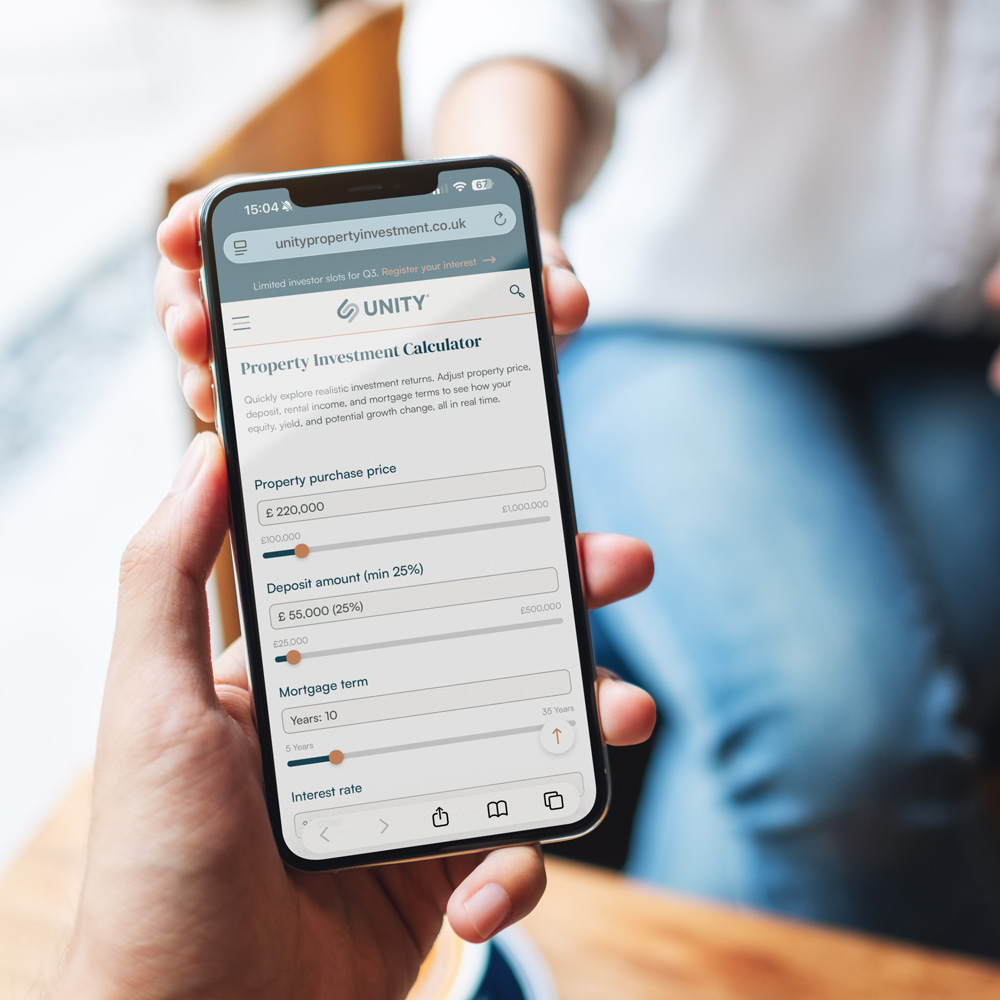
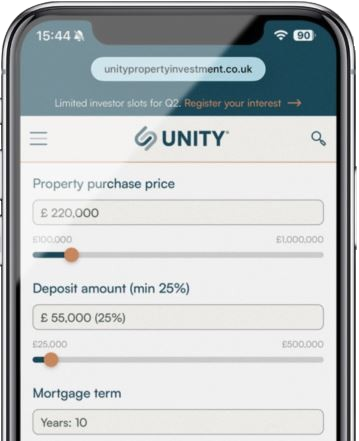
You can use our buy-to-let calculator to test how different purchase prices, rents, mortgage rates, and deposits affect the numbers.
Advantages of Buying an Investment Property Before Your Own Home
- Ability to invest in a cheaper property market while renting in a location suited to your career or lifestyle.
- The potential to generate rental income while gaining exposure to the performance of a property asset.
- Geographic flexibility, allowing you to move easily without needing to sell a primary residence.
- Beginning the process of building a property portfolio earlier in your financial journey.
Risks of Buying a Buy-to-Let as Your First Property
- Mortgage restrictions and the requirement for a large deposit.
- The impact on your future first-time buyer status and associated SDLT relief.
- LISA implications and the potential impact on your future home affordability.
- Interest-rate risk and the potential for property prices to fluctuate.
- Exposure to rental voids, maintenance costs, and strict landlord compliance obligations.
- The illiquidity of property as an asset class.
Personal Ownership vs Limited Company (SPV) Comparison
Factor
Personal name
SPV limited company
.png)
When Could Buying a Buy-to-Let First Make Sense?
Buying a BTL first may be worth considering if you expect to rent for several years, perhaps due to career mobility, or if you live in an expensive housing market where buying a home is currently out of reach. It can also suit individuals who have sufficient investment capital and emergency reserves, and who are deliberately prioritising the construction of an investment portfolio over immediate homeownership.
When Might Buying Your Own Home First Make More Sense?
Buying your own home first is generally more appropriate if you plan to purchase a residential property relatively soon, or if you intend to rely heavily on a Lifetime ISA to fund your deposit. It may also make more sense if you have limited available capital, insufficient emergency reserves, a strong desire for residential security, or an unwillingness to accept the regulatory and financial risks of being a landlord.
How to Buy Your First Rental Property
- Decide whether investing before homeownership fits your long-term financial objectives.
- Consider the implications of personal versus limited-company ownership.
- Establish your total available capital, accounting for deposits, taxes, and fees.
- Speak to an appropriate buy-to-let mortgage broker to understand your borrowing capacity.
- Establish an investment budget and clear criteria.
- Research suitable investment areas with strong rental demand.
- Identify suitable properties.
- Model the expected rent, gross yield, and cash flow.
- Make a formal offer on the property.
- Arrange the mortgage valuation and submit the full application.
- Complete legal conveyancing and property due diligence.
- Complete the purchase and pay the applicable SDLT.
- Prepare the property for letting.
- Ensure all landlord safety and compliance requirements are met.
- Instruct an agent to let and manage the property.
- Review the investment's performance periodically.
For investors considering their first rental property, financing is only one part of the decision. Location, tenant demand, purchase price, achievable rent and property condition all influence whether the investment actually works. You can explore the investment areas and the criteria we use when assessing investment property.
-v1.avif)
Get investor insights and early access to opportunities
Join our investor briefings for structured insights, market updates, and priority access to new deals.

No spam, just timely insights for investors We respect your privacy and never sell your data
Buy to let investment and rental yield calculator
Is Buying a Buy-to-Let as Your First Property Right for You?
While the path is narrower, first-time buyers can secure buy-to-let mortgages. Doing so requires sufficient capital, a strong credit profile, and a property that easily covers its mortgage stress tests.
Your choice between personal and corporate ownership can materially alter the economics of the deal. Buying personally can have important consequences for a later home purchase, while an SPV creates different upfront costs and ongoing administrative duties.
Ultimately, finding a willing mortgage lender is only the beginning. The underlying property must work financially as a long-term investment.
Minimum Deposit Needed by Property Price
Property price
25% deposit
Estimated Initial Capital Requirement
Cost Component
Estimated Cost
Illustrative Monthly Cash Flow
Metric
Value
Frequently Asked Questions
Can first-time buyers get a buy-to-let mortgage?
Can your first property be a buy-to-let?
Can a first-time buyer buy a rental property?
Do you need to own your own home to get a buy-to-let mortgage?
How much deposit does a first-time landlord need?
Can you get a buy-to-let mortgage with a 20% deposit?
Can a first-time buyer buy through a limited company?
Will buying a buy-to-let mean I lose my first-time buyer status?
Case study

- Property Price:£250k
- Mkt Value at purchase:£250k
- Day one equity:£0
- Yield:7.4%
- ROCE:31.6%
.avif)