
.jpg)










Why Commuter Belt Freeholds Outperform Flashy New Builds: An Asset Management Perspective
The UK property market in 2026 is anything but predictable. With recent macroeconomic shocks including the geopolitical fallout from the Iran conflict driving up energy prices and shifting expectations toward higher for- longer interest rates - many investors are understandably cautious. However, this exact volatility actually presents a prime opportunity to acquire well priced property if you know where to look.
But there is a dangerous, long standing trap that many still fall into. For over two decades, since off-plan property sales surged in popularity in the early 2000s, countless retail investors have been lured into glossy new build apartments by shiny marketing brochures and the promise of "hands-off" guaranteed returns. What looks like a sophisticated, premium asset on day one often turns into a financial anchor that drags down portfolio performance for years.
At Unity, we deploy a rigorous asset management philosophy. We focus relentlessly on the numbers, the underlying data, and the real world operational realities of property investment. Our strategy bypasses the speculative traps of the new build sector in favour of a much more resilient, high-performing asset class: the standard 2 to 3 bedroom freehold house in the London commuter belt.
Here is why the heavily marketed new build is often a trap, and why a strategic asset management approach to established housing stock is the true path to a secure 10% to 12% annualised return.
Executive Summary
In a volatile 2026 UK property market, asset selection is the deciding factor between capital stagnation and generational wealth. While retail investors continue to be lured by the glossy marketing of new-build apartments, professional asset managers view them as a financial trap.
This guide breaks down why institutional-grade investing avoids speculative new developments in favour of active asset management:
- The "New Build Premium" Trap: Investors frequently overpay by 10% to 20% compared to local resale stock, resulting in years of severe capital stagnation just to recover the initial premium.
- The Illusion of Guaranteed Yields: Developer-promised 7% to 8% yields are often artificial accounting tricks subsidized by your own inflated purchase price, leading to devastating cash-flow drops when the guarantee period expires.
- Hidden Operational Liabilities: Complex leaseholds, uncapped 24-hour concierge service charges, and unregulated "fleecehold" estate fees permanently erode net operating income.
- The Superior Alternative: The most robust strategy involves acquiring established 2-to-3-bedroom freehold family homes in the £200,000 to £350,000 range, situated 30 to 60 minutes from Central London (e.g., Essex, Kent, Bedfordshire).
- Active Asset Management: By forcing equity growth through strict £5,000 to £25,000 cosmetic refurbishments and executing strategic EPC upgrades, investors can access preferential "Green Mortgages" and secure highly predictable 10% to 12% annualized returns.
The "New Build Premium" Trap
One of the most persistent myths in property investing is that "new" automatically equates to a sound financial decision. While the lack of an immediate buying chain and fresh appliances are attractive, these conveniences come at a steep and immediate cost. You are paying a "new build premium." When you buy a newly developed property, you aren't just paying for the bricks and mortar; you are absorbing the developer's massive marketing budget, site acquisition premiums, and their corporate profit margins.
Recent market data starkly highlights this disparity.By late 2025, the average price of a new build property in the UK reached £394,000, while existing resold property averaged a much lower £288,000. This means investors are frequently paying a premium of 10% to 20% above comparable resale properties in the exact same postcode, simply to secure the status of being the first occupant.
The exact moment the transaction completes and the keys are handed over, the property is no longer "new" and enters the secondary market. This dynamic creates a protracted period of capital stagnation. Instead of experiencing true compound equity growth, your first few years of market appreciation simply go toward recovering that initial overpayment. In fact, research indicates that new-build homes sold seven years after their first sale can under-perform their local benchmark by around 10 percentage points. For an investor focused on building wealth, this forced multi-year waiting period is a massive opportunity cost.
The Illusion of Developer-Guaranteed Yields
To justify these inflated asking prices and maintain the velocity of their sales, developers frequently deploy "guaranteed rent" schemes. These heavily marketed packages promise investors highly attractive, fixed gross yields often around 7% to 8% - for the first one to three years of ownership. To the untrained eye, this looks like the ultimate risk-free investment.
In reality, this is often nothing more than a corporate accounting illusion. If the true, organic open-market rent for that specific apartment only supports a 4% yield, the developer must bridge the gap.They do this by subsidising the rental income using the very same profit margin they secured from your inflated day one purchase price. You are effectively pre-paying for your own rental income out of your initial capital.
The real danger arrives when this guarantee period inevitably expires. The property must revert to its true open-market rental value. Because the initial high yield was artificially engineered and never supported by local tenant demand or local wages, the rental income suddenly drops off a cliff. This "cliff-edge effect" devastates the asset's cash flow, severely compresses your long-term returns, and can even trap you on uncompetitive mortgage rates if the property down-values upon refinancing.
The Hidden Operational Costs
Beyond stagnant capital values and artificial yields,modern new build developments carry severe and escalating operational liabilities. Many new build buyers find themselves trapped in complex leasehold structures or caught in the web of unregulated estate management fees.
The rapid rise of the "fleecehold" model on private housing estates means that even if you own the freehold title of a new house, you may still be bound by strict deeds to pay uncapped, mandatory fees to third-party management companies for the upkeep of unadopted roads, drainage, and communal areas. Failure to pay these sometimes arbitrary fees even for debts as low as £100 can historically lead to draconian legal action under 100-year old laws that threatens your physical access to the home.
While the Leasehold and Freehold Reform Act 2024 has introduced critical measures to curb ground rents and ban the sale of new leasehold houses , the exorbitant service charges associated with high-density flats remain a major issue. Costs covering 24-hour concierges, private resident gyms, and complex building systems are largely uncapped. These escalating, unpredictable costs persistently erode your net operating income, making it incredibly difficult to accurately forecast the true performance of your asset.
This is not a get rich quick scheme; it is a meticulously managed, data-driven financial discipline.
The Superior Asset Class: Commuter Belt Freeholds
At Unity, our acquisition strategy deliberately avoids these systemic risks. We deploy capital into a highly specific segment of the market guided by strict investment criteria: established two-to-three-bedroom freehold houses located precisely 30 to 60 minutes from Central London.
To understand why this strategy is so robust, it is vital to look at broader market economics. As of January 2026, the official average UK house price stands at £268,421. By targeting the £200,000 to £350,000 sweet spot, we are investing squarely in the mass-market demographic. This specific bracket benefits immensely from inflationary tailwinds. As wages steadily increase and outpace house price growth, buyer purchasing power is organically restored. Because mortgage lending is typically capped at around 4.5 to 5 times a buyer's salary, rising wages naturally increase the amount the average professional can borrow. This injects fresh money supply directly into this affordable housing tier, driving sustained demand and pushing up capital values.
By targeting this sweet spot across Essex, Kent and Bedfordshire/Hertfordshire corridors, we focus on carefully selected investment areas with resilient tenant demand and long-term growth drivers. The post-pandemic shift to hybrid working has permanently driven young professionals and forming families out of Greater London. They are in search of more space, home offices, and private gardens, while still requiring highly reliable, sub-hour rail access to the capital.
The granular data supporting these specific locations is highly compelling. In Basildon, for example, the SS14 postcode generates robust average gross yields of 5.7%. In Bedfordshire, Luton (LU1) offers accessible entry prices around £198,000 and consistently delivers strong yields ranging from 5% to 7%. Meanwhile, in the Kent corridor, Dartford has seen intense rental demand, with average rents reaching £1,551 per month by January 2026.
Crucially, acquiring freehold houses entirely eliminates your exposure to unpredictable block service charges and unregulated estate management fees. You own the underlying land, which inherently appreciates, while retaining total control over your operational expenditures. Furthermore, these standard family homes attract highly stable, long-term tenants, drastically reducing operational void periods compared to the transient demographics typical of modern city centre flats.
Active Asset Management vs. Passive Speculation
The defining difference between amateur speculation and institutional-grade investing is an active asset management approach. Many retail investors operate passively, hoping the broader market will eventually inflate enough to lift their over-priced new build out of early-stage negative equity. Unity takes a proactive, value-add approach to force capital appreciation and drive sustainable, organic cash flow.
We target properties that require light to moderate cosmetic refurbishment operating strictly within the £5,000 to £25,000 capital expenditure "sweet spot". By upgrading kitchens, refreshing bathrooms, and modernising the internal presentation, we entirely bypass the severe cost overruns, planning delays, and structural risks of heavy renovations. This disciplined capital allocation instantly alters the tenant's perception of value, frequently commanding a significant rental premium overtired, equivalent stock on the exact same street.
A non-negotiable part of this asset management processis future-proofing your investment. With the UK government mandating that all private rented sector properties achieve a minimum EPC rating of 'C' by October 2030 (backed by a strict £10,000 cost cap) , we seamlessly integrate essential energy-efficiency upgrades into our initial refurbishments. This proactive step not only avoids future legislative void periods but also unlocks access to highly preferential "Green Mortgages," structurally lowering your cost of debt and widening your profit margins.
This is not a get rich quick scheme; it is a meticulously managed, data-driven financial discipline. By combining a targeted 6% to 8% organic gross yield with forced equity growth through smart, cosmetic refurbishment, Unity consistently targets and delivers a highly robust 10% to 12% annualised return.
Conclusion
When investing in real estate, the glossy appeal of a brand new development often masks deep structural flaws, artificially engineered yields, and a multi-year lag in true capital growth. Real, generational wealth in the UK property market is built through the strategic acquisition of correctly priced, established freehold assets in high demand commuter corridors, paired with active asset management.
At Unity, we don’t simply acquire property - we apply an asset management mindset across the full lifecycle of every asset. By focusing relentlessly on stable income, risk mitigation, and long-term compounding growth, we aim to build portfolios that perform predictably, sustainably, and profitably. Explore how our acquisition and asset management model works.

Portfolio projection tool

-v1.avif)
Get investor insights and early access to opportunities
Join our investor briefings for structured insights, market updates, and priority access to new deals.

No spam, just timely insights for investors We respect your privacy and never sell your data
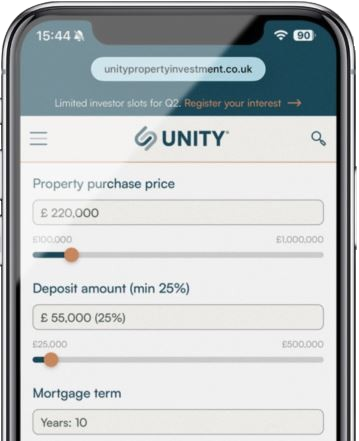
Buy to let investment and rental yield calculator
Case study
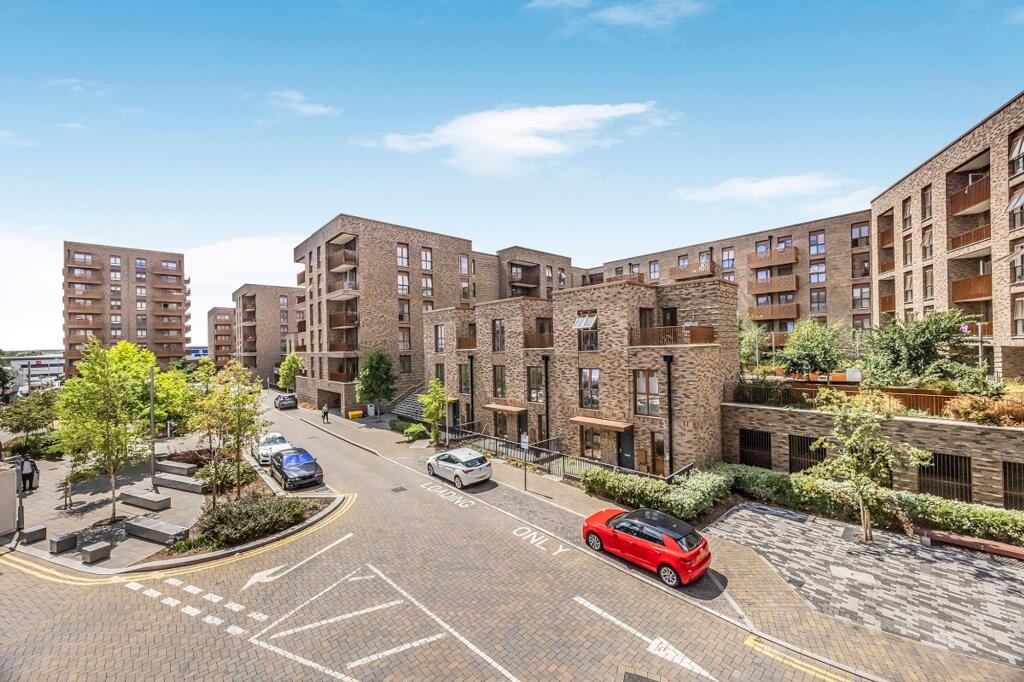
- Property Price:£300k
- Mkt Value at purchase:£320k
- Day one equity:£20,000
- Yield:6.8%
- ROCE:30.1%
.avif)