
.jpg)









Property investment can appear straightforward on the surface: identify an appealing asset, calculate the anticipated rental income, arrange the necessary finance, and execute the purchase. However, the reality of building a profitable and resilient portfolio is far more complex. In practice, investors have to make decisions about location, property type, purchase price, rental demand, yield, cash flow, financing, refurbishment and exit strategy.
Executive Summary
This guide explores the value of professional property investment advice. Investors can use this resource to understand exactly what a property investment consultant does, from strategy creation to acquisition support. We compare these specialists against estate agents and financial advisers, and clarify what independent advice truly means. Whether you want to source individual properties or require broader portfolio guidance, this article provides the framework you need to evaluate if professional assistance is right for your goals.
Engaging a consultant is a significant decision that should be based on your individual circumstances, available capital, and existing market expertise. A good consultant should conduct appropriate due diligence and help coordinate the acquisition process, while a poor provider can erode initial capital and introduce conflicts of interest.
Key Takeaways:
- Strategic Planning: Property investment consultants help define your financial goals, risk appetite, and portfolio strategy before you commit capital.
- Market Analysis: Good advice relies on considering local economic drivers, rental demand and evidence-based property valuations rather than relying solely on headline yields.
- Clear Distinction of Roles: A property consultant differs from an estate agent or regulated financial adviser; they represent the investor and focus specifically on physical real estate.
- Transparent Fees & Independence: Always verify how a property advisor is compensated, whether they receive developer commissions, and how they define their independence.
- Risk Mitigation: Professional assistance does not remove market risk, but a structured, data-led approach helps avoid emotionally driven purchases and underperforming assets.
Attempting to optimise all these variables independently takes considerable time and market experience. For investors who lack that time or local knowledge, engaging a professional property advisory firm is often a sensible consideration. Many residential property investment consultants help investors develop an investment strategy, identify suitable opportunities, analyse potential purchases and, depending on the provider, coordinate parts of the acquisition and ongoing investment process.
However, service levels vary considerably across the sector. This article examines what buy-to-let investment advice actually involves, outlines what a property investment adviser does, clarifies how these property advisors differ from estate agents and financial advisers, and helps you evaluate whether professional assistance is the right choice for your investment goals.
What Is Property Investment Advice?
In the UK residential market, property investment advice involves helping an investor make better-informed decisions about purchasing and managing investment property.
This guidance generally covers assessing an investor's objectives, available capital, and risk appetite. It helps define income versus capital-growth objectives, targets suitable locations, and evaluates property selection based on rental yield and cash flow.
It is important to distinguish general property investment guidance from personalised regulated financial advice. In the UK, advising on the purchase of direct, physical buy-to-let property is generally not a regulated activity under the Financial Conduct Authority (FCA), provided it is not structured as a Collective Investment Scheme (CIS). Providing personalised recommendations on regulated mortgages, pensions, or wealth management is strictly regulated by the FCA.
A property adviser provides strategic advice on physical real estate. If you require a mortgage, a good consultant will direct you to a regulated mortgage broker. If you need guidance on tax structures, you should consult an accountant. For foundational knowledge on how the process works, many investors read a buy-to-let investment guide before speaking to a professional.
What Does a Property Investment Consultant Do?
The services offered vary between property investment advisors, but a comprehensive residential property investment consultant will generally assist with the following stages.
Understanding the Investor's Objectives
During an initial property investment consultation, they should take time to understand your current position and future goals. They will discuss your investment budget, available deposit, income requirements, and growth objectives.
They should also assess your desired level of involvement. Some investors want to manage refurbishments and tenants themselves, while others want a completely hands-off process. A consultant will also look at your financing position and how any new acquisition fits alongside your existing portfolio.
Developing a Property Investment Strategy
There is a difference between simply finding a property for sale and establishing what type of property you should actually be looking for. A buy-to-let consultant helps you build a tailored strategy.
Depending on your goals, this strategy might be income-focused (targeting properties that offer stronger rental yields and robust cash flow), balanced (seeking moderate yields with steady capital appreciation), or capital-growth focused (targeting regeneration areas). Alternatively, you might look for value-add opportunities where you can refurbish a property to increase its value. Having a strategy ensures your capital is deployed effectively and helps clarify how to make money from property in a way that suits your risk profile.
Identifying Suitable Investment Locations
Property markets can be highly local. While national and regional data can provide useful context, individual property investment decisions depend heavily on local market conditions.
When comparing property consultants, investors should look for those who evaluate potential investment locations by analysing regional economic drivers. They review local property prices, rents, rental demand, employment, transport links, housing supply, and tenant demographics. By identifying regions where the local economy and tenant demographics are strong, these property advisers help position investors in investment areas that offer sustainable rental income and growth potential.
Finding Potential Investment Properties
While some consultants only provide advice, others actively source the properties. Finding good investment properties requires looking across multiple channels, including open-market properties, off-market opportunities, developer stock, and tenanted properties.
For anyone evaluating a property advisor, strong market connections are key. Consultants with established networks often have access to off-market opportunities, value-add properties, or unusually priced stock that investors might struggle to find independently. However, any claimed discount on a below-market-value property should still be tested against appropriate comparable evidence. Understanding how Unity sources investment properties provides a practical example of the filtering required to find viable investments.
Analysing Individual Opportunities
This is where true investment analysis takes over from basic property marketing. A consultant should break down the financial reality of a property. They will assess the purchase price against current market value, use comparable evidence to determine a realistic achievable rent, and calculate the gross yield.
More importantly, they will evaluate the true operating cash flow. This means deducting operating costs, management fees, maintenance, and void assumptions. They will also factor in financing costs. Buy-to-let lenders commonly assess whether expected rent provides sufficient coverage against mortgage interest, and lending criteria can include stressed interest rates and minimum interest-coverage ratios to ensure the investment remains affordable.
Once acquisition costs (such as Stamp Duty Land Tax in England and Northern Ireland, with different property transaction taxes applying in Scotland and Wales) are included, the consultant can present a realistic net yield. You can explore how these numbers work using a buy-to-let calculator and by understanding exactly how to calculate rental yield.
Supporting the Acquisition
Depending on the service provided, a consultant may help coordinate the purchase. This can involve making offers, negotiating the price, and liaising with mortgage brokers and solicitors.
They may also help coordinate surveys, manage the post-completion refurbishment, and hand the property over to a letting and property management team. This can reduce the administrative burden on the investor and help keep the different stages of the transaction coordinated, which is important when managing how long a buy-to-let purchase takes.
Property Investment Consultant vs Property Sourcing Agent vs Estate Agent
The UK property sector includes many different professionals. When seeking independent property investment advice, it helps to understand how these roles differ from broader property investment companies.
A high gross yield in an area with poor tenant retention and high maintenance costs often results in a poor investment.
Paying a consultant does not automatically make an investment good. The quality of the underlying property and the local market is what ultimately matters.
It is important to note that a company can perform more than one function. Furthermore, regulatory requirements depend on the specific activities a business undertakes. Simply using a title such as "property investment consultant", "property advisor" or "property sourcing agent" does not automatically create these regulatory obligations. However, if a business's actual activities meet the legal definition of "estate agency work", they must be registered with HMRC for Anti-Money Laundering (AML) supervision. Additionally, estate agents dealing with residential properties in the UK, and letting or property management agents in England or Wales, are required to join an approved government property redress scheme.
What Should Good Property Investment Advice Include?
Strong investment advice should look well beyond the headline rental yield. A high gross yield in an area with poor tenant retention and high maintenance costs often results in a poor investment.
Good property investment advice should practically consider:
- Purchase price and value: Recent comparable transactions should be considered rather than relying solely on asking prices, developer valuations or claimed discounts.
- Rental demand and achievable rent: Rental assumptions should be tested against genuinely comparable local properties, considering their condition, size, and property type.
- Gross and net yield: How does the specific property compare to average UK rental yields? An attractive headline gross yield may look materially different once financing, management, maintenance, insurance, and realistic void assumptions are included.
- Financing costs: What will the mortgage cost, and what happens if rates change?
- Operating costs: What are the true costs of being a landlord for this specific property?
- Maintenance and voids: Has the consultant factored in realistic periods where the property sits empty or requires repairs?
- Capital-growth potential: Does the area have long-term growth drivers?
- Liquidity and exit strategy: How easy would it be to sell the property if needed?
- Downside scenarios: What happens to the buy-to-let cash flow if things do not go to plan? Investors should understand what happens if rent is lower than forecast, costs are higher than expected, refurbishment overruns, or interest rates change.
How Much Does a Property Investment Consultant Cost?
Charging structures vary, and investors should understand exactly how their consultant is compensated. Common models include:
You should always ask when fees become payable, whether they are refundable if a survey reveals major defects, and whether the consultant receives commission from other parties.
Are Property Investment Consultants Independent?
The term "independent" does not have a universally defined meaning in property consultancy, unlike regulated independent financial advice. An independent property consultant might search broadly across the market for properties that meet your objectives.
However, investors should always establish what a provider actually means by "independent". Some consultants work with a selected panel of developers, meaning their recommendations are restricted to that specific stock. Others might only sell their own internally sourced opportunities. Independence should not be assumed just because a company uses the word in its branding. Always ask how the consultant is paid and whether commercial relationships limit the sellers or developers they recommend.
What Are the Benefits of Using a Property Investment Consultant?
When done well, using a property investment consultant offers tangible benefits. It saves time by outsourcing market research and property viewings. It helps investors compare opportunities using consistent, practical analysis.
Consultants also provide access to professional networks, including trusted solicitors, brokers, and tradespeople. A good consultant can provide a more objective framework for comparing properties, helping you avoid emotionally driven purchases. For many, a consultant helps build a repeatable investment strategy and provides access to opportunities they might not find on the open market.
What Are the Risks or Disadvantages?
Professional advice does not eliminate investment risk. Property values can fall, and rental income can fluctuate.
The main disadvantage is the cost of the consultancy or sourcing fees, which will impact your initial return on investment. There is also a risk of conflicts of interest if a consultant is driven by hidden developer commissions rather than the quality of the property.
The industry also has poor-quality providers who use overly optimistic projections, ignore void periods, or underestimate refurbishment costs. Using a consultant never removes your own responsibility to carry out proper due diligence and understand the investment you are making.
How Do You Choose a Property Investment Advisor?
Choosing the right professional requires careful evaluation. Before appointing a property investment advisor, investors should ask:
- How are you paid?
- Do you receive commissions from developers, sellers or other parties?
- How do you select investment areas?
- How do you assess market value?
- How do you calculate rental assumptions?
- What costs are included in your projections?
- Can I see previous investment examples or case studies?
- Who carries out the refurbishment?
- Who manages the property after completion?
- What happens if I decide not to proceed?
- What due diligence do you perform?
- What parts of the process remain my responsibility?
- Are you providing property consultancy or regulated financial advice?
- Can I use my own solicitor and mortgage broker?
It is also wise to check whether they have defined investment criteria that a property must meet before they recommend it.

Portfolio projection tool

Red Flags When Taking Property Investment Advice
Be cautious of consultants who promise guaranteed returns or guaranteed capital growth. Property is a long-term investment subject to market forces.
You should also question unexplained discounts, unrealistic rental projections, and high-pressure tactics demanding immediate reservation fees. If a consultant lacks comparable evidence for a property's value, is unclear about their fees, or discourages you from seeking independent legal advice, you should walk away.
Investors should also understand that pooling funds with others into structured, non-standard property investments (where you do not own or manage a direct, individual property) may constitute a collective investment scheme depending on how the arrangement is structured. These are subject to strict FCA regulations and carry very different risk profiles from buying standard buy-to-let property.
Do You Need a Property Investment Consultant?
Not necessarily. Whether professional assistance adds value depends on your experience, available time, market knowledge, and the scope of service offered.
Experienced investors with strong local market knowledge, sufficient time, established contacts, and a track record of analysing deals may prefer to invest independently.
A consultant is often more useful for investors who:
- are becoming a landlord in the UK for the first time;
- live outside their target investment area or are based overseas;
- have capital but limited time;
- want a hands-off approach;
- want help building a portfolio;
- need support comparing locations and opportunities.
Property Investment Advice for Building a Portfolio
A property that looks attractive individually may not necessarily improve an overall portfolio. As you move beyond a single property, property portfolio advice should help you consider the broader picture.
Good portfolio advice should consider geographic concentration, ensuring you are not too exposed to one local town or employer. It looks at property-type concentration and tenant demographic exposure. A consultant can help you balance leverage, maintain adequate cash reserves, and manage the mix between income-generating properties and equity-growth assets.
They can also help sequence your acquisitions, advising on when to refinance and whether the next purchase improves the resilience of your overall portfolio. Investors can start testing out different scenarios using our portfolio projection tool.
How Unity Approaches Property Investment Consultancy
Unity works with investors to identify UK residential buy-to-let opportunities based on their specific objectives. We focus on investment fundamentals rather than simply offering available stock.
The process typically involves:
- Understanding your goals, available capital, and desired level of involvement.
- Defining clear investment criteria.
- Researching suitable locations across the UK.
- Sourcing investment opportunities that meet those criteria.
- Appraising the purchase price, achievable rent, yield, and cash flow requirements.
- Supporting the acquisition and liaising with necessary professionals.
- Coordinating refurbishment where required.
- Providing ongoing letting and property management.
Final Thoughts - Is Property Investment Advice Worth Paying For?
Property investment advice can be valuable when it provides expertise, research, analysis, and execution capability that you either do not have or do not have the time to do yourself.
However, paying a consultant does not automatically make an investment good. The quality of the underlying property and the local market is what ultimately matters. You should always understand what you are buying, why it suits your objectives, how the assumptions have been calculated, what the risks are, and how the consultant is paid.
Investors considering building or expanding a UK buy-to-let portfolio can speak with Unity about their objectives, preferred strategy, and the types of opportunities that may be suitable by arranging to book a consultation.
Common Fee Structures for Property Investment Consultancy
Fee Structure
Description
.png)
-v1.avif)
Get investor insights and early access to opportunities
Join our investor briefings for structured insights, market updates, and priority access to new deals.

No spam, just timely insights for investors We respect your privacy and never sell your data
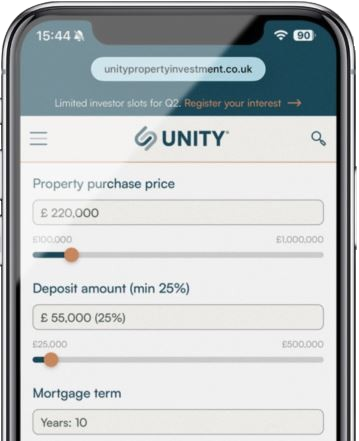
Buy to let investment and rental yield calculator
Property Professionals and Their Typical Roles
Professional
Primarily Represents
Typical Role
Usually Paid By
Frequently Asked Questions
What does a property investment consultant do?
Is a property investment consultant the same as a financial adviser?
How much does a property investment advisor charge?
Is property investment advice regulated in the UK?
Is it worth using a property investment consultant?
What is independent property investment advice?
Can a property investment consultant find buy-to-let properties for me?
What should I ask a property investment advisor before investing?
Do I need a property investment advisor to build a property portfolio?
Case study

- Property Price:£300k
- Mkt Value at purchase:£320k
- Day one equity:£20,000
- Yield:6.8%
- ROCE:30.1%
.avif)