
.jpg)








Yes, property can be a good investment, but it isn't the right investment for everyone. For many UK investors, residential property offers long-term capital growth, rental income and diversification, but it also requires significant capital, ongoing management and a long-term mindset.
The question isn't whether property is good or bad. It's whether a particular residential property delivers the cash flow and long-term return required for your investment objectives.
Executive Summary
This guide explores how UK residential property compares against other asset classes, details the core benefits and risks, and helps you decide if it belongs in your investment portfolio. While the market has seen significant regulatory shifts, including the renters' rights act, and complex tax alterations, residential property continues to offer strong, inflation-linked returns for disciplined investors.
We will review how to assess realistic returns, compare buy-to-let against shares and savings, and highlight the strategies professional landlords use to build sustainable wealth.
Why do people invest in property?
If you are wondering, is buying a house a good investment, the enduring appeal of UK residential property investment is rooted in its ability to generate wealth in multiple ways simultaneously. When structuring personal investment plans or exploring property investment for beginners, understanding these drivers is critical.
- Capital growth: Historically, UK real estate has shown a strong capacity for long-term price appreciation, driven by a persistent shortage of new housing relative to population growth.
- Rental income: Rental income is driven by a fundamental human need for shelter, providing a steady and relatively predictable cash flow.
- Leverage: The ability to safely borrow up to 75% of the asset's value using a commercial buy-to-let mortgage is a unique advantage that magnifies returns.
- Tangible asset: Property is a physical asset with intrinsic value. It cannot be erased by a stock market flash crash or a corporate bankruptcy.
- Inflation protection: As the cost of goods and wages rise, property values and rental prices typically adjust upward in tandem.
- Diversification: Adding residential property to a portfolio of shares and bonds reduces overall volatility.
- Retirement planning: The combination of capital preservation and monthly cash flow makes property an excellent vehicle for self-funded retirement streams.
What returns can you realistically expect?
Professional investors assess the total return of a residential property investment rather than looking at just one metric. Your overall return will usually come from a combination of:
- Rental income: The monthly cash flow generated by tenants, which typically rises with inflation over time.
- Capital growth: The increase in the property's underlying market value over the years.
- Mortgage amortisation: If you use a repayment mortgage, your tenants' rent pays down your debt, slowly increasing your equity stake.
- Value added through refurbishment: Actively forcing the property's value up by modernising kitchens, bathrooms, or improving energy efficiency.
By combining these elements, a well-managed residential buy-to-let property can deliver strong compound returns that often exceed the initial yield alone.
Is residential property a good investment compared with other asset classes?
When building a portfolio, many ask: is property the best investment? To determine if is buying property a good investment, it helps to benchmark it against other mainstream financial options. No single asset class is universally "best"; each serves a distinct purpose depending on your goals.
For many investors, the question isn't property or shares. It's property and shares. A balanced approach builds credibility and resilience within a long-term portfolio.
Residential Property vs Shares and Index Funds
The debate between property and shares often comes down to control and income versus liquidity. The UK stock market, such as the FTSE 100, can offer strong performance, growing around 17.5% year-to-date by mid-2026. Shares are highly liquid and require little day-to-day management.
Property, however, typically provides more stable, predictable cash flow through monthly rent. Crucially, property allows for leverage (using a mortgage). This means you earn returns on the total value of the property, not just your initial cash deposit, which can significantly amplify your overall return on investment over the long term.

Residential Property vs Cash Savings
For investors exploring the best way to invest £50k, cash savings represent the lowest-risk benchmark. In 2026, easy access savings accounts and Cash ISAs yield up to 5.00% and 4.66% respectively.
While cash is highly liquid and safe from market crashes, it fails to provide capital growth. With inflation constantly eroding purchasing power, the real return on cash is often negative over a decade. Residential property is a better long-term hedge against inflation, as both property values and rental income tend to rise alongside the broader cost of living.
Property vs Bonds and Gold
UK government bonds (Gilts) offer a fixed yield, averaging around 4.80% for a 10-year bond in 2026. For property to be worthwhile, it needs to offer a higher return than this "risk-free" rate to compensate for the extra effort and lower liquidity. With average UK rental yields sitting at 7.8%, property comfortably clears this hurdle.
Gold is a traditional safe haven and capital preservation tool that has seen strong growth recently. However, gold produces no yield, it doesn't pay rent or dividends. Therefore, it cannot replace property for investors seeking a regular monthly income from a £100k investment.
Property should be viewed as one component of a diversified investment portfolio, not a guaranteed path to wealth. The strongest long-term results typically come from disciplined investing, careful property selection and active asset management.
Successful property investing isn't about predicting the next hotspot. It's about acquiring assets with strong fundamentals that generate sustainable cash flow while offering long-term capital growth potential.
The advantages of residential property investment
When bought well, using property as an investment offers distinct advantages that are difficult to replicate elsewhere.
Predictable rental income
The multi-decade shortage of housing delivery in the UK ensures underlying tenant demand remains persistently high. Despite economic shifts, average rental yields across England and Wales sit at a robust 7.8%. This consistent income allows investors to service debt reliably while extracting surplus profit.
Mortgage leverage
The application of debt remains the primary driver of property wealth creation. With competitive buy-to-let tracker rates starting around 4.08% in 2026, the gap between the cost of borrowing and the rental income generated creates the positive cash flow that drives the sector.
Greater control over returns
Unlike most investments, residential buy-to-let investors can actively influence performance through refurbishment, refinancing, tenant selection and professional asset management rather than relying solely on market movements. Conducting a thorough investment property analysis allows you to identify exactly where you can add value and increase your yields.
Ability to add value through refurbishment
Unlike buying shares in a company, an investor has direct control over a physical property. You can acquire a tired property, execute a targeted refurbishment programme, and force its value up. Understanding how we refurbish investment properties is key to instantly increasing your equity and rental income potential.

Lower day-to-day volatility
Stock markets are subject to daily, sometimes dramatic, price swings based on global news. Physical real estate is shielded from this because it takes months to buy and sell. This creates a highly stable asset base, rewarding those who excel at long-term property asset management.
The disadvantages and risks
An objective investment strategy must acknowledge the risks. Understanding the costs of being a landlord is imperative to avoid common property investment mistakes.
Property isn't liquid
If you need immediate access to your capital, a physical property cannot be sold in days like a stock or share. Selling a residential asset in the UK typically takes three to six months, and forced fast sales usually require heavy discounts.
Large capital required
When researching how much money to invest in property, it becomes clear that substantial initial cash is required. Beyond the typical 25% mortgage deposit, investors face significant transaction costs, including the 5% stamp duty land tax surcharge on additional properties, legal fees, and valuation costs. These upfront expenses mean property must be held long-term to be profitable.
Void periods and maintenance
Physical assets degrade. Boilers break and roofs need repairing. Investors must maintain contingency funds for unexpected repairs. Furthermore, 'void periods' - months where the property sits empty between tenants but mortgage and buy-to-let insurance costs continue and can quickly eat into annual profits.

Legislation and professionalisation
Property investing has become more professional. The renters' rights act introduced stronger tenant protections, including a shift to rolling periodic tenancies and stricter compliance standards. At the same time, tax changes outlined by HMRC, like Section 24, have restricted mortgage interest tax relief for individual landlords. While this has caused some amateur landlords to exit the market, professional investors are adapting easily by using corporate structures and professional letting agents.
Is residential buy-to-let still worth it?
Despite tax and regulatory changes, residential buy-to-let remains highly viable for those who approach it correctly. Reviewing a buy-to-let investment guide reveals a market undergoing evolution, not a decline.
The strongest indicator of the sector's long-term viability is that professional landlords are continuing to buy. In fact, 78% of all new buy-to-let borrowing is now transacted through limited companies, allowing investors to operate more tax-efficiently. Furthermore, institutional investors poured £2.2 billion into the UK Build-to-Rent sector in just one quarter of 2026, demonstrating huge confidence in the UK rental market.
Success today relies on cash flow over speculation. Investors are finding the best buy-to-let areas in the UK outside of London, targeting regional cities where tenant demand is high and the average rental yield comfortably exceeds 7%.
What makes a residential property investment successful?
Returns depend on solid fundamentals rather than simply owning bricks and mortar.
The Formula for Success
Successful Residential Property Investing = Buy well + Finance well + Manage well + Hold long term
- Location and demand: Proximity to employment hubs, transport links, and good schools ensures perpetual tenant demand.
- Yield and cash flow: Successful investors prioritise monthly net cash flow after stress-testing for higher buy-to-let interest rates, maintenance, and void periods. Understanding buy-to-let profit & cash flow is essential.
- Appropriate financing: Using the right mortgage products and mindful of Financial Conduct Authority (FCA) regulations and holding structures (like a limited company) maximises efficiency and returns.
- Rigorous research: Utilising a comprehensive property due diligence checklist prevents costly mistakes.
- Active management: Yields are not passive. They require proactive maintenance, careful tenant selection, and efficient asset management.

Portfolio projection tool

Is residential property a good investment for you?
Before committing capital, it is crucial to assess whether residential property aligns with your personal circumstances.
Property may suit you if:
✓ You're investing for 10+ years
✓ You want monthly income
✓ You can comfortably fund a deposit and contingency
✓ You're happy tying capital up
Property may not be suitable if:
✗ You'll need access to your money soon
✗ You're uncomfortable with borrowing
✗ You're looking for short-term gains
✗ You don't have an emergency fund

Should I invest in property?
When asking yourself should I invest in property, it is important to remember that property isn't automatically a good investment, but good property bought well certainly can be. The days of relying on rapid market inflation to cover up poor purchasing decisions are over.
Today, strong returns come from discipline, thorough research, smart financing, and patience. If you're asking, "Is real estate a good investment UK?", the long-term fundamentals of the residential property market remain compelling, supported by chronic housing shortages and sustained rental demand.
Rather than asking whether property is a good investment in general, investors should ask whether a specific property supports their financial objectives, risk tolerance and long-term strategy. The quality of the investment matters far more than the asset class itself. For those willing to approach real estate with a long-term, professional mindset, it continues to deserve a cornerstone place within a diversified investment portfolio.
Take the Next Step
If you're considering adding residential property to your investment portfolio, our property investment consultants can help you assess whether it aligns with your goals, risk tolerance and available capital. We focus on identifying investment opportunities with strong long-term fundamentals rather than chasing short-term market trends.
Explore our current properties or book consultation with our team to discuss your wealth goals.
Frequently Asked Questions
Is property still a good investment in the UK?
Yes, provided it is approached professionally. The UK suffers from a severe housing shortage which continually underpins tenant demand and long-term values. While recent tax alterations have increased costs, professional investors simply adapt by utilising limited company structures to mitigate tax and targeting high-yielding regional cities rather than saturated markets.
Is buying property a better investment than stocks?
Neither is universally better; they serve different functions. Stocks offer total liquidity and historically excellent returns, but they are highly volatile. Property offers lower day-to-day volatility, predictable monthly income, and the unique advantage of safe mortgage leverage, which amplifies returns on your initial deposit. A robust investment strategy typically incorporates both.
Is property better than an ISA?
A Cash ISA offers tax-free interest, currently up to 4.66% with zero capital risk and instant access to your money. A Stocks and Shares ISA allows you to invest in equities tax-free, offering high potential returns and liquidity, but with market volatility. Residential property, conversely, is highly illiquid and subject to taxes like Stamp Duty and Capital Gains Tax. However, property offers the unique advantage of mortgage leverage, meaning you can generate returns on a much larger asset base than your initial cash deposit. Many investors use both: ISAs for tax-efficient, liquid wealth, and property for leveraged, long-term capital and income.
Can property generate passive income?
Property is rarely entirely passive. Physical real estate requires active asset management, repairs, and legal compliance. However, the income can be made largely passive by instructing highly competent, professional property management firms to handle tenant sourcing, compliance, and maintenance on your behalf.
Is buy-to-let still profitable?
Buy-to-let remains highly profitable, but the margins have thinned for amateurs operating in their personal names. Profitability is now driven by strategic purchasing in regions like the North East and North West, where gross yields frequently exceed 8%. Most professional investors now use limited companies to offset their mortgage interest and maintain strong cash flow margins.
How much money do you need to start investing in property?
The capital required depends entirely on the location. Generally, a commercial buy-to-let mortgage requires a 25% cash deposit. On a £200,000 property, the deposit is £50,000. However, investors must also provision capital for Stamp Duty, legal fees, valuation costs, and a contingency fund. Practically, individuals should allocate between £50,000 and £100,000 to safely acquire and set up a standard investment property.
What are the biggest risks of property investment?
The primary risks involve liquidity, interest rates, and maintenance. Property cannot be sold quickly, meaning capital is locked away. Because most property is acquired with a mortgage, rising interest rates can compress profit margins. Finally, prolonged void periods or significant unexpected repairs can quickly deplete cash reserves if you haven't budgeted properly.
Should I invest in property or keep my money in savings?
This decision depends on your timeframe. Cash savings currently offer decent rates and instant access. However, cash loses purchasing power over time due to inflation. Property is a long-term investment that historically outpaces inflation through capital growth and rising rents. If you need the money soon, use savings. If you want to build long-term wealth, property is typically superior.
Is residential property a good long-term investment?
Yes. Over 30-year economic cycles, average UK property prices have increased significantly, fundamentally driven by population growth outpacing the delivery of new housing. When held for a decade or more, property allows investors to ride out short-term economic cycles, pay down debt through rental income, and benefit from long-term asset appreciation.
Asset Class Comparison
Asset Class
Expected Returns
Income Generation
Volatility
Liquidity
.png)
-v1.avif)
Get investor insights and early access to opportunities
Join our investor briefings for structured insights, market updates, and priority access to new deals.

No spam, just timely insights for investors We respect your privacy and never sell your data
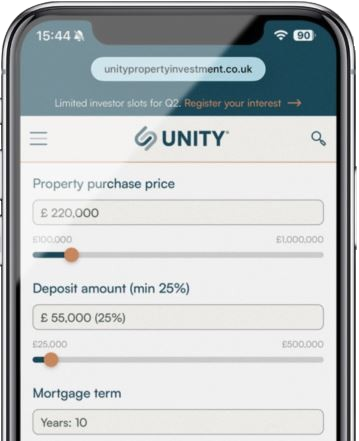
Buy to let investment and rental yield calculator
Property Suitability
Property may be a good investment if...
Property may not suit you if...
Case study

- Property Price:£250k
- Mkt Value at purchase:£250k
- Day one equity:£0
- Yield:7.4%
- ROCE:31.6%
.avif)