
.jpg)









When you step into the world of property investment, you quickly realise that success isn't just about finding a house with good kerb appeal. It is about understanding the cold, hard numbers that dictate whether a property will put money in your pocket or quietly drain your bank account. The most important metric you will use to make this assessment is your property yield.
If you are a prospective landlord staring at property listings and wondering, how do you work out rental yield, you are exactly where you need to be. Understanding the rental yield meaning and mastering the maths behind it is the defining line that separates speculative buyers from successful, professional investors.
In this comprehensive guide, we will break down the exact rental yield formula, walk you through side-by-side calculation examples using real numbers, explore what constitutes a good return in the 2026 market, and show you exactly how to actively maximise your returns through strategies like refurbishment and buying Below Market Value (BMV).
Executive Summary
Understanding how to work out rental yield is one of the most important skills in property investing. Rental yield measures the annual return a property generates from rent relative to its value, helping investors compare opportunities, assess cash flow potential, and make data-driven buying decisions.
This guide explains the difference between gross yield and net yield, including the exact formulas used to calculate each. Gross yield provides a quick top-level comparison based on annual rent versus purchase price, while net yield offers a more realistic picture by factoring in operating costs such as management fees, maintenance, insurance, and void periods.
The article also explores how rental yield differs from ROI (Return on Investment), which measures how efficiently your actual cash deposit and upfront costs are working when leverage is used.
Using real-world examples, the guide compares property performance across different UK regions and explains what is generally considered a good yield in the 2026 market. It also highlights how professional investors improve returns through strategies such as buying below market value (BMV), refurbishment, reconfiguration, and tax-efficient ownership structures.
Ultimately, rental yield removes emotion from property investing and replaces it with clear financial analysis. Used properly, it becomes one of the most powerful tools for building a profitable and scalable buy-to-let portfolio.
Rental Yield Meaning: Gross vs. Net Yields
At its core, your buy to let yield is a percentage that shows the annual return on your property investment based on the income it generates from rent. It allows you to quickly compare the financial viability of different properties, regardless of their varying asking prices, and to compare property as an asset class against other investments like stocks, bonds, or high-yield savings accounts.
However, when discussing yield, it is critical to understand that there are two distinct types: Gross Yield and Net Yield. Conflating the two is one of the most common mistakes new investors make.
What is Gross Rental Yield?
Gross yield is the simplest and most commonly quoted metric. It calculates the return based strictly on the annual rental income measured against the property's purchase price, before any expenses are deducted.
- Why it is useful: It is a fast, back-of-the-envelope calculation perfect for quickly scanning portals like Rightmove or Zoopla to see if a property is worth a deeper look. Estate agents and property sourcers almost exclusively quote gross yields because it is the higher, more attractive number.
- The limitation: It doesn't reflect the reality of your bank balance. Owning and operating a property costs money, and gross yield ignores this commercial reality completely.
What is Net Rental Yield?
Net yield is the true measure of your investment's operational performance. It calculates your return after all the day-to-day operating costs of the property have been subtracted from your rental income.
- Why it is useful: This is your actual profit margin. If you want to know if a property will generate positive cash flow or if it will be a monthly liability, the net yield is the only metric that matters.
The Exact Rental Yield Formula
Working out your yield does not require a degree in advanced mathematics. The formulas are straightforward and rely on basic arithmetic. Having a calculator handy (or a simple spreadsheet) is all you need.
The Gross Rental Yield Formula
To calculate the gross yield, you take your total projected annual rental income, divide it by the property's value (or the purchase price), and multiply by 100 to get a percentage.
Gross Yield = (Annual Rental Income ÷ Property Value) × 100
The Net Rental Yield Formula
To calculate the net yield, you must first calculate your total annual property costs (which we will outline in section 6). You subtract these costs from your annual rental income, divide that new figure by the property's value, and multiply by 100.
Net Yield = ((Annual Rental Income - Annual Property Costs) ÷ Property Value) × 100
Beyond Yield: Understanding ROI (Return on Investment)
While yield looks at the return generated against the entire value of the property, most investors use a mortgage to buy property. Therefore, you aren't paying the full £250,000 in cash; you are likely putting down a 25% deposit.
To see how hard your actual cash is working, you need to calculate your Return on Investment (ROI) - also known as Return on Capital Employed (ROCE).
ROI = (Annual Net Profit ÷ Total Cash Invested) × 100
Your "Total Cash Invested" includes your deposit, stamp duty, legal fees, broker fees, and any initial refurbishment costs. While this guide focuses primarily on yield, understanding ROI is the next crucial step once you know how much capital you need. Read our detailed guide on the buy-to-let mortgage deposit to understand your initial cash requirements.
Net yield is the true measure of your investment’s operational performance.
Understanding rental yield is the defining line between speculative buyers and professional investors.
Side-by-Side Case Study: The North vs. South Divide
To see how the rental yield formula works in the real world, let's look at a side-by-side comparison of two very different "turnkey" (ready to rent) investments typical of the 2026 market.
Property A: A 1-Bedroom Flat in London
- Purchase Price: £450,000
- Monthly Rent: £2,000 (£24,000 annually)
- Annual Operating Costs: £4,500 (High service charges and management fees)
Property B: A 3-Bedroom Terraced House in Nottingham
- Purchase Price: £180,000
- Monthly Rent: £1,100 (£13,200 annually)
- Annual Operating Costs: £2,500 (Lower management fees, no service charge)
The Gross Yield Calculation:
- London: (£24,000 ÷ £450,000) × 100 = 5.3% Gross Yield
- Nottingham: (£13,200 ÷ £180,000) × 100 = 7.3% Gross Yield
The Net Yield Calculation:
- London: (£19,500 Net Income ÷ £450,000) × 100 = 4.3% Net Yield
- Nottingham: (£10,700 Net Income ÷ £180,000) × 100 = 5.9% Net Yield
As you can see, the Nottingham property vastly outperforms the London property in terms of yield and cash flow. However, the London investor is likely betting on long-term capital appreciation (the property's value rising over time) rather than immediate monthly income.
What Is a Good Rental Yield in the 2026 Market?
A question every investor eventually asks is, what is a good rental yield? The answer depends heavily on your specific investment strategy, but we can look at current market benchmarks to set realistic expectations.
According to data tracking from the Office for National Statistics (ONS), rents have seen sustained growth. In 2026, the average gross rental yield across England and Wales sits at approximately 5.6% to 6.0%.
Therefore, we can generally categorise yields as follows:
- Below 5%: Considered low. Typical of highly expensive southern markets where investors bank heavily on capital growth.
- 5.5% to 6.5%: Considered a "good" and solid yield. This represents a healthy, balanced investment that should comfortably cover its costs and provide a buffer against interest rate fluctuations.
- 7% to 9%: Considered "very good" to "excellent." Found in the Midlands, North of England, or Scotland.
- 10% +: Exceptionally high. Yields in the double digits are almost exclusively generated by complex property strategies like Houses in Multiple Occupation (HMOs). Keep in mind that HMOs come with significantly higher setup costs and stricter government licensing regulations.
Factoring in Buy-to-Let Costs
To accurately calculate your net yield, you must be ruthlessly honest about your projected expenses. Here are the primary costs you must factor in:
- Letting and Management Fees: If you want a hands-off investment, use a professional letting agent. We recommend agents registered with Propertymark (ARLA). Fully managed services typically cost between 8% and 12% of your monthly rent (+VAT).
- Maintenance and Repairs: A standard rule of thumb is to set aside 1% of the property’s value annually for maintenance.
- Void Periods: Properties do not stay tenanted 100% of the time. Conservative investors factor in an average of 3 to 4 weeks of void periods per year.
- Insurance: Standard home insurance is invalid if you rent the property out. You need specialised Landlord Insurance.
- Ground Rent and Service Charges: Essential to account for if you are buying a leasehold apartment.
(Note: We have excluded buy-to-let mortgage payments from the standard net yield calculation above, as mortgage rates vary wildly. However, you must subtract your mortgage costs when calculating your final monthly cash flow). To understand how commercial lending differs from residential lending, read our guide on the buy to let vs residential mortgage.
The Hidden Yield Killer: Taxes (Section 24)
In the current market, you cannot accurately project your returns without understanding taxation. Under Section 24 of the Finance Act, landlords who own property in their personal names can no longer deduct mortgage interest from their rental income before calculating their tax bill. Instead, they receive a flat 20% tax credit.
For higher-rate taxpayers, this can severely impact actual net profits - sometimes turning a seemingly profitable yield into a monthly loss.
Because of this, many investors in 2026 opt to purchase properties through a Limited Company (Special Purpose Vehicle or SPV). Limited companies pay Corporation Tax on their profits, which allows them to fully deduct mortgage interest as a business expense. Always consult an accountant and review the latest Gov.uk guidance on renting out a property.


Portfolio projection tool

How to Actively Improve Your Rental Yield
You don't just have to accept the yield a property offers on day one. Professional investors actively "force" the yield up through strategic buying and value-add projects. Here is how:
Buying Below Market Value (BMV)
The simplest way to increase your yield is to reduce the purchase price. If a property is truly worth £200,000 and rents for £1,000 a month (£12,000 a year), the standard gross yield is 6%.
However, if you can negotiate with a motivated seller (such as a landlord retiring, a probate sale, or buying at auction) and purchase that exact same property for £175,000 (BMV), your gross yield instantly jumps to 6.8%. You are achieving the same rental income against a much lower initial capital outlay.
Unlocking 7-8% Yields in the South via Refurbishment
We established earlier that standard turnkey properties in the South often yield a lacklustre return. However, savvy southern investors achieve 7% to 8%+ yields by undertaking heavy refurbishments.
Instead of buying a ready-to-let £400,000 house, they look for unmodernised, rundown properties for £280,000.
- The Strategy: They might spend £50,000 on a full renovation, including a loft conversion or a rear extension to add a heavily desired extra bedroom.
- The Result: Their total spend is £330,000. Because the property is now a fully modernised, larger home, it commands a premium rent - perhaps £2,200 a month (£26,400 annually).
- The Yield: (£26,400 ÷ £330,000 total spend) × 100 = 8% Gross Yield.
By adding value and reconfiguring the space, investors can create high-yielding assets even in the most expensive regions of the country. Other lighter refurbishments include upgrading kitchens/bathrooms or improving the Energy Performance Certificate (EPC) rating to attract premium-paying tenants.
Highlighting Regional Yield Variations Across the UK
The rental yield meaning takes on entirely different contexts depending on where you place your pin on the map.
- Greater London (3.5% - 5%): Characterised by astronomical purchase prices. While London rents are among the highest in Europe, they simply cannot mathematically keep pace with the capital required to buy a property. Investors in the capital almost exclusively prioritise long-term capital growth and wealth preservation over immediate cash flow.
- The South East (5% - 7%): Often conflated with London, the wider South East (including commuter belts in Kent, Essex, and parts of Sussex or Surrey) tells a different story. While property prices remain high, strong tenant demand from professionals moving out of the capital means you can achieve highly respectable yields, especially if you target the right commuter towns.
- The Midlands (6.5% - 8%): The "sweet spot" for many investors. Cities like Nottingham and Birmingham offer a compelling blend of strong tenant demand, accessible entry prices (£150k - £220k), robust cash flow, and steady capital appreciation.
- The North West (6.5% - 8.5%): Areas around Manchester and Liverpool are booming. Significant regeneration projects and massive student populations ensure incredibly high tenant demand, resulting in fantastic, reliable yields.
- The North East (8% - 10%+): Cities like Newcastle, Sunderland, and Middlesbrough offer some of the cheapest property in the UK, meaning yields are phenomenally high on paper. However, investors must be cautious; capital growth is historically slower, and managing tenant arrears or void periods can require more hands-on effort.
- Scotland (7% - 9%): Cities like Glasgow and Dundee offer highly lucrative yields. However, investors must be aware that Scotland operates under an entirely different legal system for housing, using Private Residential Tenancies (PRTs) which afford tenants different rights compared to England and Wales.

Let the Numbers Guide You
Learning how do you work out rental yield is the most empowering thing you can do as a property investor. It removes the emotion from buying property and replaces it with objective, data-driven decision-making.
Always calculate the gross yield to quickly shortlist properties, but never commit to buying without calculating a rigorous, worst-case-scenario net yield. Factor in your management fees, assume maintenance issues, budget for empty months, and consult a tax professional. If the net yield still looks healthy after that stress test, you have found a winning investment.
Take the Next Step in Your Investment Journey
Mastering yield calculations is a vital piece of the puzzle, but building a robust property portfolio requires a comprehensive strategy.
Read our master resource, the Buy-to-Let Investment Guide 2026, to discover everything you need to know to build a profitable, future-proofed portfolio in today's market.
-v1.avif)
Get investor insights and early access to opportunities
Join our investor briefings for structured insights, market updates, and priority access to new deals.

No spam, just timely insights for investors We respect your privacy and never sell your data
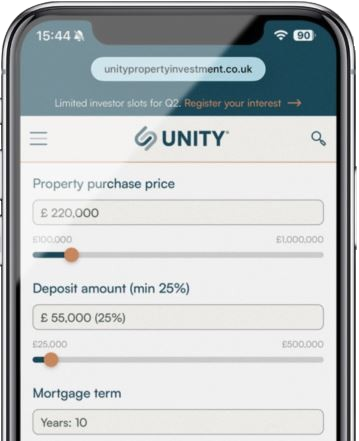
Buy to let investment and rental yield calculator
Case study

- Property Price:£300k
- Mkt Value at purchase:£320k
- Day one equity:£20,000
- Yield:6.8%
- ROCE:30.1%
.avif)