
.jpg)









If you are evaluating property investment near London, Essex remains a premier destination for building a resilient portfolio. The county offers an outstanding blend of capital growth and reliable monthly cash flow, driven by excellent infrastructure and heavy civic investment. In this guide, we draw on our hands-on experience to break down the most lucrative micro-markets in the region, helping you identify exactly where to deploy your capital in 2026 based on your specific financial objectives.
Executive Summary
The UK property market has changed significantly over the past few years, and the landscape in 2026 requires a highly focused approach. When assessing investment opportunities, we rarely look at yield in isolation. Success today relies on balancing the cost of borrowing, new tenant legislation, and higher taxation against reliable rental income and capital preservation. Within this environment, the buy to let Essex market continues to be one of the strongest regions in the UK.
The county benefits from a unique combination of proximity to London, ongoing civic regeneration, and property prices that remain accessible compared to the capital. While gross rental yields across the UK average approximately 5.96% in 2026, many towns in Essex can comfortably match or exceed this, particularly in the commuter and urban markets.
This guide evaluates the Essex buy-to-let market from a practitioner's perspective. It explores the most appropriate locations based on different investment strategies, cuts through the headline statistics, and outlines how new regulations affect local landlords on the ground.
Key Takeaways
- Affordability vs London: The Essex average offers a much lower barrier to entry than London, meaning investors put less capital at risk while avoiding the heaviest Stamp Duty burdens.
- Strong Yield Potential: Commuter hubs such as Harlow, Colchester, and Basildon frequently deliver gross rental yields between 5% and 6%, outperforming many southern alternatives.
- Legislative Realities: We are now operating under the Renters' Rights Act, which took effect in May 2026. With the removal of Section 21 and the shift to periodic tenancies, tenant retention and thorough initial referencing are more critical than ever.
- Tax Considerations: Investors must factor in the 5% Stamp Duty Land Tax (SDLT) surcharge on additional properties, which replaced the previous 3% rate in late 2024 and remains a key part of acquisition costs in 2026.
Why Consider Buy-to-Let Investment in Essex?
The fundamental case for investment property in Essex relies on long-term economic foundations rather than short-term market speculation. In our experience, Essex benefits from a geographical and commercial positioning that heavily insulates it against broader national housing downturns, making it a regular feature among the best buy to let areas in the UK.
Proximity to London remains the most significant catalyst for tenant demand. The commuter belt has expanded, and hybrid working patterns have settled into a sustainable rhythm. Tenants are willing to live further out if it affords them better living standards without sacrificing access to the capital. Towns across the county rank among the best commuter towns Essex has to offer, with journey times to London Liverpool Street or Fenchurch Street of between 30 and 50 minutes.
For investors looking to buy to let outside London, Essex provides a much lower barrier to entry without sacrificing tenant demand. With average capital values in the capital sitting well above £540,000, this price differential mitigates exposure to the 5% SDLT surcharge on additional dwellings and typically results in superior gross rental yields.
Essex also boasts strong employment centres of its own. The logistics hubs along the A13 corridor, advanced manufacturing in Basildon, and public sector employment in Chelmsford and Colchester generate vast internal tenant demand. When combined with transport improvements and extensive regeneration plans, the long-term fundamentals of Essex property investment remain strong, offering viable pathways for beginner property investors and institutional buyers alike.
What Makes a Good Buy-to-Let Area?
In practice, we often see investors overpay in premium commuter towns because they're focused purely on historical house price growth. Identifying the best buy-to-let areas Essex has to offer requires a more nuanced approach. A lower purchase price doesn't automatically make a better investment if tenant demand is weak. Investors should assess locations using a combination of factors outlined in a standard property due dilligence checklist.
Rental Demand and Tenant Demographics
The foundation of any successful investment is sustained tenant demand. High demand limits void periods and supports long-term rental growth. Investors should analyse local demographics. Is the area dominated by young professionals, families, students, or transient workers? Analysing tenant demand rather than relying purely on historical price growth dictates the correct property type to acquire and informs the broader exit strategy.
Rental Yield vs. Capital Growth
There is an inherent trade-off in property investment. High yield areas typically feature lower purchase prices but may offer subdued long term price appreciation. Conversely, premium markets provide strong capital growth outlooks but tighter monthly cash flow. Balancing yield against long term capital growth is the hallmark of a mature investment strategy. Using a portfolio projection tool can help investors model these projections over a ten to fifteen year horizon.
Transport and Regeneration
Proximity to major transport nodes is essential for commuter heavy areas. We'd normally favour properties within a 15-minute walk of a mainline railway station, as these consistently command rental premiums. Furthermore, public and private capital injections into a town signal future prosperity. Regeneration of retail centres, the creation of new commercial parks, and upgrades to public spaces improve tenant retention and drive up local property values.

Image copyright © visitcolchester.com
Which Essex Area Would Suit Different Investors?
Essex is not a single, uniform property market. It is a diverse county comprising distinct micro-economies. We typically align our clients with locations based on their specific investment objectives.
- First Investment ➔ Colchester: With urban flats available at highly accessible price points and demand driven by multiple tenant demographics (students, military, commuters), Colchester offers a forgiving entry point for new landlords.
- Cash Flow ➔ Harlow: For investors prioritising monthly income, Harlow's lower entry costs combined with intense commuter demand from London regularly generate gross yields approaching 6%.
- Long-Term Growth ➔ Chelmsford: Investors seeking a stable, blue-chip asset often gravitate toward Chelmsford. While yields are slightly compressed, the high-quality tenant base and premium infrastructure provide excellent capital preservation.
- Premium Portfolio ➔ Brentwood: For wealth preservation and elite tenant profiles, Brentwood is the apex of the Essex market. It suits high-net-worth investors who prioritise absolute asset security over high percentage yields.
While rates are falling, the deposit and the affordability check remain the two biggest hurdles for first-time buyers in Essex. We are seeing continued strong demand for smaller, terraced homes and flats in more affordable towns.
Today's professional landlord has moved beyond a passive investment toward a more active and strategic business model. We are undeniably operating in a 'higher-for-longer' baseline interest rate environment.
The Best Buy-to-Let Areas in Essex
The following locations represent the core property hotspots Essex offers in 2026. Rather than viewing them purely through statistics, we've broken down the practical realities of investing in each town.
Harlow: The Regeneration and Cash Flow Play
Harlow buy to let remains one of the locations we'd be looking at closely for investors prioritising cash flow. Its combination of commuter demand, civic regeneration, and relatively affordable entry prices creates an attractive balance between income and long-term growth.
Harlow is a highly functional commuter town, delivering passengers to London Liverpool Street in approximately 30 minutes. The town's affordability makes it highly attractive to tenants priced out of London, pushing gross rental yields in specific central postcodes up to 5.9%.
However, the real story here is the future. Harlow is undergoing a £93 million non-housing capital programme. This includes the complete redevelopment of the town centre, the construction of a modern Sustainable Transport Hub, and a new Arts & Cultural Quarter. While yields are strong, investors must be selective. The town has a large supply of ex-local authority housing. Considering refurbishment potential rather than just the headline price is vital here to ensure long-term tenant appeal.

Image credit © Harlow Council 2026
Chelmsford: Income Over Growth
As the only city in Essex, Chelmsford occupies the premium tier of the local property market. Chelmsford buy to let is a common choice for investors seeking a low-risk, high-demand asset that promises steady capital appreciation and an excellent tenant demographic.
Chelmsford boasts a robust local economy, highly ranked schools, and a thriving retail sector. Recently, the focus in Chelmsford has shifted slightly. While historical capital growth has stabilised, the rental market has surged. In 2026, Chelmsford recorded exceptional annual rental growth, driven by intense demand from affluent families and professionals relocating from London.
For investors with a long-term horizon who prioritise asset quality, minimal void periods, and a hands-off management experience, Chelmsford remains an exceptionally safe harbour.
Colchester: The Two-Tier Market
Colchester offers one of the most diversified tenant bases in the South East, making Colchester buy to let a highly resilient proposition. The rental market is supported by an expanding student population at the University of Essex, military personnel stationed at the Colchester Garrison, and a steady flow of London commuters.
In practice, Colchester operates as a two-tier market. While large detached homes command premiums, urban flats and terraces offer steep discounts. Flats in Colchester can be acquired significantly below the national average. Because of this low entry price, investors can secure strong gross yields in central postcodes. For those questioning whether flats are good buy-to-let investments, Colchester presents a highly compelling case, provided the properties are located within walking distance of the town center or university links. Our preference would usually be targeting these central flats for optimal cash flow.
Basildon: The Pragmatic Commuter Hub
For landlords looking at Basildon buy to let opportunities, the town is transitioning into a modern commercial and residential hub. It is arguably the most pragmatic choice for yield-focused commuter investment. Situated on the c2c rail line, Basildon offers rapid 35-minute transit directly into London Fenchurch Street.
We closely monitor institutional investment as a leading indicator of an area's potential, and Basildon is attracting serious capital. The town is executing a £600 million regeneration masterplan, which includes massive Build-to-Rent (BTR) funding delivering hundreds of new residential units near the station. For private landlords, Basildon offers a predictable, mid-market tenant base with strong indicators of future capital uplift driven by this wider civic investment.
Southend-on-Sea: Coastal Lifestyle and Infrastructure
When considering Southend buy-to-let, investors gain a unique proposition: coastal living combined with formidable London connectivity. It attracts a demographic seeking the amenity of seaside living, whilst retaining the practicality of two major rail lines.
Southend's long-term investment viability is heavily tied to the Better Queensway regeneration project. This major undertaking aims to transform the centre of the city with new homes, upgraded road infrastructure, and landscaped public parks. Highway works for this project are already underway in 2026. Investors acquiring properties near these newly regenerated zones position themselves well for steady income and future halo-effect capital growth.
Brentwood: Wealth Preservation
For premium portfolios, Brentwood buy to let represents the apex of the Essex commuter market. The Elizabeth Line has cemented Brentwood's status as a top-tier commuter hub, providing direct, high-speed access through central London.
Because of the high entry cost, average gross rental yields are naturally lower here than in the rest of the county. However, the tenant demographic is exceptionally strong, comprising corporate relocations and affluent families. Investors targeting Brentwood do not do so for aggressive cash flow; they do so for asset security, prestige, and robust capital growth over the long term.
Braintree: Family Stability
Braintree buy to let presents a highly viable alternative for investors seeking accessible entry points and strong family demand without paying the immediate premium of a major rail artery into central London.
The market here is predominantly geared toward families and local workers rather than transient young professionals. The district is focusing on economic development, such as the Horizon 120 business park, designed to attract businesses and create local jobs. Braintree is best suited for investors looking for stable, long-term family lets with low tenant turnover.

Location Comparisons: Evaluating the Trade-Offs
To build a resilient portfolio, investors must weigh locations against one another based on specific strategic goals.
Why Harlow Beats Chelmsford for Cash Flow
If monthly income is your primary objective, Harlow outperforms Chelmsford. Because Chelmsford is a premium city, its higher purchase prices compress gross yields. Harlow, despite offering similar commute times into London, has significantly lower property values. This allows investors to achieve yields of 5.5% to 6.0% in Harlow, compared to the 4.5% to 5.0% typically seen in central Chelmsford. Harlow requires less capital to enter and generates superior monthly cash flow, making it ideal for portfolio expansion.
Why Brentwood Suits Long-Term Investors
Conversely, if an investor's goal is to park capital safely for 15 years, Brentwood is often the superior choice. While a high-yield property in a cheaper town might look better on a spreadsheet today, it may incur higher maintenance costs and tenant turnover. Brentwood attracts elite professionals and families who tend to stay longer and treat the property as a permanent home. The underlying land value in Brentwood is exceptionally robust, making it a classic wealth preservation strategy.
Which Essex Town Offers the Best Balance?
For investors looking for the "middle ground" - a reliable yield combined with genuine prospects for capital appreciation, Basildon is arguably the strongest contender in 2026. It doesn't carry the premium price tag of Chelmsford, yet it benefits from massive, ongoing institutional regeneration that Harlow is only just beginning to implement. It provides the sweet spot of accessible entry prices, mid-market family and commuter demand, and tangible civic improvements.
Essex Rental Yields and Mortgage Considerations
Although parts of the county can produce attractive headline figures, investors exploring Essex rental yields should avoid comparing locations on gross yield alone. Understanding how to work out rental yield accurately means calculating the net yield by deducting the costs of financing, maintenance, service charges, and management fees. Professional investors focus on buy-to-let profit and cash flow, prioritising properties that attract reliable tenants who lower operational expenditure.
When assessing an Essex portfolio, we normally favour assets where the net cash flow comfortably covers unexpected voids. When applying for a buy-to-let mortgage, lenders assess affordability using an Interest Coverage Ratio (ICR). For basic-rate taxpayers and limited companies, lenders typically require rental income to cover 125% of the mortgage interest at a stressed rate. Higher-rate taxpayers applying in their personal names usually face a stricter 145% stress test. Investors must ensure the property generates sufficient yield to unlock the necessary buy-to-let mortgage deposit and leverage.
Is Essex Better Than London for Buy-to-Let?
For many investors in 2026, comparing Essex against the capital reveals a compelling argument for investing outside of London.
The most immediate difference is the barrier to entry. Purchasing a buy-to-let at London's high average prices incurs severe taxation penalties due to the 5% additional dwelling surcharge. By contrast, a high-quality property in Colchester or Basildon can be acquired for significantly less, drastically reducing upfront capital requirements and SDLT, allowing investors to deploy capital more efficiently.
While London rents are high, the property prices often compress average gross yields across the capital. Essex offers comparable or superior yields with significantly less capital at risk. Furthermore, Essex offers larger properties for a similar rental price, meaning tenant demand remains incredibly sticky, reducing the churn often seen in the transient London flat-share market.
Taxation, Legislation and the Renters' Rights Act
The regulatory environment for landlords has transformed, meaning investors must take a highly professional approach. When structuring an Essex acquisition, navigating buy-to-let tax explained is vital.
According to official government guidance, the SDLT surcharge for additional residential properties sits at 5%, applying on top of standard residential SDLT rates for purchases of second homes and buy-to-let investments. Additionally, corporate entities face an elevated SDLT flat rate of 17% on residential properties exceeding £500,000 in specific circumstances, meaning correct initial structuring is essential.
Crucially, as practitioners, we are now operating under the Renters' Rights Act, which took effect in May 2026. Key changes include:
- Abolition of Section 21: "No-fault" evictions have been banned. Landlords must now rely on specific Section 8 grounds to regain possession.
- Periodic Tenancies: Fixed-term tenancies are abolished. Tenancies convert to periodic (rolling) agreements.
- Rent Increases: Rent increases are limited to once per year, requiring correct legal forms.
These rules require meticulous tenant referencing from the outset, as removing a problematic tenant is a more complex legal process. Additionally, landlords must forecast the costs of property ownership, particularly the capital expenditure required to meet the incoming 2030 Energy Performance Certificate (EPC) 'C' regulations.

Portfolio projection tool

Common Mistakes Investors Make in Essex
Even in a robust market, it is easy to make costly property investment mistakes if you do not understand the local nuances. In our experience, we frequently see investors fall into the same traps:
- Buying purely for yield: One mistake we frequently see is buyers assuming a high headline yield in a declining area equals strong cash flow. Chasing a 7% yield in a poorly connected street often leads to void periods and heavy maintenance costs that erode all profit.
- Ignoring commuter links: We'd generally avoid properties that are more than a 15-to-20-minute walk from a mainline station if the target demographic is London commuters.
- Buying large detached houses: While appealing to owner-occupiers, large four-bedroom detached homes in premium towns like Brentwood usually suffer from severely compressed yields, making them mathematically unviable for most buy-to-let mortgages.
- Ignoring regeneration: Failing to track where councils and institutional funds are injecting capital means missing out on the early stages of capital growth.
- Buying ex-local authority stock without due diligence: Towns like Harlow have a vast supply of ex-local authority homes. While these can offer excellent value, we always advise strict structural due diligence before purchasing, as construction quality and block management can vary dramatically.

Conclusion
Essex isn't one market. It's a collection of very different local economies. Benefiting from the economic overspill of London, excellent rail infrastructure, and vast civic regeneration projects, the county offers a highly resilient environment for property investors.
Investors looking for stronger cash flow may naturally gravitate towards towns such as Harlow or Basildon, while those focused on preserving wealth over the long term may prefer Chelmsford or Brentwood. For most investors, choosing the right town will have a far greater impact on long-term returns than trying to perfectly time the market.
If you're considering investing in Essex but aren't sure which locations best match your goals, explore our current investment opportunities, read our case studies, or book a call with one of our property investment consultants to discuss your wider property investment strategy.
Frequently Asked Questions
Is Essex good for buy-to-let?
Yes, Essex is highly regarded for buy-to-let investment due to its excellent transport infrastructure and strong local economies. It offers a favourable balance of affordability compared to London, resulting in stronger gross rental yields while still benefiting from the high tenant demand typical of the South East.
Where is the best place to invest in Essex?
The most suitable location depends entirely on an investor's strategy. Harlow and Basildon are excellent for high yields and regeneration-driven growth. Chelmsford and Brentwood are top-tier for capital preservation and high-quality tenant profiles. Colchester offers excellent value for flats and diverse tenant demand from students and the military.
What rental yield can you expect in Essex?
In 2026, realistic gross rental yields in Essex typically range between 4.5% and 6.0%. Urban flats in highly connected commuter towns like Harlow and Basildon tend to push towards the higher end of that bracket. Premium detached family homes in affluent areas like Brentwood will yield closer to 3.5% to 4.5%.
Is Harlow good for buy-to-let?
Harlow is a very strong buy-to-let market, particularly for investors seeking monthly cash flow. With lower entry prices than premium Essex cities, it generates robust yields. The town is also undergoing a £93 million non-housing regeneration programme, providing potential for future capital uplift.
Is Chelmsford a good investment?
Chelmsford is widely considered a secure, blue-chip investment. As an affluent city with excellent schools and a 30-minute commute to London, tenant demand is perpetually strong. While higher purchase prices mean yields are slightly lower, it offers exceptional long-term stability and strong professional renter demand.
Is Colchester good for buy-to-let?
Colchester provides excellent opportunities, particularly for entry-level investors. It features a diverse rental market supported by a university, a military garrison, and commuters. Urban flats in Colchester represent particularly strong value, allowing for gross yields frequently exceeding 5.5%.
Is Essex better than London for property investment?
For many private investors, Essex offers a superior risk-to-reward ratio. London's high entry prices compress yields and trigger significant Stamp Duty surcharges. Essex offers lower capital entry points, higher percentage yields, and strong demand from renters migrating out of London for affordability and space.
How much money do I need to invest in Essex?
To invest in an average Essex commuter property, you will typically require a 25% buy-to-let mortgage deposit. You must also budget for Stamp Duty (including the 5% additional dwelling surcharge), legal fees, valuation fees, and potential refurbishment costs.
How does the Renters' Rights Act affect Essex landlords?
Implemented in May 2026, the Act abolished Section 21 "no-fault" evictions and converted fixed-term tenancies into periodic (rolling) tenancies. Landlords must now use specific Section 8 grounds to regain possession of their property. It also limits rent increases to once a year.
What are the Stamp Duty rates for Essex buy-to-let properties?
When buying a buy-to-let property in Essex, you must pay the standard Stamp Duty Land Tax (SDLT) plus a 5% surcharge for additional properties. For companies buying residential properties worth over £500,000, a 17% flat rate may apply depending on the specific business structure.
-v1.avif)
Get investor insights and early access to opportunities
Join our investor briefings for structured insights, market updates, and priority access to new deals.

No spam, just timely insights for investors We respect your privacy and never sell your data

Buy to let investment and rental yield calculator
.png)
Essex Buy-to-Let Locations Comparison (2026)
Area
Typical Yield
Capital Growth
Entry Cost
Best Investor
Case study
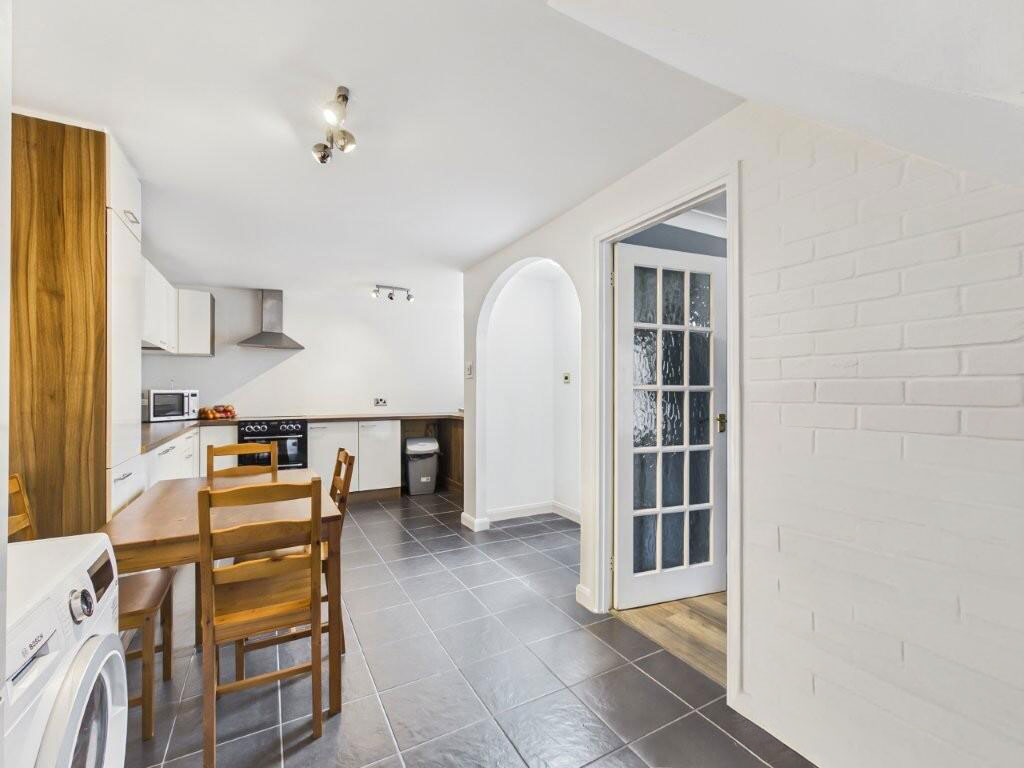
- Property Price:£275k
- Mkt Value at purchase:£290k
- Day one equity:£14,500
- Yield:7.2%
- ROCE:28.6%
.avif)